China's economic ambitions hit limits to growth as its National Congress meets
The Hindu
China's economic growth faces challenges as the National Congress convenes, highlighting tensions between technological ambitions and domestic demand.
China's progress in building a modern economy, evident in its kung-fu fighting robots and self-parking cars, is hitting limits as a downturn in its housing industry drags on, small businesses suffer and young people struggle to find jobs.
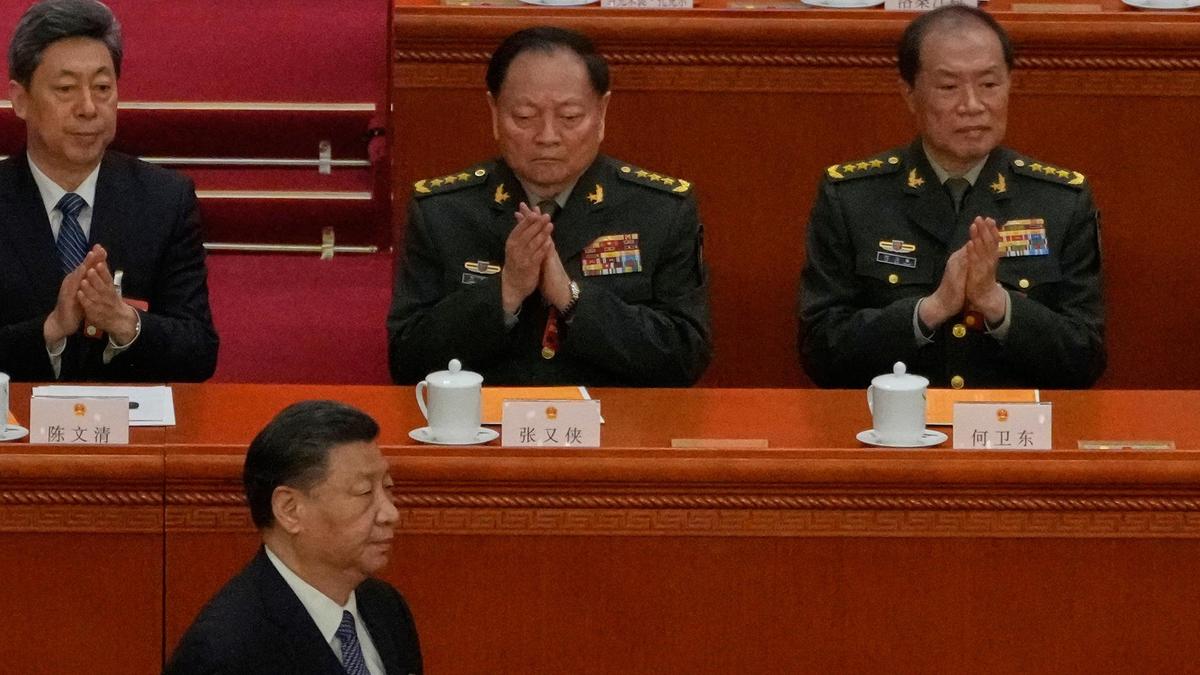
The gap between Chinese leader Xi Jinping's high-tech, artificial intelligence-driven ambitions and the hard realities of slowing growth is the backdrop for the annual meeting of the country's largely ceremonial national legislature, the National People's Congress, which begins on Thursday (March 5, 2026).
During the meetings, which draw about 3,000 deputies to Beijing, top leaders will outline China's annual target for growth and the Congress will endorse a five-year blueprint of policy priorities until 2030.
“What we'll see is the trade-off between whether it's going to be industry and tech, or looking after domestic demand,” said Alexander Davey, an analyst at the Mercator Institute for China Studies. “These are the two priorities that are juggling for Xi Jinping right now.”
In a city in southern China's Guangdong, families were cutting back on big purchases during last month's Lunar New Year holidays. Even for auspicious houseplants like orchids, used as a symbol of abundance and prosperity, prices were slashed by as much as 40% from last year.
The penny pinching has small business owners complaining about hard times.


Hezbollah condemns Lebanon's government ban on its military activities amid escalating tensions and Israeli retaliatory strikes.

Modi engages Gulf leaders on Indian safety as first casualty reported in Iran-Israel conflict amid escalating tensions.

Nepal's upcoming elections see old parties clashing with new contenders as voters seek change amidst political instability.

Shorts News:Only lasting solution in Iran is a diplomatic one, von der Leyen says

U.K. PM Keir Starmer defends military stance on Iran amid Trump criticism, prioritizing national interests and lessons from past conflicts.

Escalating cross-border strikes between Pakistan and Afghanistan expose a widening political, military, and societal divide between Islamabad and Kabul, despite earlier attempts at dialogue and de-escalation. Disputes over the handling of the Tehrik-e-Taliban Pakistan, rising militant activities in Khyber Pakhtunkhwa, and Pakistan’s shift to a military approach deepen mistrust between the establishment and the Taliban leadership.

Indian Navy ships are on standby in the Gulf for potential humanitarian operations amid rising tensions in West Asia.

U.S. Secretary of War Pete Hegseth delivered a defence of Washington’s military operation in Iran, calling it a “clear, devastating, decisive mission” aimed at destroying missile threats and preventing nuclear weapons. He accused Tehran of buying time to restart its nuclear ambitions and warned that any threat to Americans would be met without hesitation. The remarks come amid escalating tensions following U.S. strikes and widening conflict across West Asia.

Putin calls for a ceasefire in West Asia during talks with UAE and Qatar leaders amid escalating regional conflict.

The attack on oil tanker 'Skylight' underscores the dangers facing Indian seafarers in the Persian Gulf amid rising hostilities.

Iranian drone crashes into RAF Akrotiri; UK permits US to use bases for limited defensive operations amid escalating regional conflict.

Muzaffarnagar police arrest Vikki Tyagi's son Rakshit and aide after a shootout, seizing illegal arms and ammunition.

Iran's Revolutionary Guards claim missile attacks targeted Israeli PM Netanyahu's office and air force headquarters using Kheibar missiles.