Fear is a constant companion: My Eid in Lebanon war zone
India Today
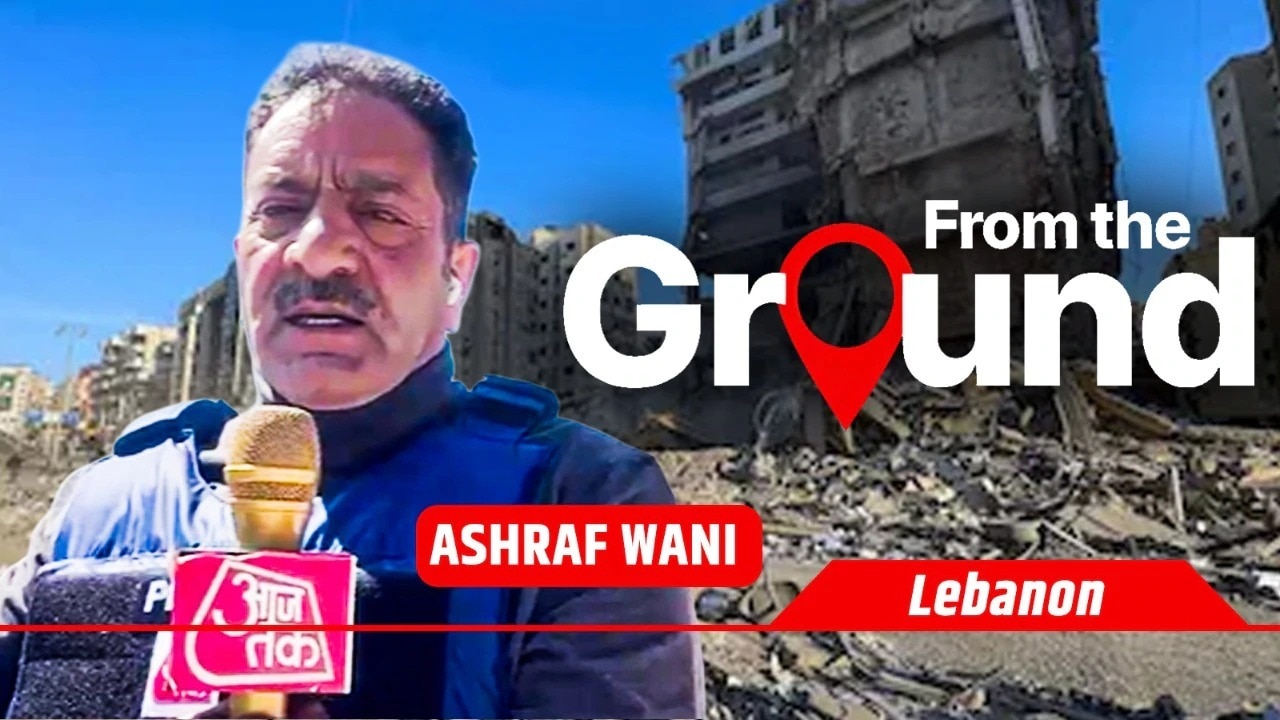
Ashraf Wani's firsthand account from the frontlines amid the conflict between Israel and Hezbollah in Lebanon. He narrates the relentless challenges amid heavy shelling in Lebanon, which has already registered over 1,000 deaths.
The first thing you learn in a war zone is that silence is never really silence. It hums beneath your skin — tense, waiting to be shattered. For 15 days, that hum became the backdrop of my life as I reported from the frontlines of the conflict between Israel and Hezbollah in Lebanon.
Every morning began the same way: checking if the night had spared us. Messages from colleagues, missed calls from family, and alerts of fresh strikes. Then came the ritual of preparation — helmet, flak jacket, microphone, camera — tools that felt both essential and painfully insufficient.
Television demands immediacy. It does not wait for safety, nor does it tolerate hesitation. When the shelling started, we didn't run away — we moved closer, calculating angles, framing destruction, chasing signals strong enough to broadcast the reality to the outside world. The irony was never lost on me: while others sought shelter, we searched for clarity.
The challenges were relentless. Connectivity would collapse just as we were about to go live. Roads we used an hour earlier would become inaccessible, reduced to rubble or declared too dangerous after fresh strikes. Sometimes we broadcast from rooftops, other times from basements, adjusting not just for signal strength but for survival.
There were moments when journalism felt secondary to instinct. The whistle of incoming fire does not give you time to think about editorial priorities. It forces a raw, immediate decision: stay and report, or move and live. Yet, somehow, the camera kept rolling. Because the story — the truth — was unfolding in real time, and the world needed to see it. For Ashraf Wani, the real fear came from witnessing the human cost
Fear was a constant companion, but it evolved. At first, it was sharp and paralysing. Later, it became quieter, almost functional — guiding decisions, sharpening awareness. The real fear came from witnessing the human cost. Families were displaced overnight. Children are learning the language of war too early. Faces that carried shock, grief, and a resilience that words could barely capture.


The United States has already increased its naval presence in the Gulf, deploying additional warships and surveillance assets to the region. The latest move is expected to enhance the speed and reach of US operations, allowing for quicker response times against emerging threats.

The statement came as the Norwegian royal family had been at the fore of severe scrutiny due to the Crown Princess's friendship with late sex offender Jeffrey Epstein. Though she has not been accused of wrongdoing, their connection has raised multiple questions.

China poured sixty billion dollars into Pakistan, defended it at the UN, armed its military and mediated its wars. Pakistan responded by letting Chinese workers die and chasing Donald Trump.

Delhi-based influencer Yuvraj Dua used sharp wit and relatable anecdotes to seek Prime Minister Narendra Modi's help to convince his father to cut back on sugar due to his health. The reel quickly went viral, garnering more than 1,80,000 views.


A man shared a heartfelt video thanking a biker who helped an ambulance navigate heavy traffic in Mumbai, acting like a one-man escort to ensure his mother reached the hospital on time.


A Mumbai man offered paid "listening services" for people's problems at a beach, which led to several users praising the simple yet relatable idea of charging to hear others out.

The Trump administration has been pushing for a single legislative framework that can be applied uniformly across the country, rather than leaving states to form their own plans.

A man surprised his mother by arranging a meeting with her childhood crush Jonty Rhodes, capturing her emotional reaction in a heartwarming video that went viral online.

Reacting to reports of the F-35 aircraft being damaged, Mohammad Bagher Ghalibaf mocked the reputation of the F-35 as an "untouchable" platform and framed the episode as a turning point.


A video from Kolkata showed a chaotic interaction between a man and a cop after he hurled stones at his vehicle, which left social media users jaw-dropped.