Trump's call to PM Modi a damage control as Pakistan plays mediator?
India Today
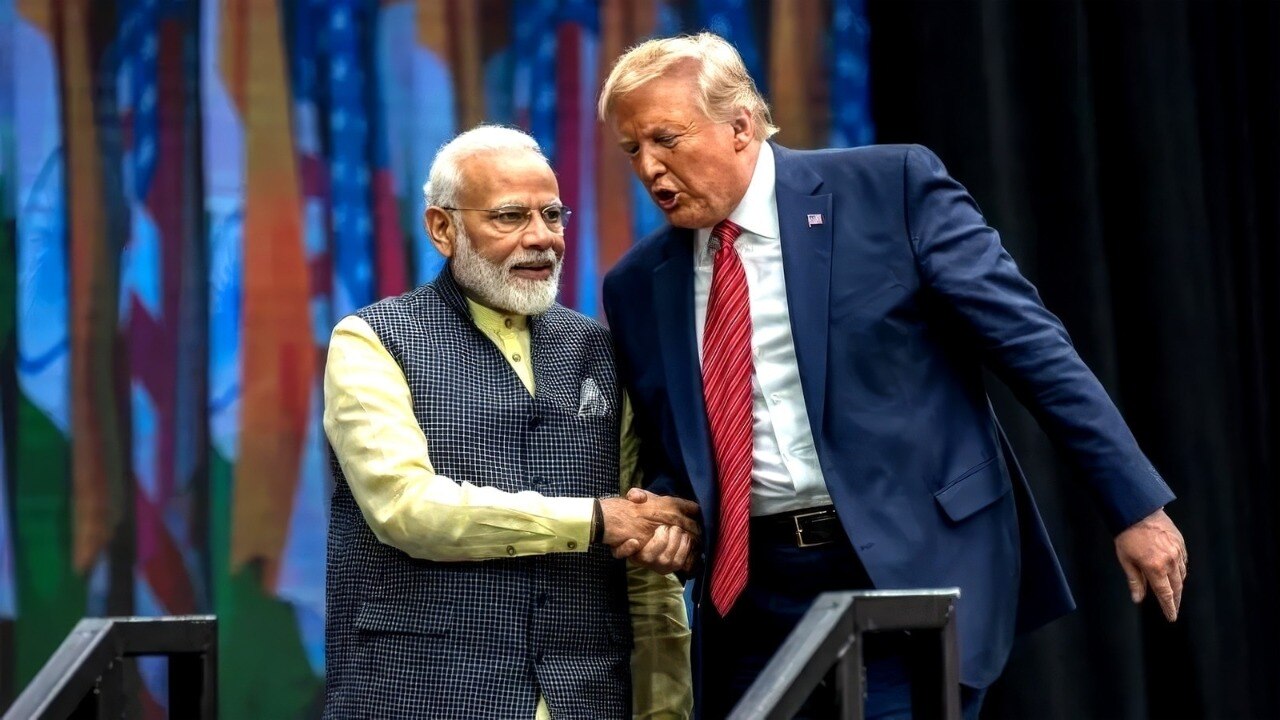
US President Donald Trump dialled Prime Minister Narendra Modi on Tuesday, four weeks after the Iran war started. The timing is crucial, coming on the back of Pakistan's emergence as Trump's choice as a mediator. Was Trump's call a damage-control exercise?
Nearly four weeks into the Iran war, US President Donald Trump called up Prime Minister Narendra Modi on Tuesday. A day before, Secretary of State Marco Rubio spoke with External Affairs Minister S. Jaishankar. At the same time, the US Under Secretary of War is on a visit to India. The flurry of the US's engagements with India has raised a question. Why now? There is a Pakistan angle to it.
Trump's sudden call to PM Modi and the outreach to India have been interpreted by geopolitical experts as a damage-control exercise. The timing is critical, coming at a time when Pakistan has emerged as the US's mediator of choice with Iran to end the conflict. In fact, Islamabad may host top US officials for negotiations with Iran soon. The optics of it are bound to cause unease in New Delhi. The US is well aware of that.
US Ambassador Sergio Gor, who has been key in getting Washington-Delhi ties back on track after a brief strain, told a media house that Trump wanted to keep PM Modi "in the loop" over the latest developments. Crucially, the call came a day after Trump paused for five days his threat of striking Iran's power plants and claimed the US was holding "productive" talks with Iran.
The news of the Trump-Modi call, the first since the war and the second this year, was first disclosed by Gor. "They discussed the ongoing situation in the Middle East, including the importance of keeping the Strait of Hormuz open," Gor said.
Around 20% of the world's oil and gas passes through the Strait of Hormuz. The war has not only severely reduced shipments through the critical chokepoint, but has sent global oil prices soaring.
India, which imports 90% of its energy needs, has borne the brunt of the economic fallout. While Iran has allowed a handful of Indian oil and LPG tankers to pass the strait, it has not stopped triggering a cooking gas crisis in the country. Thus, India is both a stakeholder and a victim, as underlined by geopolitical expert Brahma Chellaney.


Authorities said the metro tunnel lies approximately 80 to 100 feet below ground level. The breach was discovered near Mandai Metro Station, raising safety concerns.


Randhawa had accused the former minister of pressurising him to allocate a tender for a Godown to his father, Sukhdev Singh Bhullar. Before his death, the officer had also written to his seniors, accusing Bhullar of forcing him to falsely confess to taking bribes for tenders.

According to exclusive information from top defence sources, the operation is being conducted with the highest degree of caution and minimal publicity to ensure the safe evacuation and transit of Indian-flagged cargo ships.

According to the Delhi Fire Service, the bus lost control and overturned near the Jhandewalan Temple in Delhi's Karol Bagh area. The department added that the bus, carrying at least 25 passengers, came from neighbouring Rajasthan.

Rohit Pawar, nephew of late Maharashtra Deputy CM Ajit Pawar, has filed a zero FIR in Bengaluru over the January 28 plane crash in Baramati that killed his uncle and four others. Rohit Pawar has alleged a "larger criminal conspiracy" behind the crash.

With the passage of the bill, BJP-ruled Gujarat became the second state in the country to pass the UCC Bill. Uttarakhand became the first state to pass a UCC Bill in February 2024.


Accused Devkripal Meena, 28, alias David, was arrested in Kota on Monday, produced in court on Tuesday, and remanded to seven days of police custody for interrogation.


The Congress matriarch was hospitalised after she started feeling unwell, sources said. Both Rahul Gandhi and Priyanka Gandhi are present in the hospital, they added.

CCTV footage of the incident shows the accused seated among several other women and browsing through clothes. Meanwhile, her 5-year-old son discreetly picks up a purse from inside a bag kept behind one of the unsuspecting customers.