This exhibition at MAP, Bengaluru explores the link between colonisation and botany
The Hindu
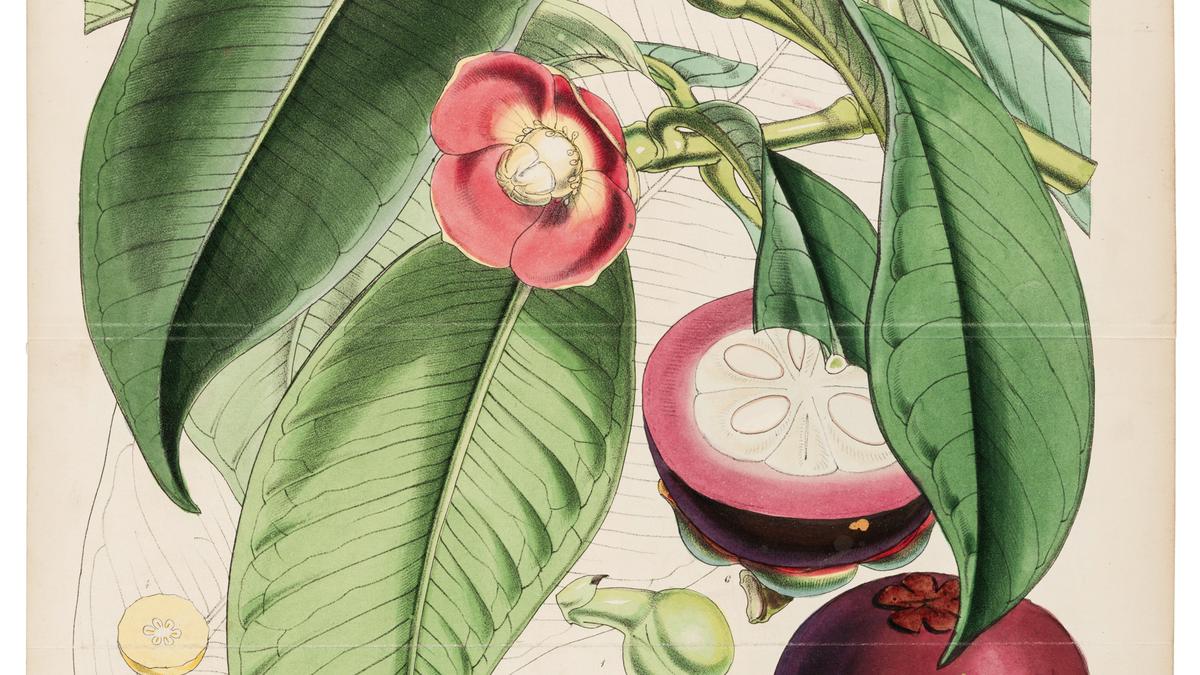
Paper Gardens: Art, Botany, and Empire offers insights into the history of botanical illustration in colonial India and the often-uncredited Indian artists behind these works
The year was 1847. Joseph Dalton Hooker, a close friend of Charles Darwin and the son of William Jackson Hooker, the first director of the Royal Botanic Gardens, better known as Kew Gardens, found himself on a ship sailing to India. “His father gave him a £400 allowance and sent him as a plant collector for Kew,” says Shrey Maurya, Research Director of Impart, who is leading us on a walkthrough of Paper Gardens: Art, Botany, and Empire, a new exhibition at the Museum of Art & Photography (MAP), Bengaluru.
On this journey, JD Hooker meets Lord and Lady Dalhousie, who are on their way to Kolkata to assume their official positions as the Viceroy and Vicereine of British India, according to Shrey, also the curator of this exhibition exploring the history of botanical illustration in colonial India and the often-uncredited Indian artists behind these works.
“When he reaches Darjeeling and starts climbing in search of plants, he quickly discovers that the known species of rhododendrons are nothing. He “discovers” 33 new species of them in India,” Shrey says.
In the classic tradition of English naturalists, where “to name is to claim”, he christened these plants after prominent British botanists and wealthy patrons, including Lady Dalhousie, with whom he had travelled to India, says Shrey as we walk past lithographs of these bright blooms taken from The Rhododendrons of Sikkim-Himalaya, a book about these discoveries that Hooker published in 1849, even before he left India.
“It functioned not only as surveys of specific plant groups and landscapes but also as records of extensive fieldwork that depended heavily on the knowledge and labour of local communities who guided collectors and botanists through these regions,” Shrey explains, adding the book set off a rhododendron craze in England, since the flower fits into the idea of the great British Garden, “a very contained wilderness.”
Hooker would return to England carrying nearly 30,000 specimens from India, including rhododendron seeds and cuttings, many of which flourished in English soil and today, “is one of the most invasive species there.”


Directed by Hemanth M Rao, ‘666 Operation Dream Theatre’ stars Dhananjaya in the lead role and Shivarajkumar in a pivotal character

YSRCP struggles to regain relevance after a drastic electoral decline, facing challenges and controversies in Andhra Pradesh politics.

Paper Gardens: Art, Botany, and Empire offers insights into the history of botanical illustration in colonial India and the often-uncredited Indian artists behind these works

Mysuru MP urges inclusion of the city in the 'urban economic zone' scheme to enhance infrastructure and development opportunities.

Monalisa Bhosle defends her interfaith marriage to Farman Khan in Kerala, rejecting 'love jihad' claims and asserting personal choice.

YSRCP struggles to regain relevance after a drastic electoral decline, facing challenges and controversies in Andhra Pradesh politics.

Telangana CM inaugurates Netflix Eyeline Studio’s VFX hub in Hyderabad, advocating for Netflix's office in the proposed Bharat Future City.

Kerala Governor Rajendra Vishwanath Arlekar, who was appointed to discharge the functions of Governor of Tamil Nadu, assumed his gubernatorial office at Lok Bhavan in Chennai. Hailing from Goa, Mr. Arlekar had served as Governor in Himachal Pradesh and then as Governor of Bihar. Earlier, he was BJP's Goa State president.

CPI(M) veteran G. Sudhakaran announces independent candidacy for Ambalappuzha, upholding party ideals while distancing from the party.

Andhra CM praises Collector Himanshu Shukla's 'One Month-One Village-Four Visits' initiative for resolving land issues in 26 villages.

Bengaluru's power generation faces disruption due to the Centre's gas supply prioritization amid ongoing natural gas shortages.

KKCCI calls for a multi-level parking complex in Kalaburagi's Super Market area to alleviate traffic and vendor issues.

Explore The Hindu Sunday crossword no. 47, featuring clever clues and engaging wordplay for puzzle enthusiasts.