The workings of an atomiser and its myriad applications Premium
The Hindu
Atomisers create sprays for various applications, from deodorants to power plants, using different designs and techniques.
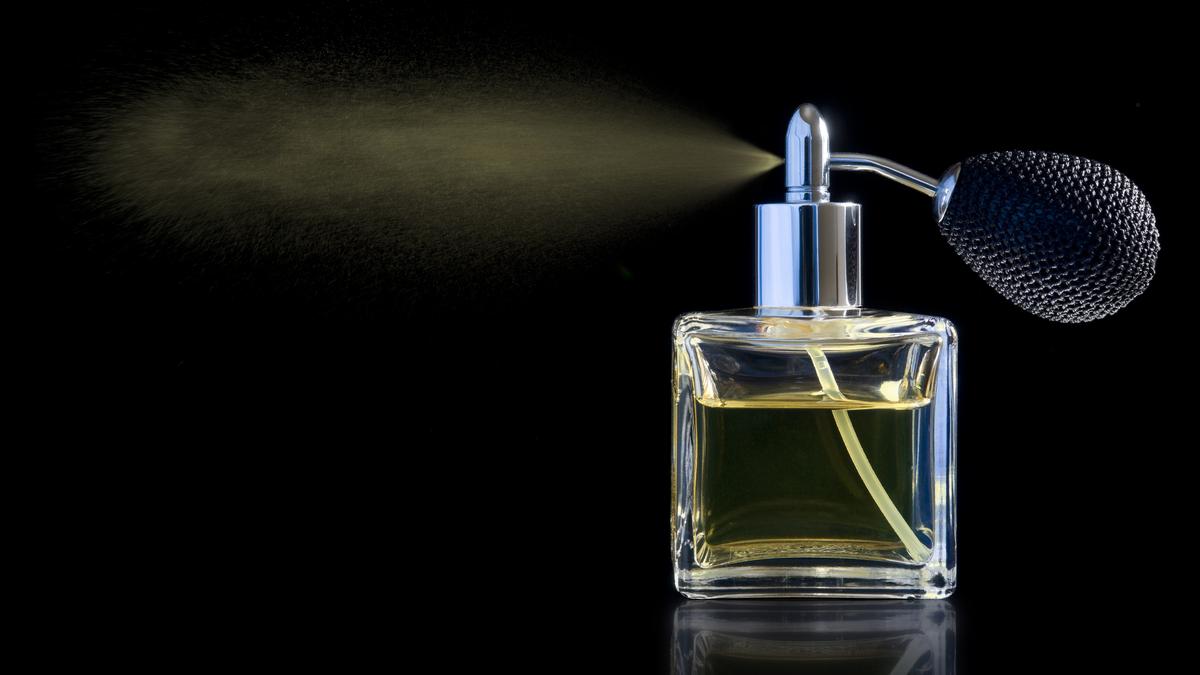
All of us have had this experience at some point: you wake up, find out you’re late for a class or meeting, clean up, put on some nice clothes, and run. When you finally get to where you need to be, you’re sweating. You pull out a small deodorant bottle from your bag, give yourself a spray, and you’re set. Wasn’t that handy? The spray nozzle, also known as an atomiser, is a nifty piece of technology that creates a mist of particles from a liquid on demand. Liquids are easier to store whereas a spray spreads better. Thus some enterprising engineers invented the atomiser to allow you, and in fact many industries in the world, to make the best of both worlds.
An atomiser is a device that creates a spray. A spray is in turn a collection of drops that disperses as gas. There are different kinds of atomisers based on the kind of spray required. Since there are many hundreds of scenarios where sprays are required — including injecting fuel into internal combustion engines, manufacturing steel, and to irrigate gardens and quench small fires — atomisers are also expected to have different abilities.
Some simple ways in which sprays differ are in the drop size, spray pattern, and angle of application.
There are at least two ways to measure spray drop sizes: by the drops’ average surface area or average volume. Some use a statistical figure called the Relative Span Factor (RSF). It denotes the distribution of drop sizes as a ratio of the size difference between the largest and smallest drops to the median size. If the RSF is close to 1, it means the spray is close to being very evenly sized.
There are also many ways to measure the drop sizes. For example, the greater the angle at which light is scattered by a drop, the smaller it is. So scientists can shine a laser light at a spray and assess drop sizes using a detector to record the scattered light.
Spray pattern refers to the distribution of the spray’s drops once they hit the target surface. While the spray on a deodorant may want to deliver drops to a wide area on skin, a spray in a coal mine may need to deliver a ring of drops spreading in a conical shape through the air to quickly trap as many coal-dust particles as possible (devices that can achieve the latter are good at preventing clogging and can create sprays at low pressure.)
Similarly, the angle of application matters to keep a spray from striking surfaces that shouldn’t be sprayed or, conversely, to cover a given area as efficiently as possible.


AI tool for sparrow conservation

BTS’s comeback with ‘Arirang’ marks a major global music event. When does the album release, and where can you watch their concert live stream? We have all the details

The 2026 U.S. cholesterol guidelines urge starting screening and treatment at 30 to prevent cardiovascular disease effectively.

Olam Festival 2026 in Thiruvananthapuram returns March 27-29 with 120+ vendors, music, art, and cultural zones.

A few storytellers in Thiruvananthapuram share their journeys, challenges, and evolving methods on World Storytelling Day, inspiring young minds.

76-year-old Kurian Jacob from Kerala triumphs with seven medals, including five golds, at the Open Masters Games in Abu Dhabi.

Explore the nature of the human mind as an emergent property of brain activity and complex neural interactions.

CERN's Large Hadron Collider discovers the Xi-cc-plus particle, enhancing understanding of quantum mechanics and baryon behavior.

Vibha Batra’s latest book, Spotless (Hachette India) is a novel in verse for young adults

In its first edition, the Madras Art Salon spotlights the works of journalist and artist Narayan Lakshman at The Botanical Club, a social space in the British Deputy High Commission, Chennai

Cholesterol enhances melanoma cell invasion by making nuclei squishier, revealing a potential treatment target in cancer progression.

The designers reinterpret the Swedish artist’s symbolic forms and colour energy through contemporary resortwear silhouettes

Discover the inspiring legacy of Bibha Chowdhuri, a pioneering woman in physics and a trailblazer in STEM history.