The hub of export-oriented textile units and bus building facilities set to witness high-stakes electoral battle
The Hindu
Karur's textile hub faces electoral tensions amid environmental concerns and water scarcity, highlighting shifting political dynamics and community issues.
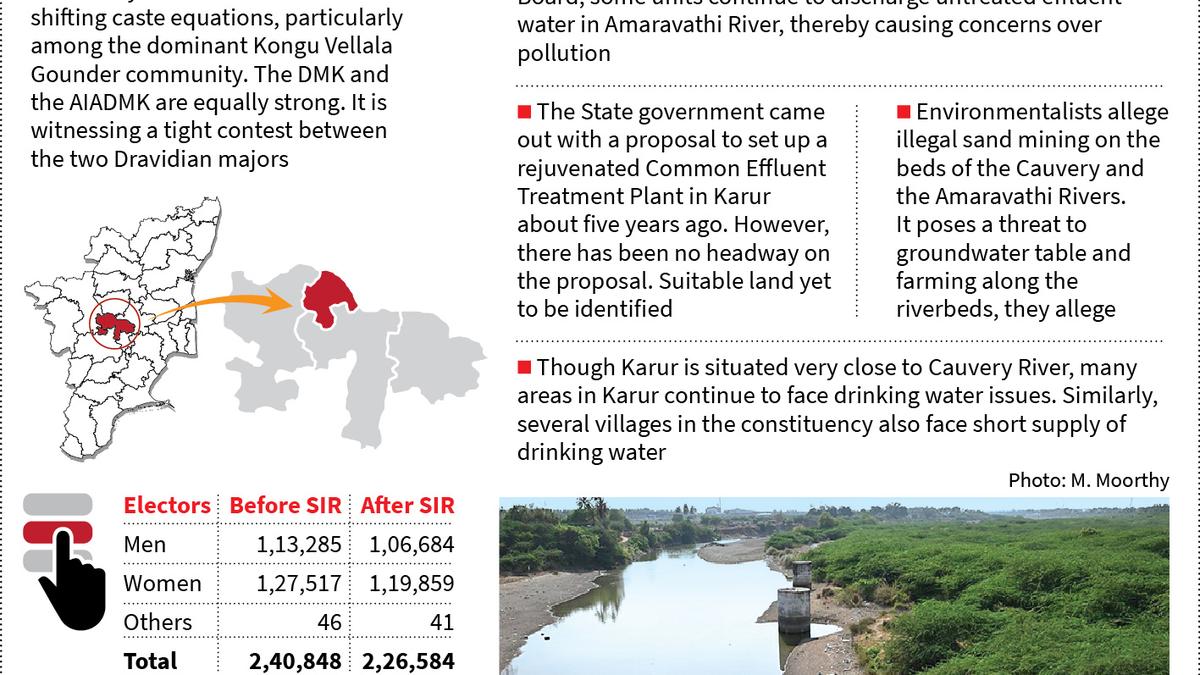
Karur, which is known for textile industry with various allied industries like ginning, spinning mills, dyeing factories, and weaving, has of late has emerged as a high-stakes and closely watched constituency, defined by intense political rivalries and shifting caste equations, particularly among the dominant Kongu Vellala Gounder community.
The change in political climate after the Karur stampede that occurred during the address of Tamilaga Vettri Kazhagam president Vijay on September 27, 2025, has added to the political heat in the constituency.
Textile, bus body building and agricultural sector, primarily drives the economy of Karur, one of the major industrial hubs in the State. The total annual manufacturing value of the town is approximately estimated at ₹9,000 crore. It is a significant exporter, contributing roughly ₹6,000 crore annually in foreign exchange.
The town is renowned for home textiles, including bed linen, kitchen cloths, mats, and table covers. It is a major hub for bus body building, with over 60 units functioning in and around the city, constructing a significant portion of South India’s private bus bodies. As of 2024, there were over 26,000 registered industrial units in the district, covering textile, engineering, and bus body building.
On the flip side, the city is no different from Tiruppur, Erode,and Coimbatore when it comes to the degradation of environment due to industrialisation and urbanisation. Karur had about 450 dyeing and bleaching units 10 years ago. They were blatantly discharging untreated effluents in the Amaravathi. Most of them had to close their operation following the order of the Madras High Court. Only those units with zero liquid discharge were allowed to continue. The number has come down to 68. However, civic activists allege that a section of them discreetly discharges untreated effluents in the Amaravathi.
Establishing a common effluent treatment plant (CETP) has been a long-pending demand of the textile manufacturers. The State government, considering the importance of regulated discharge of effluents, came out with a plan to establish CETP in 2021 on 250 acres of land. However, it remains only on paper. The efforts to find a suitable land are still going on, thereby causing discontent among the industrialists.


Anantapur police intensify checks at transit points with dog squad to combat drug trafficking and ensure public safety.

Politicians make promises on Mullaperiyar dam only during poll time, say Cumbum farmers

Shorts News:Watch: Not focused on Pinarayi Vijayan, says Shashi Tharoor on UDF campaign

Mudukulathur extects its rightful share of Vaigai waters

TPCC chief accuses BJP of resorting to divisive politics, diversionary tactics

Karnataka launches a free reading glasses program for the elderly, starting in Yadgir, to combat presbyopia.

K.C. Thirumaran is BJP candidate for Tiruppattur Assembly constituency

At Thiruvananthapuram International Airport, flight operations were halted for a few hours as the centuries-old Arattu procession of the Painguni festival crossed the runway en route to Shangumugham Beach. The ritual, linked to the Sree Padmanabhaswamy Temple, marks the ceremonial sea bath of the deity, drawing thousands every year and showcasing Kerala’s unique blend of tradition and modern life.

Kiran Mazumdar-Shaw highlights the need to empower women in STEM to reduce dropout rates and enhance career opportunities.

BJP, Congress announce candidates for constituencies in Kanniyakumari district

Chicken prices have dropped sharply, bringing customers back to shops although retailers say margins remain tight.

Tirupati's Rotary Human Milk Bank celebrates two years of service, promoting milk donation to support malnourished infants.

Tensions rise in Hubballi as a Muslim youth is beaten over 'love jihad' allegations, sparking protests and police involvement.