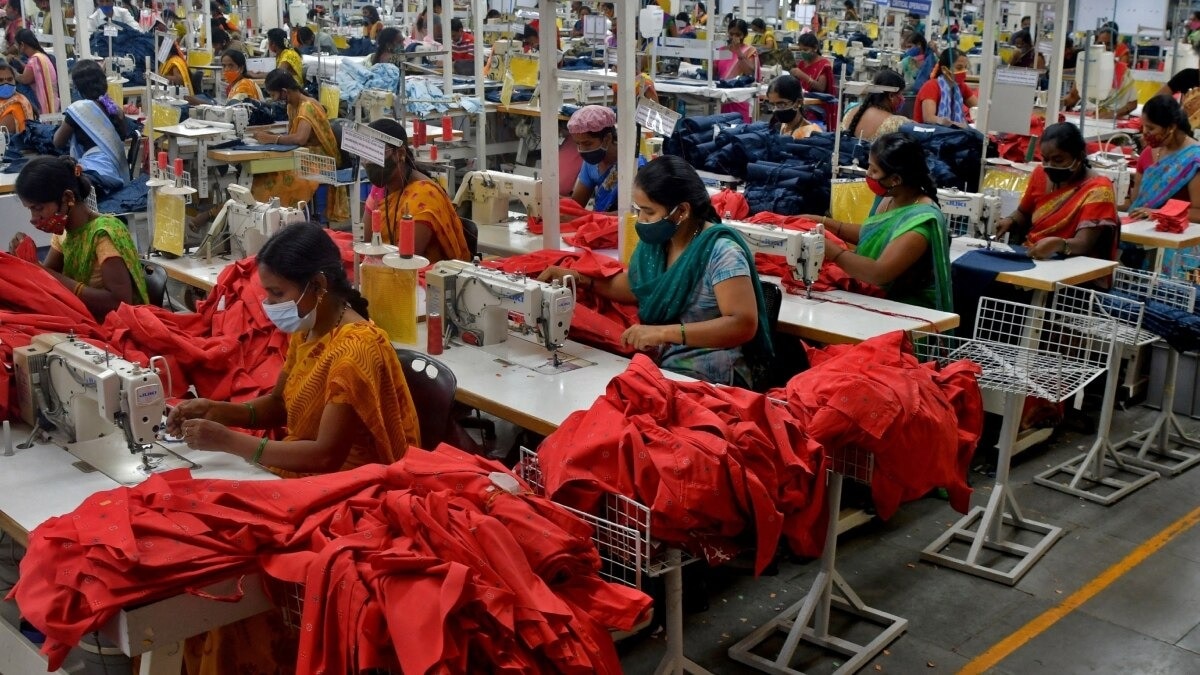
Textile trap: Why India should be concerned over US-Bangladesh deal?
India Today
The US-India trade deal was met with cheers by Indian textile exporters as it gave them an advantage over their competitors, like Pakistan and Bangladesh. However, the trade deal with Bangladesh seems to have undercut India's position. Here's how the agreement impacts India.
The US slashed tariffs on Bangladesh to 19% as the countries announced a trade deal on Monday, a week after a pact was reached with India. The deal placed India among the countries facing one of the lowest tariff rates (18%) from the Trump administration, down from a crippling 50%. It was met with cheers by Indian textile exporters as the deal gave them an advantage over their competitors like Bangladesh, Pakistan (19%), Vietnam (20%) and China (30%). However, the fine print of the US-Bangladesh trade deal seems to have unsettled textile exporters and cotton traders as well. Stay with us, and we will explain how in simple terms.
Apart from lowering tariffs from 20% to 19%, the US has given a breather to Bangladesh's textile industry, its lifeline, by allowing certain exports to enter America at zero duty. However, this will only apply to those goods produced with American cotton and man-made textiles. This move may undercut India's position in the US apparel market.
Notably, the US is the top market for India's textile exports. Thus, when Trump reduced tariffs on Indian exports to 18%, there was considerable joy in the textile industry. Not only did it unlock the US's $118 billion market for textiles and apparel, but it also strengthened India's position in global supply chains.
The US already accounts for around $10.5 billion of India's textile exports. Around 30% of all textile and apparel shipments from the country go to the US. Following the imposition of 50% tariffs, the textiles sector, which contributes 2.3% to India's GDP, not only registered a dip in exports but also was plagued by a massive inventory pile-up.
In fact, data shows that textile exports to the US fell by over 31% year-on-year in November 2025. Against this backdrop, amid slowing shipments and job losses, the US-India trade deal came as a silver lining for the textile sector.
However, the US-Bangladesh trade agreement may upend that advantage for India. Even though India's overall tariff rate is lower than that of Bangladesh, the zero-tariff provision for Bangladeshi garments made using American cotton completely changes the competitive equation.


A second patient died within 72 hours at RG Kar Hospital, with his family alleging that a lack of stretcher and basic facilities forced the critically ill man to walk 100 metres, leading to his death.

As Parliament prepares to bring amendments to the Transgender Act, activists warn the proposed changes risk rolling back years of hard-won rights.

A high-speed boat crash in the Maldives has left two Indians missing, including a celebrated rally figure, even as Gautam Singhania returns home. Search teams continue efforts amid mounting concern and unanswered questions.

A prominent seer, Pranavananda Swamiji, alleged that mutts backing Karnataka Deputy Chief Minister DK Shivakumar to take over the top post were denied any allocation in the state budget presented by Chief Minister Siddaramaiah. He reiterated his support for Shivakumar to take over as the chief minister.

India's original Dhurandhar, Ravindra Kaushik, rose from acting at college theatres, to infiltrating the Pakistan Army as a RAW Agent. He provided critical intelligence on Pakistani troop movements and the country's nuclear programme, but died a lonely death after his betrayal and subsequent capture by the ISI.


According to the police, 19-year-old Sachin Dharmendrabhai Chaudhary, who works as a labourer, had borrowed the money before expressing his inability to repay it immediately, police said. He was allegedly threatened with his life over the delay in repayment. Fearing for his life, Sachin immediately alerted the police.

A quiet arrest in Rajasthan has unravelled a wider espionage network, linking an Air Force employee to Pakistani handlers. Investigators say the trail began months ago and may reach deeper than first believed.

A 36-year-old woman plotted to murder her mother-in-law with the help of her 21-year-old lover. The murder plot was exposed by CCTV installed inside the house.


A former village pradhan who had been missing since March 18 was found dead in a sack near a canal in Pratapgarh. Police have arrested his lover, claiming she carried out the murder with accomplices.

From a Kashmiri widow parting with her late husband's cherished jewellery to children emptying their piggy banks, a wave of generosity is emerging across India as citizens step up to support people affected by the escalating conflict in Iran.