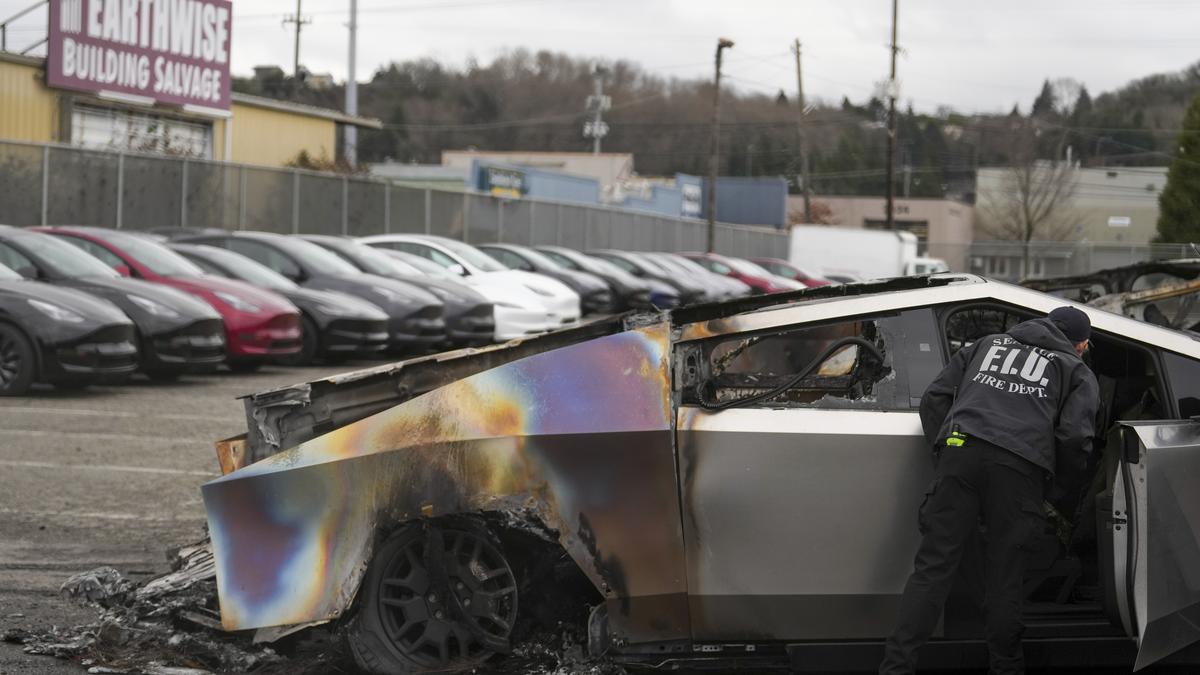
Tesla could benefit the most from new rules on reporting of self-driving car crashes
The Hindu
Rule changes could allow automakers to report fewer crashes involving self-driving cars such as from Tesla.
Rule changes announced by the Trump administration this week could allow automakers to report fewer crashes involving self-driving cars, with Tesla potentially emerging as the main beneficiary.
The Transportation Department announced Thursday that it will no longer require automakers to report certain kinds of non-fatal crashes — but the exception will apply only to partial self-driving vehicles using so-called Level 2 systems, the kind Tesla deploys. Tesla CEO Elon Musk had complained the old reporting rules cast his company in a bad light.
If Tesla and other automakers are required to report fewer crashes into a national database, that could make it more difficult for regulators to catch equipment defects and for the public to access information about a company's overall safety, auto industry analysts say. It will also allow Tesla to trumpet a cleaner record to sell more cars.
“This will significantly reduce the number of crashes reported by Tesla,” said auto analyst Sam Abuelsamid at Telemetry Insight. Added Dan Ives of Wedbush Securities, noting that Tesla rival Waymo won’t get an exception, “This is a win for Tesla, a loss for Waymo.”
Tesla stock soared nearly 10% Friday on the rule changes. Wall Street analysts, and Musk critics, have said that Musk’s role as an adviser to President Donald Trump could put Tesla in position to benefit from any changes to regulations involving self-driving cars.
Other car makers such as Hyundai, Nissan, Subaru and BMW make vehicles with Level 2 systems that help keep cars in lanes, change speed or brake automatically, but Tesla accounts for the vast majority on the road. Vehicles used by Waymo and others with systems that completely take over for the driver, called Automated Driving Systems, will not benefit from the change.
The National Highway Traffic Safety Administration, which enforces vehicle safety standards, said the new rules don’t favor one type of self-driving system over another, and that raft of changes it announced will help all self-driving automakers.


The Dispur election heats up as 'CongBJP' defections shape a high-stakes contest between veteran candidates from BJP and Congress.

Bengaluru's M. Chinnaswamy Stadium conducts readiness drill ahead of IPL 2026, ensuring upgrades and technical preparations are complete.

First-level randomisation of EVMs completed in Nagapattinam for upcoming elections, ensuring transparency and security.

A district-level committee in Krishnagiri has been formed to assess and verify seizure claims of goods and cash.

Minister Anam Ramanarayana Reddy pledges government support for local fishermen and farmers facing challenges in Andhra Pradesh.

MP M. Sribharat urges collective efforts to revive Visakhapatnam Steel Plant, highlighting key reforms for crucial recovery and growth.

141 candidates have filed nominations for Kozhikode's Assembly elections, with scrutiny on March 24 and campaigning intensifying.

BJP's Vijayendra accuses Congress of using money to influence Bagalkot bypolls, urging voters to reject their tactics.

First randomization of electronic voting machines completed in Tirunelveli and Tenkasi districts for upcoming Assembly elections.

RPF seizes 10.12 kg of unclaimed cannabis worth ₹5.06 lakh from a train in Mangaluru.

Kolar's groundwater levels rise to 50-100 ft due to the K.C. Valley project, ensuring clean water and improved health outcomes.

Three smugglers arrested in Sangareddy with 574 kg of ganja valued at ₹2.87 crore during a police operation.

Mysuru MP urges a 'flex-free Mysuru' by discouraging birthday banners, promoting responsible celebrations to preserve the city's heritage.