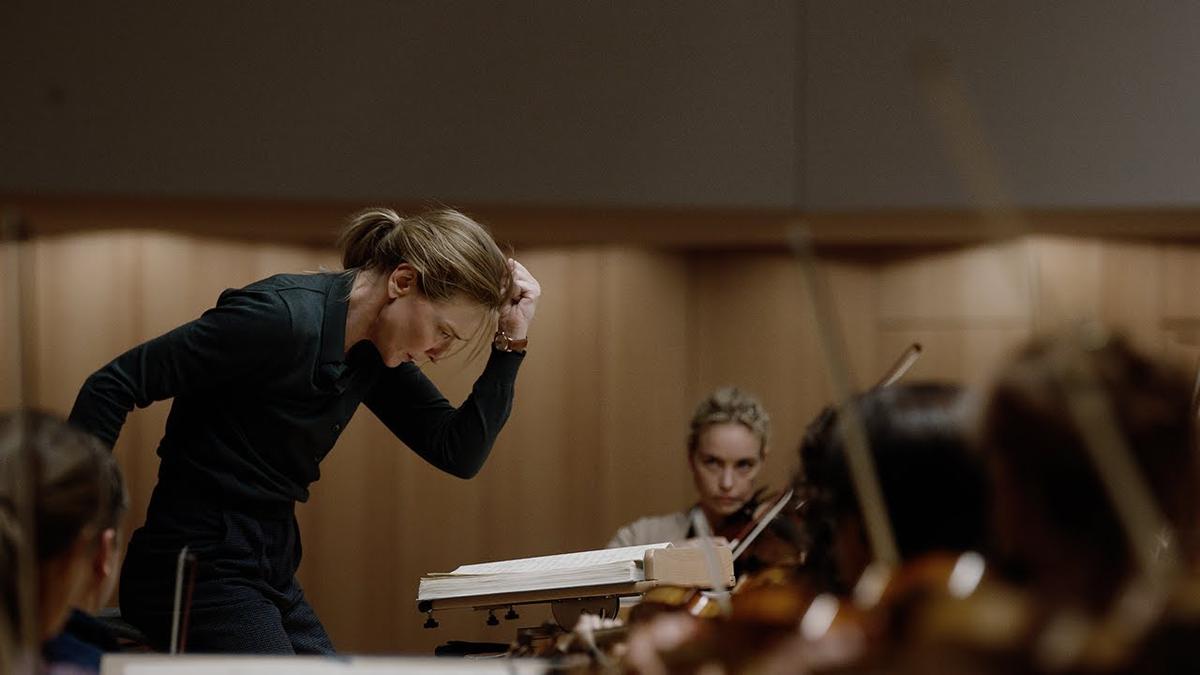
‘Tár’ movie review: Sublime Cate Blanchett shows us that genius is finally only human
The Hindu
With ‘Tár,’ director Todd Field takes an unflinching look at the absolute corruption of absolute power as well as the healing might of music
What a stupendous meditation on creativity, power and predation this film is! And Cate Blanchett is sublime as Lydia Tár, the stratospherically sucessful composer-conductor whose personal and professional world comes crashing down just as she is about to scale the final peak.
The movie opens with a phonescreen showing a series of cynical texts. We see Lydia waiting at the wings at the New Yorker Festival. Her assistant, Francesca (Noémie Merlant), hands her water and pills and Lydia calms herself down with a series of tics to go on stage for an interview with Adam Gopnik (playing himself).
At the interview, we hear of Lydia’s achievements including being the first woman conductor of the Berlin Philharmonic and for being an EGOT — having won an Emmy, Grammy, Oscar and Tony. We see Lydia confident in her achievements and talents with a live recording of Mahler’s Fifth Symphony and the publication of her memoir, Tár on Tár, being further feathers in an already crowded cap.
Her lecture at the Juilliard School is a masterclass in music appreciation and the pitfalls of deconstruction (“The problem with enrolling yourself as an ultrasonic epistemic dissident is that if Bach’s talent can be reduced to his gender, birth country, religion, sexuality, and so on, then so can yours..”)
In between blind auditions for a cellist and figuring out the cover photo for the Symphony, Lydia realises Petra (Mila Bogojevic) an adopted child she is bringing up with her wife, Sharon (Nina Hoss) is unhappy and withdrawn.
There is also the matter of Krista Taylor (Sylvia Flote) a former member of the fellowship programme Lydia runs with investment banker, Eliot Kaplan (Mark Strong) for upcoming female conductors.
The deeper we are drawn into Lydia’s life, the more we see of her brilliance and her abuse of power. She is attracted to Olga (Sophie Kauer) and manipulates results so that she is chosen at the audition. Did she encourage Krista and Francesca, which resulted in the permanent damage to both the young women?


Oscars 2026 security heightened amid FBI warnings of a potential Iranian drone threat ahead of the Hollywood ceremony.

Directed by Rahul Pandey, the series also stars Naila Grewal, Nidhi Bisht, Anant Joshi, Anjum Batra and Kusha Kapila

A tribute to the versatile actor and comedian V.K. Ramasamy in his birth centenary year.

‘One Piece’ Season 2 review: As the Straw Hats enter the Grand Line, Netflix’s live-action adaptation finds its sea legs with bigger islands, stranger villains and the same stretch-happy sense of boundless adventure

Geeta Gandbhir, the Indian-origin American filmmaker is waves at this year’s Oscars with not one, but two nominations. Her documentaries, ‘The Perfect Neighbor’ and ‘The Devil is Busy’ are in the race for the Academy Award

Directed by filmmaker and environmentalist Pradip Krishen, the film follows a group of "dope-smoking, bellbottom-wearing and vaguely idealistic" final-year students racing to complete their theses.

Alan Ritchson powers through 'War Machine', a lean sci-fi action thriller on Netflix. A competent, Reacher-style chase adventure with nonstop tension and solid set pieces

Explore the Unshelving Memories exhibition in Thiruvananthapuram, showcasing diverse book art by 61 talented artists until March 15.

Oscars 2026 date and timings: Watch the 98th Academy Awards live on March 15, 2026, at 4:30 a.m. IST in India on various platforms.

The 12-day Tribal Art Festival, taking place in Delhi until March 13, brings together more than 75 tribal artists and over 1,000 artworks representing more than 30 tribal art traditions.

Tom Cruise wins Best Actor at the 2026 Saturn Awards, while 'Avatar: Fire and Ash' takes home multiple major honors.

The new God of War is a coming-of-age story that builds Kratos into the formidable warrior seen in later games

Rachel Weisz dazzles in Vladimir, a sharp, sexy Netflix mini‑series that probes power, desire, and academia in eight smart, bingeable episodes