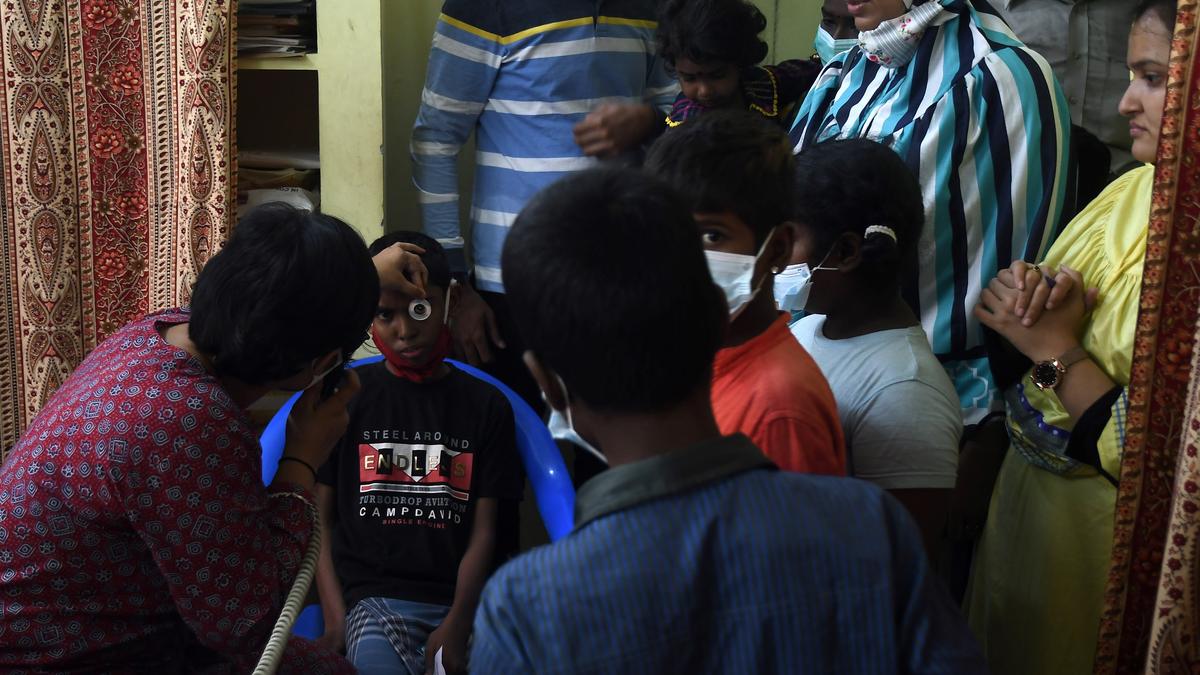
Surge in dry eye syndrome among children worries ophthalmologists
The Hindu
Rise in dry eye cases due to online learning, social media use. Ophthalmologists suggest lifestyle changes, treatments to reduce risk.
The city has been witnessing a steady rise in the number of people reporting dry eye syndrome. This has been the trend in the past three years, say ophthalmologists. This could be detrimental, especially to children’s vision, they say.
A major reason is children being forced to learn online owing to COVID-19 induced restrictions and lockdown.
Ranjitha Rajagopalan, consultant, cornea and refractive surgery, Dr. Agarwal’s Eye Hospital, said: “Dry eye occurs when glands do not make enough tears to keep eyes wet or when tears dry up too fast. Though the risk of dry eye increases with age, various factors, including air pollution, climate, and health conditions of individuals can be the culprit”.
It was advisable to follow the 20-20-20 rule of looking at objects 20 feet away for 20 seconds every 20 minutes during prolonged digital screen use, she said.
Ophthalmologist must do a comprehensive evaluation to identify the specific cause of dry eyes and formulate an appropriate treatment plan. “During a comprehensive eye examination, an ophthalmologist can evaluate the tear film, tear production and the overall health of the eyes. Untreated, it may lead to chronic discomfort, redness and even vison problems,” she said.
“Young children come with dry eye and myopia. Although we have gone to offline classes, the assignments are sent through laptops or cell phones forcing children to visit the Internet. Apart from this, children are getting addicted to social media, watching videos on YouTube and Instagram,” said K. Thiruvengada Krishnan, chief, cornea and refractive surgery services, Aravind Eye Hospital, Chennai.
A study by the hospital in Madurai found that 20% of urban children wear spectacles as they are confined to indoor activities unlike in rural areas where children are outdoors for longer periods, he said. Parents should limit the screen time for children to 30 minutes or an hour, he suggested. Parents should not stay glued to their laptops, he said.


Delhi HC requests Delhi Police's response on Sushil Kumar's bail plea in Chhatrasal Stadium murder case involving wrestler Sagar Dhankar.

Bela Gram becomes Maharashtra's first net-zero village, showcasing panchayat leadership's crucial role in local climate action during Mumbai Climate Week 2026.

As the Indian Cartoon Gallery enters into its 20th year, a look at how it began and its workings

‘The Gallery Of Upside Down Women’, a poetry book by Arundhathi Subramaniam chronicles complex women through history

Kerala's final voters list reveals 2.69 crore voters, with publication set for February 21, 2026.

Fire at Aditya Enclave in Hyderabad's Ameerpet causes panic, but no casualties reported; investigation underway.

Supreme Court dismisses plea to ban naming mosques after Babur, affirming their right to use historical nomenclature.

Ramesh Chennithala claims UDF will win 100 seats in Kerala, criticizing government misuse of resources ahead of elections.

Tension rises in Belagavi village after Sangolli Rayanna statue is desecrated, sparking protests and police investigation.

Sachin Pilot urges a transparent investigation into Ajit Pawar's death, linking it to personal loss and safety concerns.

Unions praise Tamil Nadu's ₹2,446.46 crore allocation for settling terminal benefits for 6,867 retired transport employees.

Karnataka's Guru Spandana adalat will address government teachers' grievances in Mangaluru on February 21.

Rahul Gandhi to appear in Sultanpur court for defamation case linked to remarks against Amit Shah dating back to 2018.