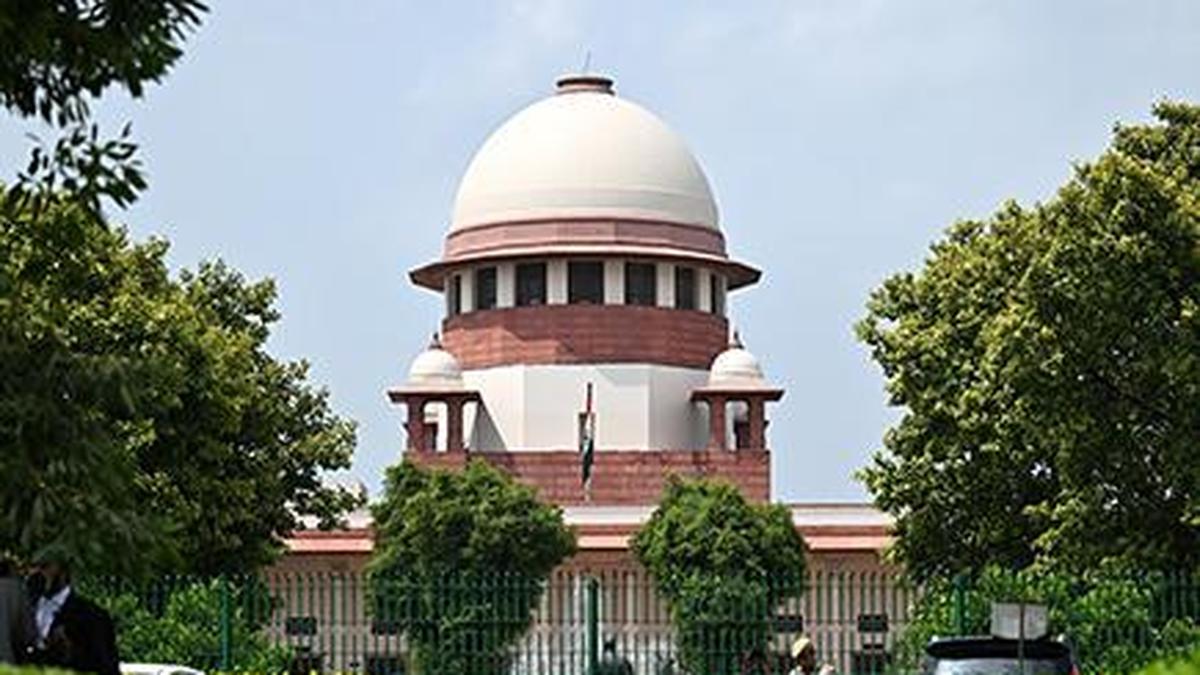
Supreme Court rejects plea for ban on naming mosques after Babur
The Hindu
Supreme Court dismisses plea to ban naming mosques after Babur, affirming their right to use historical nomenclature.
The Supreme Court on Friday (February 20, 2026) dismissed a petition seeking a ban on naming mosques after the first Mughal emperor Babur.
A Bench of Justices Vikram Nath and Sandeep Mehta rejected a plea by Devki Nandan Pandey, a petitioner-in-person from Uttar Pradesh, who sought a blanket judicial restraint on naming mosques after Babur or using the nomenclature ‘Babri Masjid’.
Mr. Pandey had made the Union government and States respondents in the petition. He termed Babur an “invader”.
Recently, suspended TMC MLA Humayun Kabir, while laying the foundation of a mosque in Murshidabad in West Bengal, had said that naming a mosque after the Mughal emperor was not unconstitutional.
The Babri Masjid, a 16th-century mosque in Ayodhya, was demolished by kar sevaks on December 6, 1992. It had been a site for communal tensions for decades and prolonged legal battles, including a title dispute with the Hindus over the ownership of the land on which the mosque had stood.
In 2019, a five-judge Bench headed by then Chief Justice of India Ranjan Gogoi had declared the land to belong to the Hindus.


Ramesh Chennithala claims UDF will win 100 seats in Kerala, criticizing government misuse of resources ahead of elections.

Tension rises in Belagavi village after Sangolli Rayanna statue is desecrated, sparking protests and police investigation.

Sachin Pilot urges a transparent investigation into Ajit Pawar's death, linking it to personal loss and safety concerns.

Unions praise Tamil Nadu's ₹2,446.46 crore allocation for settling terminal benefits for 6,867 retired transport employees.

Karnataka's Guru Spandana adalat will address government teachers' grievances in Mangaluru on February 21.

Rahul Gandhi to appear in Sultanpur court for defamation case linked to remarks against Amit Shah dating back to 2018.

A surgical instrument was discovered in a Kerala woman's abdomen five years post-surgery, prompting an inquiry into medical negligence.

MM Baig was known for directing two films including Naseeruddin Shah’s ‘Massom Gawah’ (1990), which remains unreleased, and ‘Chhoti Bahu’ (1994), starring Shilpa Shirodkar.

Madras HC orders DVAC to register a case in cash-for-jobs complaint against K.N. Nehru’s Municipal Administration Dept.

Explore Gauravi Kumari's PDKF Collective, empowering Rajasthan's artisans through visibility, patronage, and transformative craft initiatives.

Great Backyard Bird Count 2026: Visakhapatnam, Vizianagaram and Srikakulam log strong species numbers in Andhra Pradesh

Argentine workers protest labor reforms, clashing with police as widespread strikes disrupt Buenos Aires amid economic turmoil.

Directed by Geetu Mohandas and co-produced by Yash, ‘Toxic’ hits theaters on March 19, 2025, right in the ring with the blockbuster sequel Dhurandhar 2, featuring Ranveer Singh