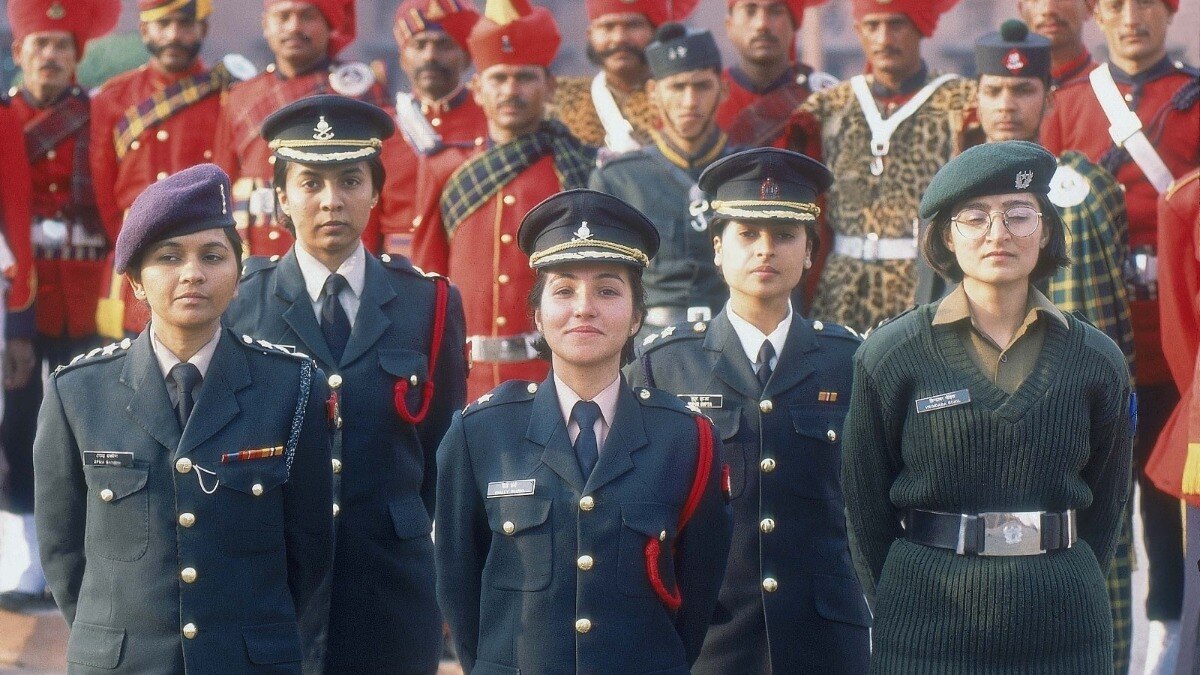
Supreme Court backs women officers after long fight for permanent commission
India Today
In three rulings covering the Army, Navy and Air Force, the court said evaluation systems and limited access to training disadvantaged women despite policy reforms.
The Supreme Court has recognised long-standing barriers faced by women officers in the Indian Armed Forces in securing permanent commissions and promotions. After nearly 15 years of legal battles, the Court acknowledged systemic biases that affected Short Service Commission Women Officers (SSCWOs) in the Army, Navy, and Air Force.
The Court delivered three key rulings on Tuesday, highlighting how women officers were disadvantaged despite earlier court orders and policy changes aimed at gender parity. Around 100 women officers across the three services have been seeking justice against these obstacles.
The Court noted that Annual Confidential Reports (ACRs), which form most of the evaluation for permanent commission, were prepared when women were not eligible for such promotions. This led to consistently lower ratings for women officers, limiting their chances despite their merit.
Women officers were often excluded from important training courses and appointments that helped career growth. For example, they were denied the Junior Command Course, which was available to men and critical for promotion, simply because of their initial ineligibility for permanent commission.
Although the Armed Forces introduced anonymous and computerised evaluations in 2012, the Court observed this could not undo the impact of earlier biased assessments. The Court compared this to trying to fix an old photograph by adjusting the camera lens after the picture was taken.
The government’s argument about a yearly cap of 250 permanent commission vacancies was also challenged. The Court pointed out that this limit had been exceeded before and said rigidly applying it now would worsen inequality.


PM Modi, in his Lok Sabha address, had urged unity and preparedness, warning that the conflict could have long-term global and economic impacts.

Lalu Yadav had argued that the FIR, the probe and the chargesheets in the land-for-job case were legally unsustainable, claiming that the CBI had not obtained prior sanction.

From a record outlay to a sweeping green push, Rekha Gupta lays out Delhi's roadmap with big allocations across sectors, while key claims and ambitious targets set the tone for the year ahead.

Proposed changes to the transgender law trigger outrage over exclusion, mandatory certification, and the rollback of self-identification rights.

India's artillery strength sees a steady build-up with new Pinaka regiments, but the bigger plan points to a much larger force and more advanced systems in the coming years.

MK Stalin attacks PM Modi's 'be prepared' remark, questions if the Centre is ready to protect citizens amid the West Asia crisis.

The ongoing Budget Session of Parliament may be extended beyond April 2. According to sources, the government is considering a dedicated two-day session to push through amendments to the Women's Reservation Act.

The official announcement of the result will take place at 2.30 pm at the party's national headquarters in Delhi.

A bench of Justices PK Mishra and NV Anjaria further ruled that a Dalit who converts to Christianity cannot invoke provisions of the Scheduled Castes and Scheduled Tribes (Prevention of Atrocities) Act.

As the long-running cruise drugs case resurfaces, Sameer Wankhede rejects bribery claims in court, even as judges question the evidence and the probe drags on without a chargesheet.