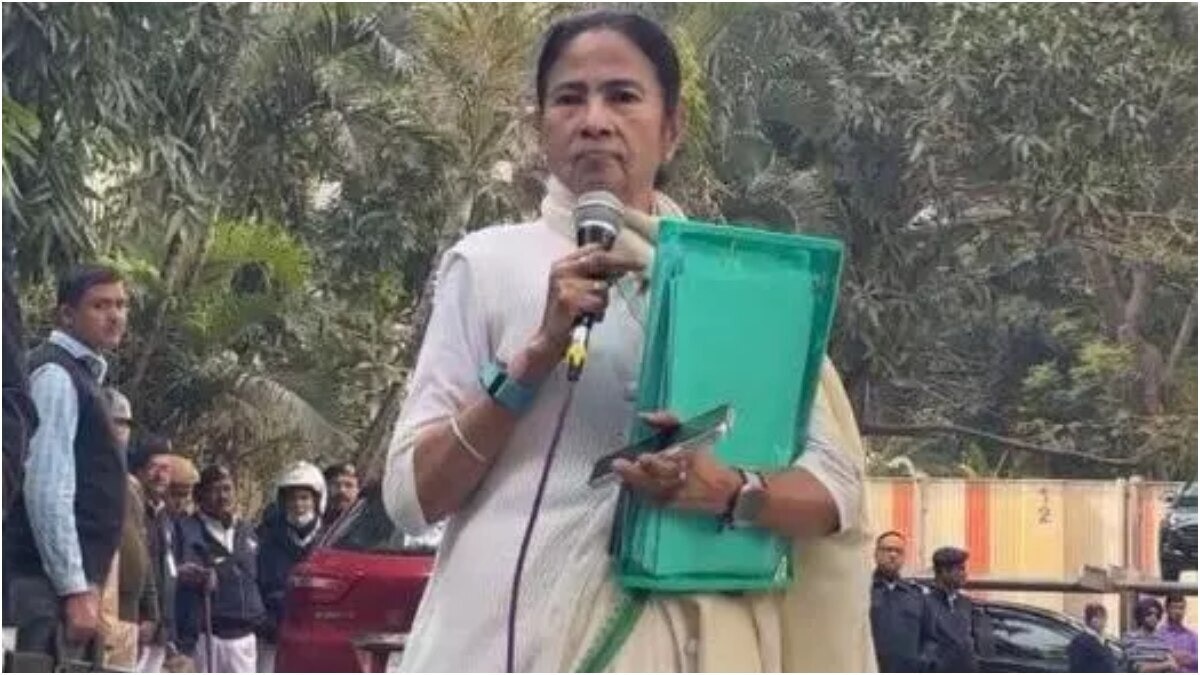
Can ED go to cops if CM barges in during raid? Supreme Court asks Bengal
India Today
The Supreme Court was hearing West Bengal's objections to the maintainability of the ED plea filed under Article 32. The ED has sought a CBI probe into the alleged obstruction of its raids on I-PAC by Mamata Banerjee and her government.
The Supreme Court on Tuesday asked the West Bengal government if the ED could seek a remedy from the state police over the alleged interference by the Chief Minister during its raids on political consultancy firm I-PAC. The court was hearing Bengal's objections to the maintainability of the plea filed by the ED and its officers under Article 32. The ED has sought a CBI probe into the alleged obstruction of its raids on I-PAC by Mamata Banerjee and her government.
Opposing the ED's plea, senior advocate Kapil Sibal, representing Bengal, argued that the ED cannot file a petition under Article 32 when a remedy to approach the state police was available to it. Article 32 gives citizens the right to seek constitutional remedies from the Supreme Court over a violation of fundamental rights.
To this, the top court asked if approaching the state police for a remedy would be appropriate when the charges are against the state government itself.
"The Chief Minister barges into an ED investigation, and your idea of remedy for the ED is to go to the state government, which is headed by the CM and inform them about it and seek a remedy?" Justice Prashant Kumar Mishra said. The Supreme Court bench also comprised Justice NV Anjaria.
Sibal said if there was any interference, the state police could investigate the matter. He also underlined that the court should not assume that the Chief Minister had committed any offence.
The senior advocate further argued that allowing the ED to invoke writ jurisdiction under Article 32 would open a "Pandora's box". Sibal underscored that probe agencies can't claim they have a fundamental right to investigate.


Proposed changes to the transgender law trigger outrage over exclusion, mandatory certification, and the rollback of self-identification rights.

India's artillery strength sees a steady build-up with new Pinaka regiments, but the bigger plan points to a much larger force and more advanced systems in the coming years.

MK Stalin attacks PM Modi's 'be prepared' remark, questions if the Centre is ready to protect citizens amid the West Asia crisis.

The ongoing Budget Session of Parliament may be extended beyond April 2. According to sources, the government is considering a dedicated two-day session to push through amendments to the Women's Reservation Act.

The official announcement of the result will take place at 2.30 pm at the party's national headquarters in Delhi.

A bench of Justices PK Mishra and NV Anjaria further ruled that a Dalit who converts to Christianity cannot invoke provisions of the Scheduled Castes and Scheduled Tribes (Prevention of Atrocities) Act.

As the long-running cruise drugs case resurfaces, Sameer Wankhede rejects bribery claims in court, even as judges question the evidence and the probe drags on without a chargesheet.


The woman's father identified the accused outside the theatre after the screening and started beating him. He was also joined by some passersby.

One of the pillion riders, wearing a helmet, is seen holding a beer bottle and drinking from it during the ride. The rider and another pillion passenger appear without helmets.

The government's move to introduce the Central Armed Police Forces (CAPF) Bill in the Rajya Sabha ran into trouble early, after Opposition parties, including the Trinamool Congress, objected to procedural lapses, prompting a halt before the bill could be tabled.

A bench led by Chief Justice of India Justice Suryakant expressed strong concern over both the investigation and the circumstances in which the child's statement was recorded.