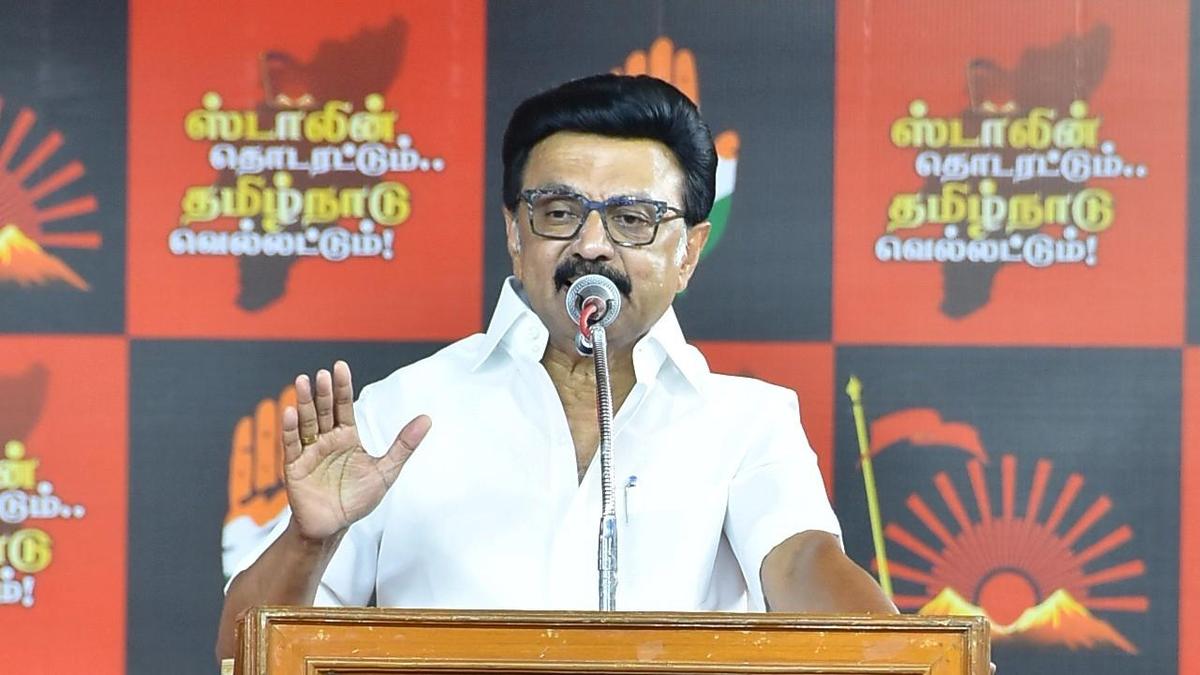
Stalin, Dharmendra Pradhan clash over CBSE’s three-language formula ahead of T.N. polls
The Hindu
Tamil Nadu's CM Stalin and Union Minister Pradhan clash over the controversial three-language formula amid upcoming elections, sparking heated debate.
With the Tamil Nadu Assembly election around the corner, the Central Board of Secondary Education (CBSE) announcement that it will implement the three-language formula in a phased manner from 2026-27 kicked off a war of words between the DMK government in the State and the BJP-led regime at the Centre on “Hindi imposition” versus “progressive and inclusive multilingualism”.
Tamil Nadu Chief Minister M.K. Stalin slammed the CBSE’s move, which is driven by the National Education Policy 2020, arguing that it is a “covert” way of “imposing” Hindi on non-Hindi speaking States with no “reciprocity”. He demanded that his opponents in the State — the AIADMK and their NDA allies — choose whether they would support the policy, or whether they would, “for once, stand up for the rights, identity, and future of our students.”
Union Education Minister Dharmendra Pradhan hit back, saying that this “narrative” was a “tired attempt to mask political failures.” He added that “mischaracterising” the policy to portray multilingualism as a threat was “misplaced”.
The three-language policy is a “calculated and deeply concerning attempt at linguistic imposition that vindicates our long-standing apprehensions,” Mr. Stalin said, adding that it was being advanced “under the guise of promoting ‘Indian languages’.” Calling out “the stark and unacceptable irony,” the CM said: “The same union government that has failed to make Tamil a mandatory language in Kendriya Vidyalaya Sangathan schools - and has consistently failed to appoint adequate Tamil teachers - now seeks to lecture States on promoting Indian languages. This is not commitment; this is rank hypocrisy.”
Mr. Stalin added, “The union government appears determined to impose Hindi, brushing aside the legitimate, consistent, and democratic concerns raised by Tamil Nadu and several other States.” He called this approach a “direct affront” to the principles of cooperative federalism and an “insult” to the linguistic identity of millions of Indians.
In response, Mr. Pradhan said, “By misrepresenting a flexible policy as ‘compulsory Hindi’, you are not defending Tamil; you are creating barriers that deny our youth the opportunity to become multilingual global leaders... Tamil is not weakened by the learning of additional languages; it is enriched when its speakers are multilingual, confident and linguistically empowered.”


Congress accuses Rajasthan police of inaction in Ajmer Dalit rape case, alleging protection for the accused and rising atrocities.

Thirumavalavan withdraws from the 2026 Assembly election to strengthen the DMK-led alliance, fielding Jothimani instead.

Prominent DMK and AIADMK candidates file nominations in Madurai district ahead of the upcoming assembly elections.

A total of 58 nominations were filed on Saturday for the five Assembly constituencies in the district for the April 23 Assembly elections. Candidates filed 15 nominations for Tirunelveli, 10 for Palayamkottai and Ambasamudram each, 16 for Nanguneri and seven for Radhapuram on Saturday.

Uddhav Thackeray may support Sunetra Pawar in Baramati bypoll, while Congress insists on fielding its own candidate.

BJP's Puducherry manifesto promises free LPG cylinders, e-scooters for girls, job reservations, and infrastructure upgrades ahead of April polls.

Thousands flocked to Thiruvananthapuram for PM Modi's vibrant roadshow, boosting BJP's campaign ahead of Kerala's 2026 Assembly polls.

Andipatti people’s woes remain unresolved

Thiruvadanai -- ‘Rice Bowl’ of Ramanathapuram -- faces water scarcity, administrative limbo

Fishermen seek fair representation in Colachel constituency

DRDO's Director General highlights the need for youth to adapt and change careers multiple times amid evolving job landscapes.

A Mangaluru court sentences drug dealer T.P. Farooque to seven years in prison for ganja possession and sale.

HPV vaccination drive in Vizag aims to vaccinate 800 girls aged 9-14, addressing cervical cancer prevention.