Singularity starts now? OpenAI Cofounder builds AI system that gets better on its own
India Today
AI may soon become so smart that it can improve itself. While this might sound like science fiction or something that could happen a decade from now, an experimental project by an OpenAI co-founder has developed an AI system which is capable enough to autonomously run experiments to improve its own models.
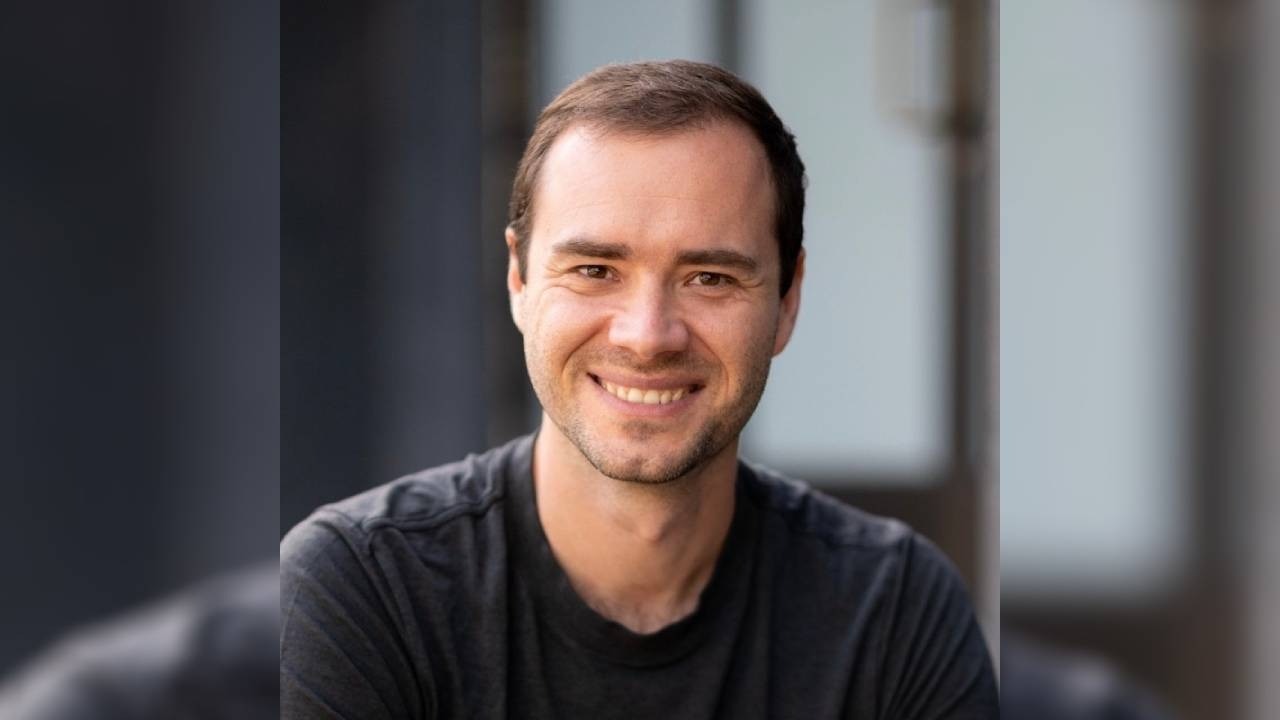
At the start of this year, Tesla and xAI boss Elon Musk predicted that 2026 will be the “year of the Singularity.” Singularity is described as the moment when artificial intelligence becomes so advanced that it begins to surpass human intelligence and starts improving itself. Now, just three months into the year, it seems Musk’s prediction may already be showing early signs. A new experimental project from Andrej Karpathy, one of the early members of OpenAI and former Director of AI at Tesla, shows how AI systems could autonomously run experiments to improve other models.
Karpathy recently introduced a project called “autoresearch.” He built a system in which an AI agent repeatedly modifies and tests the training code of a language model in an automated loop. Instead of human researchers manually adjusting code, testing parametres and evaluating results, this AI agent itself proposes changes to the model, runs experiments, measures performance and keeps the versions that perform better.
In simple terms, Karpathy’s experiment shows how an AI system can try to improve itself without constant human intervention. Sharing results from the project online, Andrej Karpathy revealed how the AI agent ran hundreds of experiments autonomously and gradually improved the model step by step.
“Who knew early singularity could be this fun? :) I just confirmed that the improvements autoresearch found over the last two days of (~650) experiments on a depth-12 model transfer well to depth-24, so nanochat is about to get a new leaderboard entry for ‘time to GPT-2’ too. Works,” he wrote in one of his posts on X.
Karpathy’s project quickly became a topic of discussion across the AI community, highlighting how the project could show early indicators of what technologists call the technological singularity. “The singularity has begun. so many signs,” wrote Tobi Lutke in response to the development. Musk also agreed with Lutke's comments.
The term singularity refers to a point where artificial intelligence is expected to surpass human intelligence and begins improving itself rapidly without human intervention. Once machines become capable of designing better versions of themselves, often linked with the idea of Artificial General Intelligence, researchers suggest it could accelerate progress rapidly, potentially leading to breakthroughs far beyond its current capabilities.


Among the fashion standouts at the Oscars 2026 were Nicole Kidman, Teyana Taylor, Priyanka Chopra, Emma Stone, Audrey Nuna, Anne Hathaway and Pedro Pascal.

Thousands of degree certificates and mark sheets have remained unclaimed in several colleges for nearly four decades. Students passed their exams but never returned to collect their documents, leaving institutions struggling to store the growing pile of academic records.

In a small classroom in Aligarh's government school, waste materials are turning into machines. A government school teacher is guiding students to build simple robots and drones using scrap, helping them understand science through hands-on learning.

Elon Musk's satellite internet service, Starlink, is now available in Kuwait. This announcement comes at a time when the country has found itself impacted by the US-Israel war with Iran.

Delhi University has rejected Rahul Gandhi's claim of caste bias in interviews. In a post on X, the university said the Leader of the Opposition should verify facts before making such statements.

Apple is rumoured to be making its debut in the foldable smartphone market this year with the iPhone fold. From the design to the features, and the expected price, here is everything you need to know about the first-ever foldable iPhone.

The Central Board of Secondary Education, CBSE, has cancelled the Class 12 board examinations in several Middle Eastern countries due to the ongoing US-Israel-Iran war. The board also confirmed that the mechanism for announcing results for affected students will be announced at a later stage.

Chinese giant ByteDance has reportedly suspended its plans to release its latest AI video generation model, SeeDance 2.0, after major Hollywood studios raised disputes over copyright violations.

Bidyut Innovation MD Rahul Shah spoke during the India Today Conclave 2026. Shah reckoned that India could soon have its own robots competing those from other countries, perhaps at a fraction of the cost.

Alpha High School, an AI-driven education institute is rolling out a new course with a promise – earn $1 million by the time you graduate or you get a full refund. Here is how it works.

Devendra Singh Chaplot, an IIT Bombay alum has joined xAI to build super intelligence. His arrival was welcomed by xAI chief Elon Musk. Here is everything you need to know about xAI's latest Indian origin member.

Blending heritage with modern technology, Royal Enfield is preparing to enter the electric motorcycle space with the upcoming Royal Enfield Flying Flea C6, expected to debut in India around mid-2026.

IIT Madras and the Delhi government have signed an MoU to study 'smog-eating' surfaces to help tackle air pollution in the capital.