Shutdown, protest rallies in Ladakh over Statehood, Sixth Schedule demands
The Hindu
Protest rallies in Ladakh demand Statehood and Sixth Schedule inclusion, highlighting ongoing struggles for rights and representation.
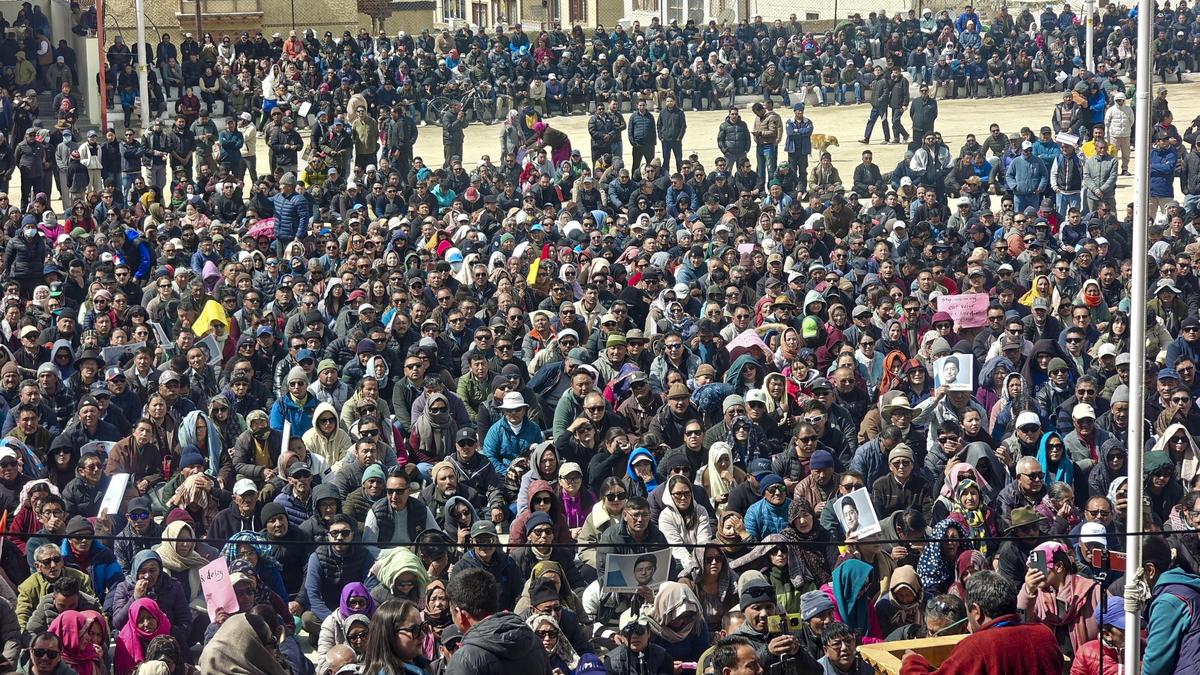
Protest rallies were held in Ladakh on Monday (March 16, 2026), marking the first instance since violence erupted in September last year, on the call of the socio-political groupings of the Kargil Democratic Alliance (KDA) and the Leh Apex Body (LAB) to press for Statehood status and inclusion in the Sixth Schedule.
Hundreds of locals marched from Singay Namgyal Chowk up to Leh Polo Ground in Leh town. In Kargil, protesters held a rally in the town that was attended by hundreds of locals. The KDA and the LAB had called for shutdown on March 16 in Ladakh. Protesters were carrying banners and raising slogans in favour of Statehood and the Sixth Schedule. They raised slogans that the current Union Territory status was unacceptable to the region. Ladakah was carved out as a U.T. in 2019 from the Kashmir division of erstwhile State of Jammu & Kashmir.
“For the last six years, the people of Ladakh have been deprived of democratic representation and constitutional safeguards. The voices from the mountains are growing louder for justice, rights, and restoration of democracy. Although our activist Sonam Wangchuk has been released, our struggle for legitimate rights will continue. We also demand the release of Deldan Namgyal and Smanla Dorjey,” said Sajjad Kargili, a member of the KDA.
In Leh, the protesters also recalled those who died in the protests in September. On September 24, 2025, four civilians were killed and around 90 persons were injured in protests. It was followed by the arrest of climate activist Sonam Wangchuk on September 26 under the National Security Act (NSA). Leh witnessed imposition of multiple spells of curfew and internet outage.
“The decision to revoke the detention order of Mr. Wangchuk symbolises a triumph for Ladakh and restores the dignity of the community, which had been unfairly targeted by such accusations. While the removal of the detention order is a significant achievement, the broader demands of the movement remain unresolved. The relay protests are being conducted with full commitment to non-violence,” said Dorjay Lakrook, chairman of LAB.


Dindigul campus highlights include awards, collaborations, community initiatives, and skill training programs, fostering education and environmental awareness.

Arasinamakki records 26 mm of rainfall, the highest in Dakshina Kannada district, according to KSNDMC reports.

Almost 50% of Assam's voters are women as nominations begin for the April 9 elections, highlighting significant female electoral participation.

Rising polypropylene sack costs amid crude oil fluctuations are impacting rice millers and traders in Tiruchi, increasing packaging expenses.

Chinnaswamy Stadium receives government clearance to host IPL 2026, following upgrades and improved security measures for fans.

Over 40,000 students from Dakshina Kannada and Udupi will take the SSLC-1 exam from March 18 to April 2.

ECI directs posting of new Superintendents of Police for Erode, Karur, Nagapattinam, and Virudhunagar ahead of elections.

Families in central Nigeria are digging deep mining shafts in their own backyards in search of minerals such as tin and columbite. In communities around Jos in Plateau state, the practice has spread as poverty and lack of jobs push residents into artisanal mining. This video looks at why backyard mining is spreading in Jos, the dangers involved, and how poverty is pushing families to dig for survival beneath their own homes.

BJP leader Nainar Nagenthran condemns Aadhav Arjuna’s inappropriate remarks against Rajinikanth, urging an apology and public distancing.

Palla criticizes YSRCP for hindering development and driving away industries, impacting job creation in Andhra Pradesh.

Protest rallies in Ladakh demand Statehood and Sixth Schedule inclusion, highlighting ongoing struggles for rights and representation.

Shivamogga DC confirms steady domestic LPG supply; urges consumers to avoid panic and overstocking amid circulating rumors.

Sunsure Energy secures ₹606 cr debt financing from Aseem Infra and RBL Bank for projects across Maharashtra and Uttar Pradesh