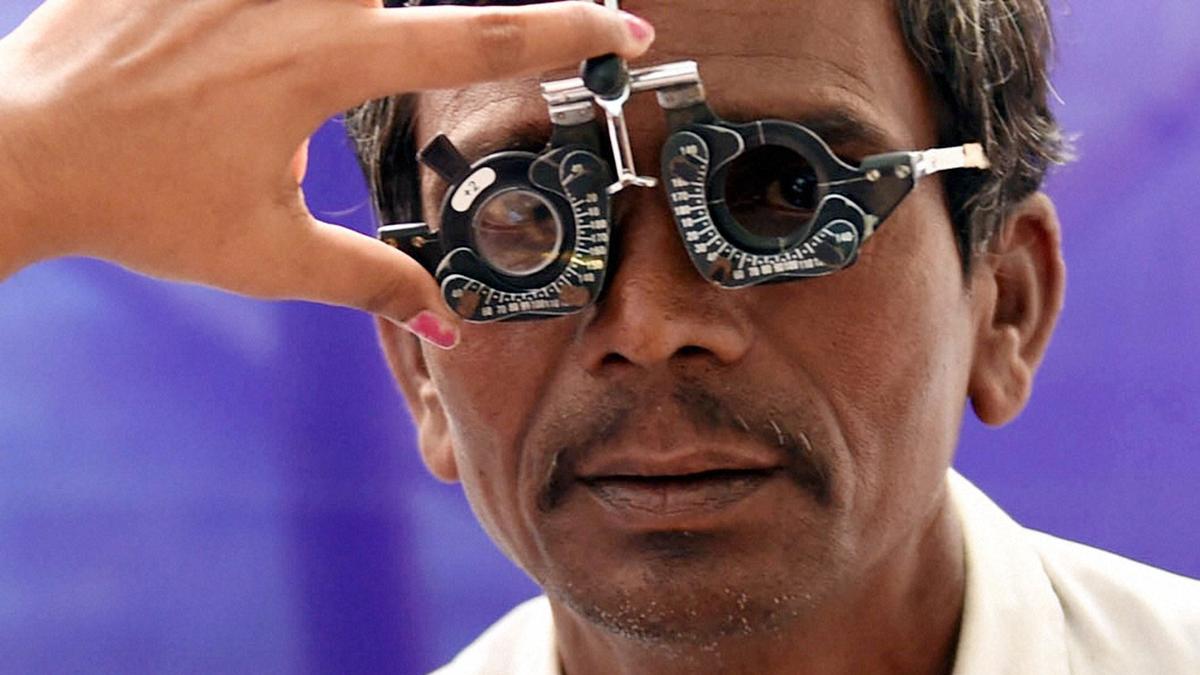
Seeing the magic of artificial intelligence applications in ophthalmology
The Hindu
AI is being used in ophthalmology to analyse data, detect & classify retinal diseases, recommend personalised treatment plans, assist in precision surgery, & discover new drugs. It is important to ensure accuracy of data & compliance with regulatory requirements & constant collaboration with ophthalmologists. AI should complement, not replace, human clinicians.
We all know, by now, that Artificial Intelligence (AI) is a branch of computer science that focuses on creating computer systems and software that can perform tasks like problem-solving, learning, reasoning, understanding natural language, and perceiving the environment. The aim of AI is to develop systems that can mimic and replicate various aspects of human intelligence or cognitive functions, and thereby automate and enhance processes, make predictions, assist in decision-making, and improve the efficiency and capabilities of systems and devices.
If AI is touching everything in modern life, then it cannot possibly leave out medicine, can it?
There are certain aspects of artificial intelligence that make it particularly useful in medicine. For instance, AI can analyse data from sensors and predict when equipment or machinery will require maintenance, reducing downtime. This, as you can imagine, will be massively useful in hospitals and clinics, particularly in procedures and diagnostics, where we constantly use some form of machinery to treat patients. Additionally, AI can be used, with machine learning, to analyse and interpret images and videos, making it useful in reading and coming up with interpretations of scans and other diagnostics, based on the data we have fed it already. Already, robotics has been employed in precision surgery, with good outcomes, and faster recovery periods. AI is being used in commerce to tailor recommendations on social media, and it is to be seen whether this application might assist in patient care too.
But the basic question that we must ask in medicine is: can a computer perform better than a human brain? Then the answer is Yes, particularly in the field of ophthalmology.
AI has made significant advancements in the field of ophthalmology, offering a range of potential applications that can improve patient care and enhance the efficiency of eye disease diagnosis and treatment. In fact, we are among the early adopters of AI for health care, and some of the key uses are:
Retinal disease diagnosis: AI algorithms can analyse retinal images, such as fundus photographs and optical coherence tomography (OCT) scans, to detect and classify various retinal diseases, including diabetic retinopathy, age-related macular degeneration (AMD), and glaucoma. These AI systems can help identify diseases at an early stage, allowing for timely treatment and reducing the risk of vision loss.
Automated screening: AI-powered screening programmes can assist in the early identification of eye diseases by analysing large datasets of retinal images. This can be particularly useful in regions with limited access to ophthalmologists, and in mobile medical camps.


Explore 2026's wallpaper trends in India, highlighting botanicals and handmade designs that enhance modern homes with nature-inspired aesthetics.

Mercedes-Benz CLA 250+ with EQ Technology review: design, performance, range and features explained. Discover how the new electric CLA combines advanced AI, long range, fast charging and futuristic styling for the next generation of luxury EVs.

AI tool for sparrow conservation

BTS’s comeback with ‘Arirang’ marks a major global music event. When does the album release, and where can you watch their concert live stream? We have all the details

The 2026 U.S. cholesterol guidelines urge starting screening and treatment at 30 to prevent cardiovascular disease effectively.

Olam Festival 2026 in Thiruvananthapuram returns March 27-29 with 120+ vendors, music, art, and cultural zones.

A few storytellers in Thiruvananthapuram share their journeys, challenges, and evolving methods on World Storytelling Day, inspiring young minds.

76-year-old Kurian Jacob from Kerala triumphs with seven medals, including five golds, at the Open Masters Games in Abu Dhabi.

Explore the nature of the human mind as an emergent property of brain activity and complex neural interactions.

CERN's Large Hadron Collider discovers the Xi-cc-plus particle, enhancing understanding of quantum mechanics and baryon behavior.

Vibha Batra’s latest book, Spotless (Hachette India) is a novel in verse for young adults

In its first edition, the Madras Art Salon spotlights the works of journalist and artist Narayan Lakshman at The Botanical Club, a social space in the British Deputy High Commission, Chennai

Cholesterol enhances melanoma cell invasion by making nuclei squishier, revealing a potential treatment target in cancer progression.