Scientists untangle mystery about the universe's earliest galaxies
The Hindu
The existence of massive and mature galaxies during the universe’s infancy defied expectations and baffled scientists. It left them scrambling for an explanation while questioning the basic tenets of cosmology
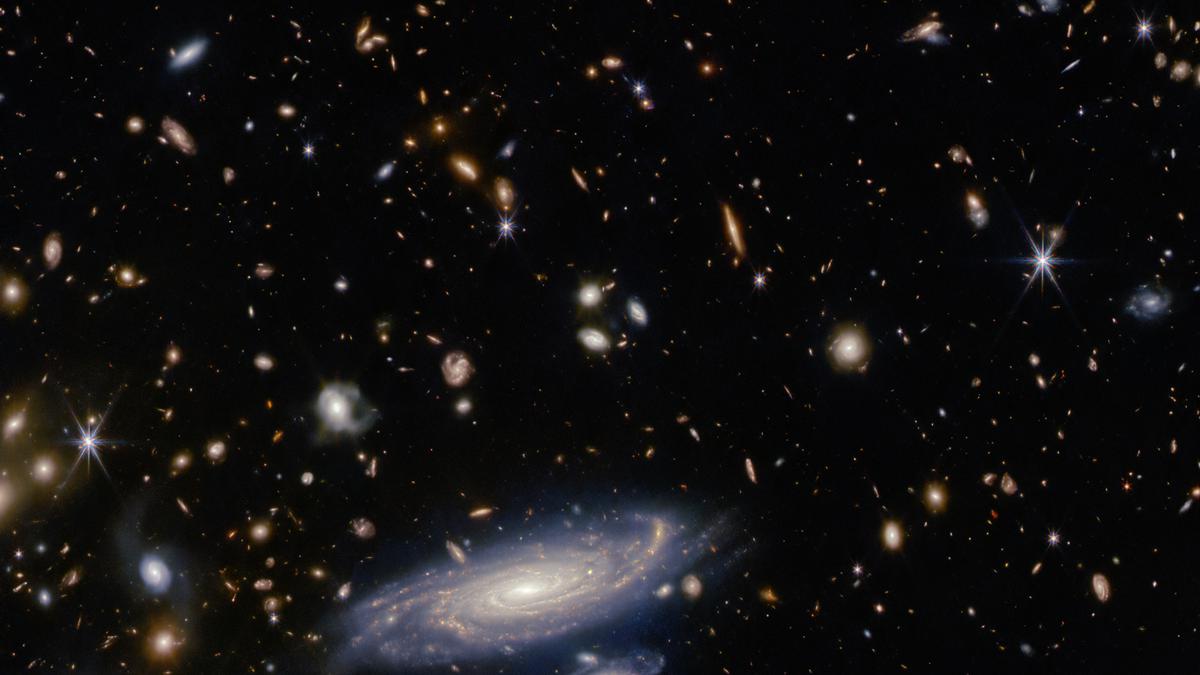
Since beginning operations last year, the James Webb Space Telescope has provided an astonishing glimpse of the early history of our universe, spotting a collection of galaxies dating to the enigmatic epoch called cosmic dawn.
But the existence of what appear to be massive and mature galaxies during the universe's infancy defied expectations - too big and too soon. That left scientists scrambling for an explanation while questioning the basic tenets of cosmology, the science of the origin and development of the universe. A new study may resolve the mystery without ripping up the textbooks.
The researchers used sophisticated computer simulations to model how the earliest galaxies evolved. These indicated that star formation unfolded differently in these galaxies in the first few hundred million years after the Big Bang event 13.8 billion years ago that initiated the universe than it does in large galaxies like our Milky Way populating the cosmos today.
Star formation in the early galaxies occurred in occasional big bursts, they found, rather than at a steady pace. That is important because scientists typically use a galaxy's brightness to gauge how big it is - the collective mass of its millions or billions of stars.
Also Read | Billion-light-year-wide ‘bubble of galaxies’ discovered
So, according to the study, these galaxies may have been relatively small, as expected, but might glow just as brightly as genuinely massive galaxies do - giving a deceptive impression of great mass - because of brilliant bursts of star formation.
"Astronomers can securely measure how bright those early galaxies are because photons (particles of light) are directly detectable and countable, whereas it is much more difficult to tell whether those galaxies are really big or massive. They appear to be big because they are observed to be bright," said Guochao Sun, a postdoctoral fellow in astronomy at Northwestern University in Illinois and lead author of the study published this week in the Astrophysical Journal Letters.


Kannada Development Authority Chairman Purushothama Bilimale on Friday, raised concern over the lack of updated linguistic data and the growing imbalance in language policy frameworks.

India Meteorological Department has issued a thunderstorm forecast for Mancherial, Peddapalli, Jayashankar Bhupalapally, Mulugu, Bhadradri Kothagudem and Mahabubabad districts on Saturday.

Mamata Banerjee unveils 10 commitments for a prosperous Bengal, promising industrial growth, healthcare, education, and 24/7 power supply.

Khushi IVF Centre launches in Hubballi, offering advanced fertility treatments and affordable services for couples in North Karnataka.

Senior railway engineer inspects the electrified Thiruthuraipoondi-Pattukottai stretch, ensuring readiness for operations and safety standards.

World Sparrow Day in Mysuru emphasised sparrow conservation, featuring educational games, eco-friendly initiatives, and community pledges for biodiversity.

After months of uncertainty, cricket will make a comeback at the iconic M. Chinnaswamy stadium in Bengaluru on March 28.

A tragic collision on the Salem-Coimbatore Highway kills eight, including a pregnant woman and an infant, injuring four others.

Kodagu district faces high human-wildlife conflict deaths; Minister mandates urgent repairs to elephant trenches and enhanced safety measures.

Telangana's 2026-27 budget allocates ₹875 crore for IT, reflecting significant growth in exports and employment in the sector.

Tiruchi observes World Down Syndrome Day, emphasizing early intervention, inclusion, and social acceptance for individuals with Down Syndrome.

Eight crore devotees are expected to participate in the Godavari Pushkaralu, celebrated once every 12 years in Telangana.

CBI interrogates Anil Ambani for second day over ₹2,929-crore cheating case linked to Reliance Communications and SBI.