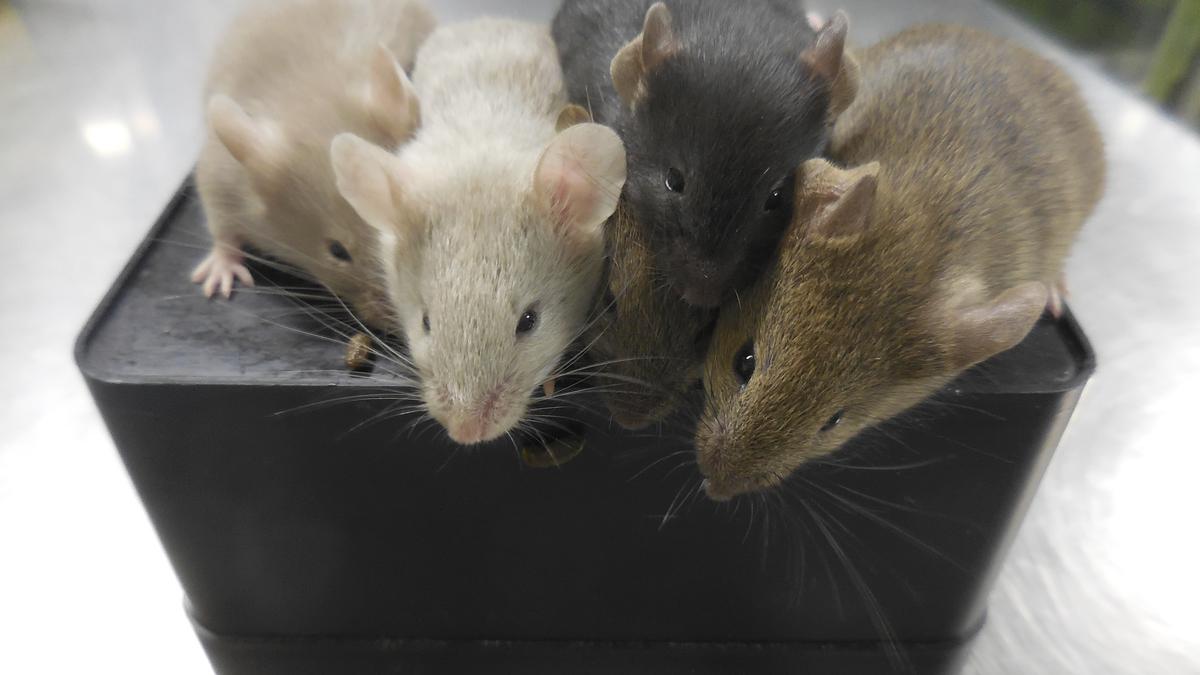
Scientists create mice with cells from 2 males for 1st time
The Hindu
The pups appeared to grow normally and were able to become parents themselves in the usual way, researchers said
For the first time, scientists have created baby mice from two males.
This raises the distant possibility of using the same technique for people – although experts caution that very few mouse embryos developed into live mouse pups and no one knows whether it would work for humans.
Still, “It’s a very clever strategy," said Diana Laird, a stem cell and reproductive expert at the University of California, San Francisco, who was not involved in the research. "It’s an important step in both stem cell and reproductive biology.”
Scientists described their work in a study published Wednesday in the journal Nature.
First, they took skin cells from the tails of male mice and transformed them into “induced pluripotent stem cells,” which can develop into many different types of cells or tissues. Then, through a process that involved growing them and treating them with a drug, they converted male mouse stem cells into female cells and produced functional egg cells. Finally, they fertilized those eggs and implanted the embryos into female mice. About 1% of the embryos – 7 out of 630 – grew into live mouse pups.
The pups appeared to grow normally and were able to become parents themselves in the usual way, research leader Katsuhiko Hayashi of Kyushu University and Osaka University in Japan told fellow scientists at the Third International Summit on Human Genome Editing last week.
In a commentary published alongside the Nature study, Laird and her colleague, Jonathan Bayerl, said the work “opens up new avenues in reproductive biology and fertility research" for animals and people. Down the road, for example, it might be possible to reproduce endangered mammals from a single male.


Justice Bhuyan emphasizes the judiciary's role as impartial, condemning reckless criminal cases and advocating for dissent and fair bail practices.

Vijay announces candidates for all 30 Puducherry Assembly segments as TVK prepares to contest independently on April 9.

Kerala LDF ministers declare assets nearing ₹2 crore each amid upcoming elections, revealing financial details and legal challenges.

Sunil Ambekar of RSS discusses organisational changes and initiatives to unify India and address social challenges in an exclusive interview.

Pinarayi Vijayan predicts the BJP will fail again in Kerala, emphasising the Left's enduring strength and commitment to development.

Small eateries in Coimbatore face operational challenges due to LPG cylinder shortages, impacting service and food prices.

Assembly polls 2026: Follow updates from The Hindu on the upcoming elections in five States, on March 22, 2026

Palla urges NDA leaders to unite for grassroots outreach, enhancing public trust through balanced welfare and development initiatives.

Horses shone at Auroville's 2026 event, showcasing equestrian talent through dressage, derby, and show jumping competitions.

Telangana Governor Shiv Pratap Shukla attends Bihar Foundation Day celebrations in Hyderabad, honoring Bihar's historical and cultural contributions.

Samsung workers protest for the reinstatement of 27 suspended employees, citing unfulfilled promises from the Labour Minister.

The Vice-Chancellor of Rajiv Gandhi University of Health Sciences (RGUHS) B. C. Bhagavan said on Sunday that the university will soon open a research centre on Yoga and Naturopathy on 60-acre land in Bengaluru.

UT Matters: Construction of Uppar drain road overbridge in Puducherry to be completed in four months, amid traffic regulations.