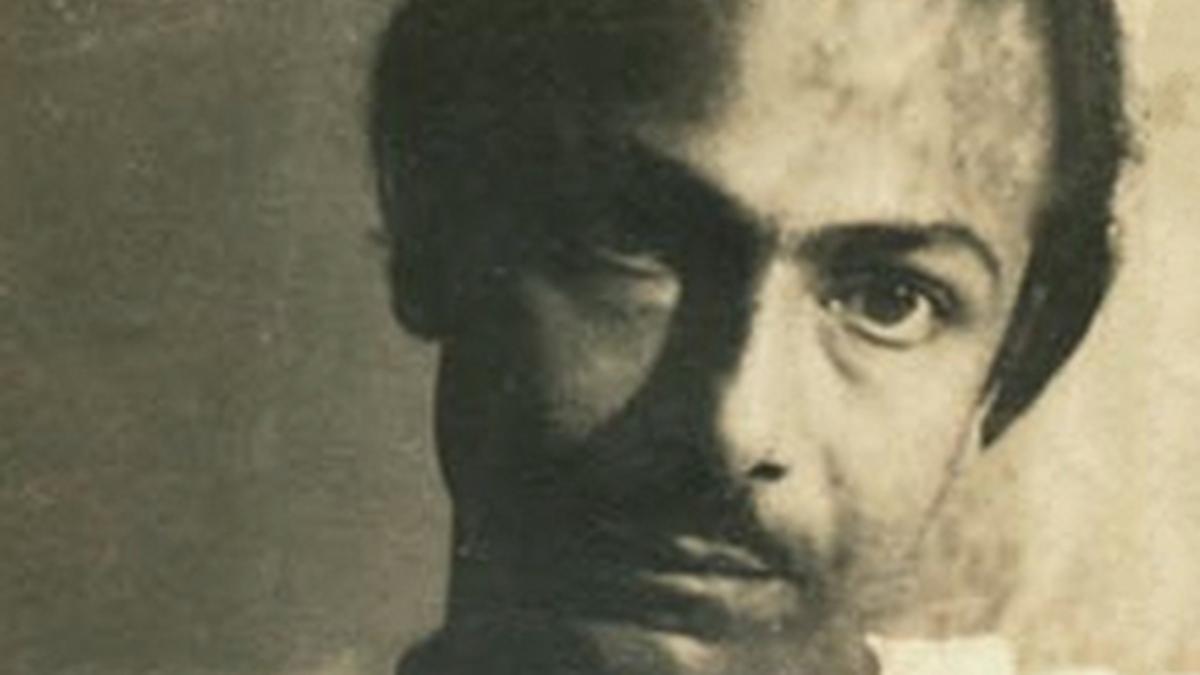
Salil Chowdhury’s music was high on melody and reflected his socio-political ideologies too
The Hindu
2025 marks the centenary celebrations of composer-writer-poet Salil Chowdhury
As I drove towards the hills to get rid of the scorching Delhi heat this past week, Salil Chowdhury was my trusted companion. Of course, the conversation began with the ultimate travel song, ‘Suhana safar aur ye mausam haseen’ (Madhumati), but, as rain clouds gathered, the subtle undertone of longing and wistfulness in Mukesh’s voice gave way to an interplay of rain and romance in Lata Mangeshkar’s ethereal voice in ‘O sajna barkha bahar aayi’ (Parakh). Soon, Talat Mahmood came on with a velvety riposte in the form of ‘Itna na tu mujh se pyaar badha ki main ik badal awara” (Chhaya), and the time melted away.
It was in the hills that the philosophical depth and lyrical beauty of Salil da’s (as he was fondly known) compositions took root. Salil grew up in the tea gardens of Assam, where his father was a medical officer. Surrounded by Europeans, his father Dr. Gyanendra Chowdhury, ardently followed Western classical music and staged plays with plantation workers. His rich collection introduced young Salil to Beethoven and Bach. The discerning can find the influence of Mozart’s symphony in ‘Itna na mujhse’. He learned to play the flute and piano. The ambience of the tea estate not only exposed him to folk traditions of the region, but also to the harsh working conditions of plantation workers. These multi-layered experiences found expression years later in the Nepali folk song, ‘Chhota sa ghar hoga’ in Naukri.
When the family shifted to Calcutta, a teenage Salil underwent a socio-political awakening as Bengal was reeling under a manufactured famine — result of exploitative Colonial policies. The famine catalysed Salil’s involvement with Indian People’s Theatre Association (IPTA), a cultural arm of the Communist Party of India, which used art to address social issues and famine became a central theme in their performances. It shaped his musical and ideological outlook in the years to come.
After becoming a popular voice of resistance against the Colonial rule and feudal values, Salil came up with songs such as ‘Bicharpati’, based on Bengali folk forms of Baul, Keertan and Bhatiyali. Encouraged by influential filmmaker Bimal Roy, Salil shifted base to Bombay. Bimal Roy was impressed by Salil’s poignant story ‘Rickshawala’ about an oppressed peasant forced to become a rickshaw puller in the city. He turned it into the classic Do Bigha Zamin (1953). Bimal’s trust in Salil’s ability to craft music was mirrored in the film’s theme and cemented their partnership.
The song, ‘Dharti kahe pukar ke’, explores rural exploitation and Salil drew inspiration from the Russian Red Army’s march tune. Bimal further consolidated their bond with Parakh, a political satire, again based on a story by Salil. Its music has also withstood the test of time, with Lata picking raag Khamaj-based ‘O sajna’ as one of her all-time favourite. The two created a unique musical synergy where Salil challenged her with complex compositions such as ‘Ja re ud ja re panchhi’ (Maya) and ‘Na jiya lage na’ (Anand) and liberally used her voice in Bangla and Malayalam films as well.
Meanwhile, Salil-Shailendra partnership too continued to grow, so much that, when Raj Kapoor took a neorealist turn with Jagte Raho (1956), he approached Salil. The master lived up to the faith reposed in him with the hauntingly contemplative ‘Zindagi khwab hai, khwab main doob Ja’, followed by the boisterous Bhangra number ‘Main koi jhoot boleya’ with Prem Dhawan. Salil also painted a poignant ode to the motherland in Kabuliwala (1961) with ‘Ae mere pyare watan’ in Manna Dey’s voice.
Jagte Raho’s background score also has seeds of ‘Aaja re pardesi’, which Salil later developed (perhaps, on the advise of Shailendra) in his folk-classical style for Madhumati. Shailendra and Lata made Salil’s simple-yet-intricate composition special by using bicchua (scorpion) in ‘Chaddh gayo paapi bichhua’.


Oscars 2026 security heightened amid FBI warnings of a potential Iranian drone threat ahead of the Hollywood ceremony.

Directed by Rahul Pandey, the series also stars Naila Grewal, Nidhi Bisht, Anant Joshi, Anjum Batra and Kusha Kapila

A tribute to the versatile actor and comedian V.K. Ramasamy in his birth centenary year.

‘One Piece’ Season 2 review: As the Straw Hats enter the Grand Line, Netflix’s live-action adaptation finds its sea legs with bigger islands, stranger villains and the same stretch-happy sense of boundless adventure

Geeta Gandbhir, the Indian-origin American filmmaker is waves at this year’s Oscars with not one, but two nominations. Her documentaries, ‘The Perfect Neighbor’ and ‘The Devil is Busy’ are in the race for the Academy Award

Directed by filmmaker and environmentalist Pradip Krishen, the film follows a group of "dope-smoking, bellbottom-wearing and vaguely idealistic" final-year students racing to complete their theses.

Alan Ritchson powers through 'War Machine', a lean sci-fi action thriller on Netflix. A competent, Reacher-style chase adventure with nonstop tension and solid set pieces

Explore the Unshelving Memories exhibition in Thiruvananthapuram, showcasing diverse book art by 61 talented artists until March 15.

Oscars 2026 date and timings: Watch the 98th Academy Awards live on March 15, 2026, at 4:30 a.m. IST in India on various platforms.

The 12-day Tribal Art Festival, taking place in Delhi until March 13, brings together more than 75 tribal artists and over 1,000 artworks representing more than 30 tribal art traditions.

Tom Cruise wins Best Actor at the 2026 Saturn Awards, while 'Avatar: Fire and Ash' takes home multiple major honors.

The new God of War is a coming-of-age story that builds Kratos into the formidable warrior seen in later games

Rachel Weisz dazzles in Vladimir, a sharp, sexy Netflix mini‑series that probes power, desire, and academia in eight smart, bingeable episodes