Rising up to the challenge
The Hindu
It took French scientist Jacques Charles less than 100 days to go from launching the first hydrogen-filled balloon to lifting off on one such balloon himself on December 1, 1783! Hop on as A.S.Ganesh takes you on this wonderful balloon ride…
There’s something about balloons that fascinates almost all of humankind. It is probably a fascination that we are born with, as children seem most drawn to it, even though that charm never fades off completely for many people. There was even a period of public interest in hot air balloons called balloonomania that spanned for decades beginning in 1783. What follows is something that happened in that year that helped spark this mania.
You might have heard of the Montgolfier brothers – Joseph-Michel and Jacques Etienne. Aviation pioneers instrumental in the development of hot-air balloons, they came from a family that had made its name manufacturing paper in France for generations. The balloon bug first bit Joseph, who, after building and flying small hot air balloons in 1782, got his brother Jacques on board as well. On June 4, 1783, their balloons were up and about – the first public demonstration of hot-air balloons – in Annonay, France.
Barthélemy Faujas de Saint-Fond was a French geologist, volcanologist and traveller of the time, who was also a member of the Academie Royale at the time. Impatient for a balloon demonstration in Paris, Faujas sold tickets for such a balloon flight and handed over the money to Jacques Alexandre-César Charles.
Born in 1746, Charles had switched to science after clerking in the finance ministry. He experimented with electricity and also came up with a number of inventions, including a hydrometer and a reflecting goniometer.
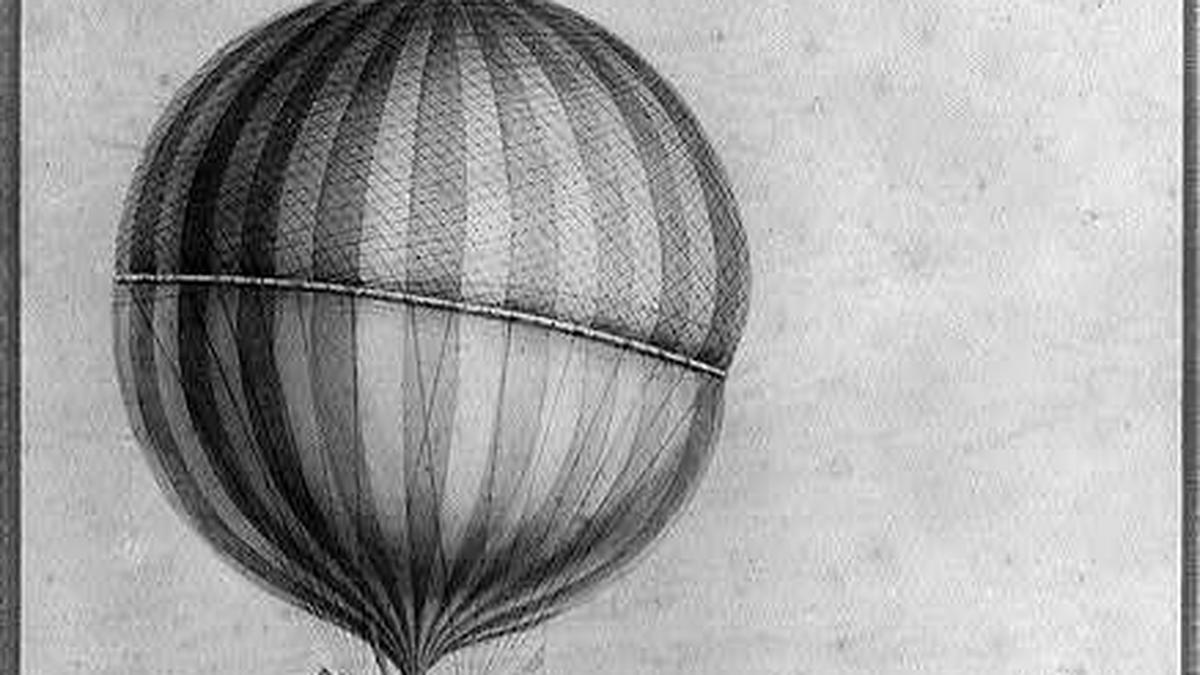
Tasked now with the challenge of designing, constructing, and launching a balloon, Charles got to work. Collaborating with the Robert brothers – Nicolas and Anne-Jean – Charles built the first hydrogen balloon. On August 27, 1783 – 83 days after Montgolfiers’ demonstration – Charles launched the first hydrogen-filled balloon from the Champ de Mars in Paris, the present-day site of the Eiffel Tower.
As the race was on, the Montgolfier brothers were at it again. On September 19, they conducted another demonstration, this time from Versailles. They sent the first living creatures – a sheep, a duck, and a rooster – aboard a balloon. The passengers aboard the first hot-air balloon flight were recovered unharmed, with the only injuries sustained being the result of the sheep kicking the rooster!
A teacher and an experimental aviation pioneer, Jean-François Pilâtre de Rozier rode in a balloon tethered to the ground on October 15. On November 21, he made the first free flight on a hot-air balloon alongside French soldier François Laurent d’Arlandes.


Discover why stars are blue, white, or red, influenced primarily by their surface temperatures and energy emission.

CERN's ALICE collaboration reveals how fragile deuterons survive high-energy collisions, impacting models of cosmic rays and dark matter.

The Doomsday Clock is now set at 85 seconds to midnight, signaling unprecedented global catastrophe risk.

Discover how ancient kangaroos evolved unique adaptations for hopping, enabling them to manage their immense size and weight.

Discover the fascinating process of radioactive decay, where unstable atoms transform, releasing energy in the form of alpha, beta, and gamma emissions.

Explore India's ambitious goal to eliminate malaria by 2030, its progress, challenges, and strategies outlined in key reports.

Discover Kerala's famous banana chips—a delicious souvenir variety for tourists, from classic salted to innovative flavors.

Explore Pantone's 2026 Colour of the Year, Cloud Dancer, blending serenity and history for modern, minimalist interiors.

Calum Scott discusses his new album Avenoir, upcoming concerts in India, and excitement for Harry Styles' latest release.

Sunita Williams expresses FOMO over NASA's Artemis II Moon mission while reflecting on her remarkable space career and Earthly joys.

quiz on palaeoclimatology

A strongly chef led endeavor, Nila has a tasting menu that will focus on one region of India every three months. It kicks off with a Nagaland inspired menu with ingredients such as black rice, anushi, and reimaged smoked pork

Join Chennai's AlterNation Jazz Festival on January 31 to celebrate local artists and enjoy original jazz performances.