Restrictions imposed in Kashmir after protests over killing of Iran’s supreme leader Ali Khamenei
The Hindu
Severe restrictions imposed in Kashmir amid protests over Iran's Supreme Leader Khamenei's killing, impacting movement and schools.
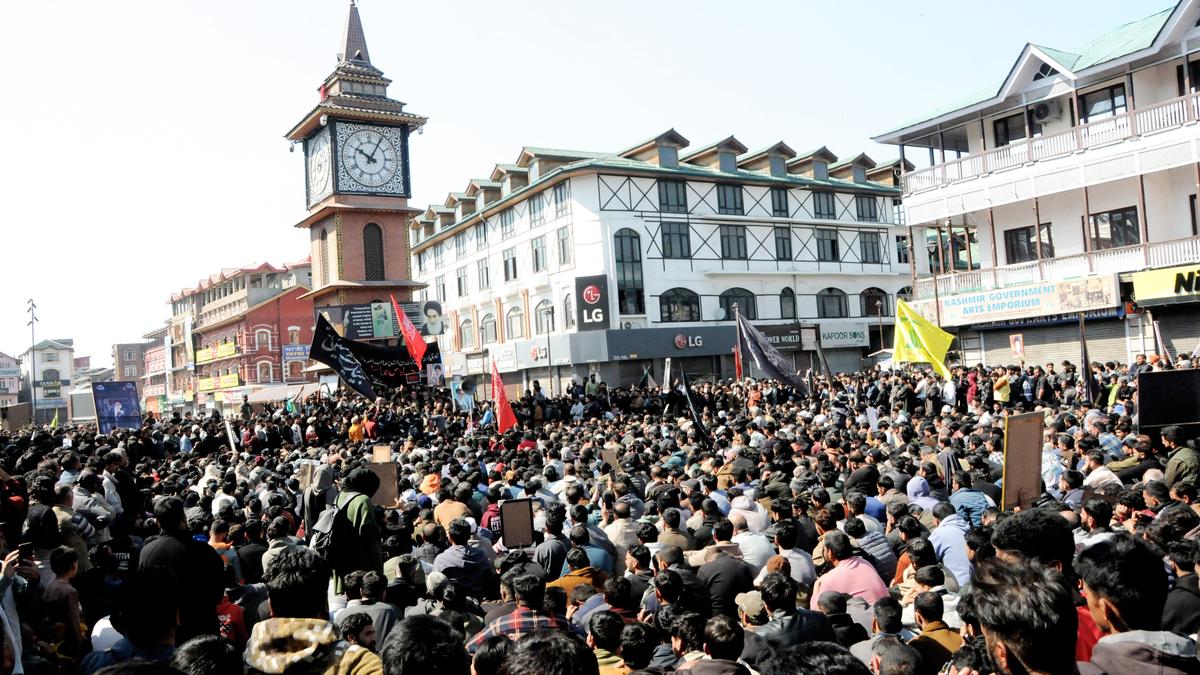
Authorities on Monday (March 2, 2026) imposed severe restrictions on the movement of people in parts of Kashmir where massive street protests were witnessed over the killing of Iran's supreme leader, Ayatollah Ali Khamenei, in a joint strike by the U.S. and Israel.
The iconic Ghanta Ghar at Lal Chowk has been sealed with barricades erected all around it, officials said. They said a large number of police and paramilitary CRPF personnel have been deployed across the city to prevent gatherings of protestors.
Khamenei was killed in an airstrike in Tehran on Saturday (February 28, 2026 ) during a joint Israel-U.S. attack on Iran. Iranian state media confirmed the same on Sunday (March 1, 2026), triggering a wave of protests and mourning across the world, including India.
Kashmir — which has about 15 lakh Shias — witnessed major protests at Lal Chowk, Saida Kadal, Budgam, Bandipora, Anantnag and Pulwama, an official said.
The protesters were seen beating their chests as they shouted anti-U.S. and anti-Israel slogans. The officials said the restrictions were imposed as a precautionary measure to maintain law and order.
Concentrated wires and barricades have been placed at important intersections leading into the city, they said. Similar curbs have been imposed in Shia-dominated areas in other districts of the valley.


Janawadi Mahila Sanghatane to stage protest in Bengaluru on March 5, demanding better policies for women, farmers, and senior citizens.

U.S. officials doubt regime change in Iran post-Khamenei's death, citing skepticism about opposition capabilities amid ongoing military actions.

Explore how Special Intensive Revision is disenfranchising millions of voters, making them feel like outsiders in their own country.

Karnataka MLA Asif Sait expresses condolences for the death of Iran’s leader Ayatollah Syed Ali Khamenei, emphasizing tragedy and resilience.

Students have the power to change the nation, says Ex Diplomat Deepak Vohra

The foremost goal of the People’s Plan Campaign (PPC) in Kerala is to deepen democracy by empowering the Local Governments (LGs) and expanding the space for citizen’s participation in governance.

BRS MLA Kaushik Reddy accuses Karimnagar CP of misusing government vehicles for personal use and demands an inquiry.

Lionel Messi's two goals lead Inter Miami to a thrilling 4-2 comeback victory over Orlando City at Inter&Co Stadium.

To barge in on; Overpriced and expensive

Students protest against increasing restrictions on dissent at Delhi universities amid rustications and campus tensions over caste discrimination issues.

IIT Madras plans to raise ₹70 crore from Indo-MIM IPO to invest in innovation through equity share sales.

Maharashtra Chief Minister Fadnavis highlights investment opportunities in AI, infrastructure, and climate finance during a reception for Canadian leaders.

Madhya Pradesh CM Mohan Yadav releases gharials and turtles at Kuno National Park, enhancing conservation efforts for endangered species.