'Pretty In Pink' Taught Me It Was OK To Be Quirky
HuffPost
Andy Walsh was the first time I saw myself in a character.
At 9 years old, I pulled my mom’s polka-dotted turtleneck sweater up over my legs, and tied the arms tight around my tiny waist like a belt. Growing up, I often turned my mother’s clothing into weird fashion devices. I was also a natural redhead, always the only one in my class and had few ginger-haired role models. The ones I did have, like Pippi Longstocking and Anne of Green Gables, were characters who had a defining trait I recognized: eccentricity.
They had agency over their individuality. But I struggled to make mine feel like a strength rather than a shortcoming. As a child, I begged my mom to let me dye my hair blonde.
“Don’t you know women pay to get your hair color?” she huffed. My bright hair made me stand out. What I wanted then was to blend in with everyone else.
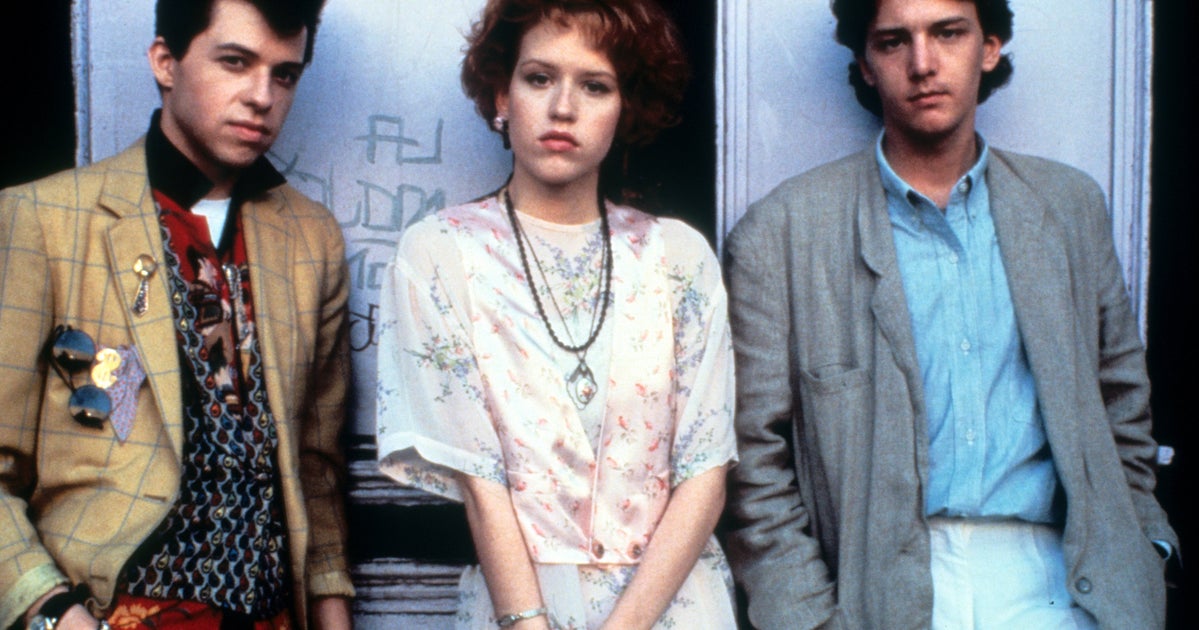
That is, until I saw “Pretty in Pink” and began to understand the things that made me different held more power than I realized. As Andy Walsh, Molly Ringwald embodied a girl I recognized. I was several years younger, but identified with the wavy, red-haired misfit, with freckles like mine and an unapologetic style. Eleven years before Cher chose her outfit from a computer program and plucked it from a rotating closet in “Clueless,” Andy practiced a similar, more relatable ritual. She emerges on screen wearing a dark vest over a white lace blouse, belted pencil skirt, cameo necklace and socks over tights.
“$15 for the shoes, secondhand, I made the rest,” she replies when her dad marvels at her “latest creation” and wonders about the cost. At school, her outcast best friend Duckie (uniquely stylish himself with a bolero tie and blazer) lovingly calls her outfit a “volcanic ensemble.” But the same wardrobe is later ridiculed in class by the rich, blonde popular girl.


The late night host found his name being used in another "moneygrab" attempt by the president.

The "Daily Show" host's monologue on Trump got sidetracked... by a monkey.

Tourette syndrome is widely misunderstood. Here's what experts and advocates want you to know.

One of Minnelli's collaborators previously said the stage and screen icon had felt "sabotaged" by her experience at the 2022 Academy Awards.

Delroy Lindo said he and co-star Michael B. Jordan "did what we had to do" when faced with a racial slur while presenting at Sunday's event.

Fans of the former Disney star are ecstatic that their tween role model is back with a new album and on tour.

The "Last Week Tonight" host delivered a damning deep dive on the platform formerly known as Twitter.

Host Alan Cumming stressed that the outbursts of profanity and slurs were involuntary and apologized for any offense the language may have caused.

Wildcard winners and frontrunners were all in the mix at the British Academy Film Awards in London on Sunday.

Hollywood celebrated the best of film and TV during a chic night out in London on Sunday.

Andy Walsh was the first time I saw myself in a character.

The audacity of these men is through the roof.

"One clip showed Tyra scolding a contestant for ’not having a perfectly flat stomach' and suggesting that she 'more carefully watch her food.'”