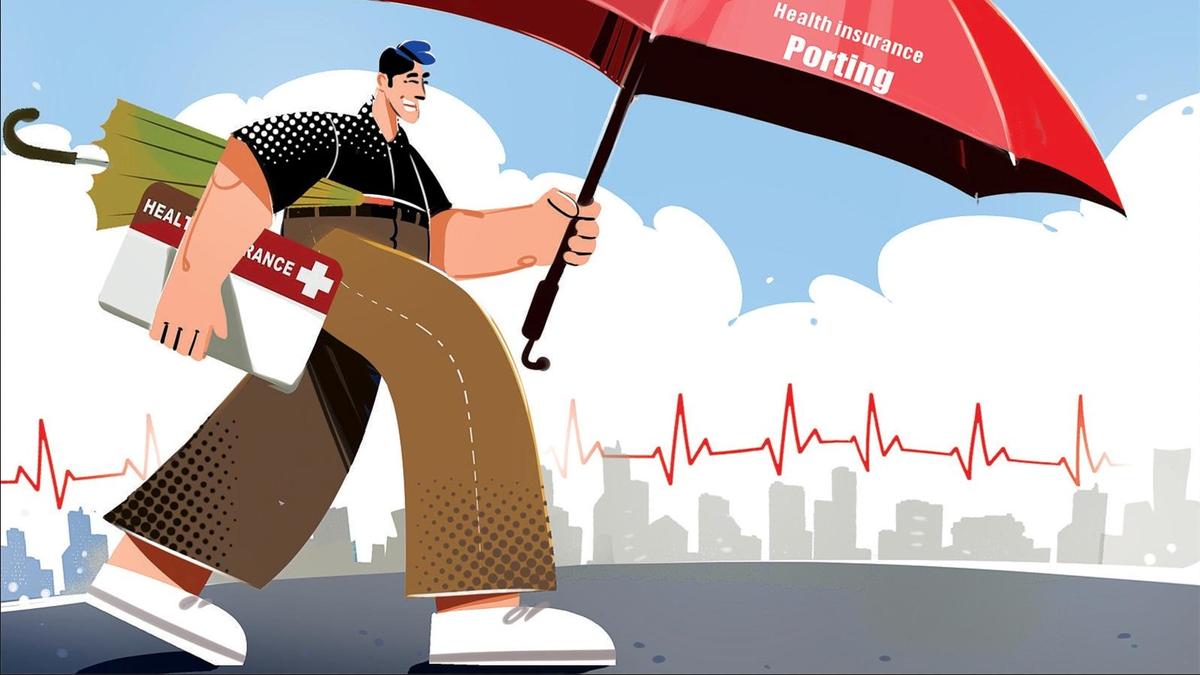
Opportunities, risks in porting health policy Premium
The Hindu
Explore the opportunities and risks of health insurance portability, ensuring informed decisions for better coverage and terms.
A few days ago in this column, we examined the risks some insureds encountered while attempting to port hospitalisation policies. After paying the premium, they found themselves either without cover for a period or saddled with terms materially different from what they had proposed and paid for.
In this context, let us look at how you can port policy smoothly —what advantages you should leverage, and the risks and mistakes you should avoid.
Portability — the facility to shift a hospitalisation insurance policy from one insurer to another — was unveiled in end 2011 by the insurance regulator, opening up options for insured to better terms elsewhere and nudge insurers to focus on customer retention via fair pricing and improved service.
The inspiration was mobile number portability implemented earlier in 2011 giving consumers unprecedented freedom. However, insurance is a far more complex. Porting a health policy was never meant to be a simple “walk in with KYC and switch” exercise, as in the case of mobiles.
Why would you want to port the policy? Primarily, to access better products, get wider coverage or more suitable policy terms with another insurer. This could mean broader risk cover, fewer restrictions, higher sum insured or more competitive pricing.
Equally crucial are service-related considerations — poor responsiveness, unsatisfactory TPA performance or an inadequate hospital network.


India's merchandise exports remain flat in February, with Commerce Secretary warning of a potential dip in March due to trade constraints.

Hard Rock International closes 10 outlets in India, including three cafes in Bengaluru, while Goa hotel remains open.

The booming market for artificial intelligence servers brought Taiwan's Foxconn a 24 percent jump in annual net profit, the company said

In a statement on its website, Adobe said it has in recent years streamlined its sign-up and cancellation processes and made them more transparent.

Stock markets recover as Sensex and Nifty bounce back following a three-day slump, driven by value-buying in blue-chip stocks.

U.S. President Donald Trump’s administration is set to receive a roughly $10 billion fee from investors in the recently completed deal to take control of TikTok’s U.S. business, the Wall Street Journal reported

Meta is planning sweeping layoffs that could affect 20% or more of the company, three sources familiar with the matter told Reuters

Learn how to choose the best personal loan lender by evaluating eligibility, interest rates, and borrowing experience.

Discover why pension planning is essential in modern India to ensure financial security and peace during retirement.

The U.S. has launched two investigations under Section 301 of the Trade Act of 1974 against India and other economies to examine practices that may be ‘unreasonable or discriminatory and burden or restrict U.S. commerce’. One probe examines whether countries, including India, are using excess manufacturing capacity to export to the U.S. in a manner that hurts American businesses, while another looks at whether countries have taken ‘sufficient steps’ to prohibit imports of goods produced with forced labour.

NHAI raises annual pass fee to ₹3,075 from April 1, 2026, streamlining toll payments for FASTag users.

The U.S. probes forced labour in global supply chains, scrutinizing China and India's exports, warns the Global Trade Research Initiative.

The Hindu collection of images of the LPG crisis: War lights a kitchen fire