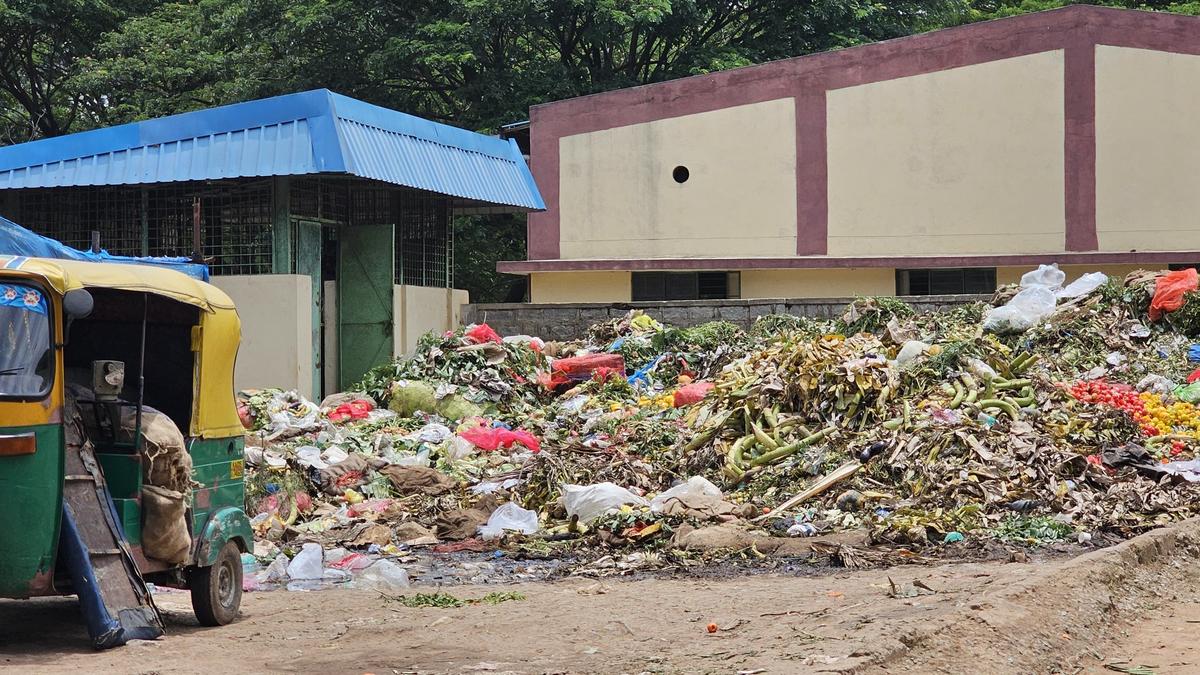
No public-friendly markets or market-friendly waste disposal in Bengaluru
The Hindu
Trapped in the muck is a system that is critical for lakhs of Bengalureans to keep their kitchens afloat. The ugly sight repeats in markets across the city. From Banashankari Market on Kanakapura Road to the HAL Market off Old Airport Road, from Malleswaram to Madiwala, the neglect is stark. But the issues go far beyond big gaps in waste management.
Nothing beats the unbearable stench that hits you while stepping into an open vegetable market in Bengaluru. But if you somehow bypass those mountains of rotting wet waste, a labyrinthine mess of slushy pathways awaits you inside. This is nauseatingly real as monsoon has got here in full force. The time for a cleanup job was yesterday.
Trapped in the muck is a system that is critical for lakhs of Bengalureans to keep their kitchens afloat. The ugly sight repeats in markets across the city. From Banashankari Market on Kanakapura Road to the HAL Market off Old Airport Road, from Malleswaram to Madiwala, the neglect is stark. But the issues go far beyond big gaps in waste management.
Poor maintenance and infrastructural gaps have, for instance, left the once thriving HAL Market in a sorry state today. Yes, the huge wet waste pile right inside the market is symbolic of all that has gone wrong. But walk in deeper, and the full extent of the poor upkeep becomes obvious. The pathways are barely walkable, filled with slush after every rain. Beyond the busy weekends that exacerbate the chaos, the market is virtually empty on weekdays.
Bengaluru Praja Vedike founder Mukunda N.S. says that poor waste management is the fundamental problem with the markets. “The waste has to be cleared effectively, not in a haphazard manner,” he says. “There should be a permanent mechanism in all the markets, where the waste is cleared every two hours. The frequency should be even higher during festival times. The waste collectors should be stationed there itself,” he elaborates.
The market waste, he says, should be transported to the processing centres through a system that is infallible. “The BBMP is now charging a fee for Solid Waste Management from everybody, including bulk generators. Let them collect and use the money there. The waste collection and transport process should be monitored by a committee. Some checks and balances have to be devised to ensure payment only after satisfactory completion of the work.”
Trash is a big problem at the Banashankari open market, which extends on the footpath along the Kanakpura Road between two Metro Stations. The waste accumulates by the hour, but is cleared only twice a day or less. To streamline waste collection and address congestion and chaos, the Praja Vedike had suggested building an underground plaza at Banashankari Circle with space for 150 stalls and eight exits. But this proposal made to former Minister R. Ashoka was not followed up, recalls Mukunda.
The rampant use of plastic has emerged as a key issue with the markets. Shanthi Tummala, a founding member of the HSR Citizen’s Forum and a member of the Solid Waste Management Round Table (SWMRT), says plastic was the main pain point why she stopped going to the Madiwala market. “It has been nine years since the plastic ban came into force, in 2016. I don’t understand why the markets are not getting rid of plastic. As a sustainability practitioner and motivator, I feel de-motivated and depressed,” she laments.


Karnataka contractors threaten a strike over ₹37,370 crore in unpaid bills, alleging increased kickback demands under the Congress government.

Mumbai taxi driver arrested for overcharging a tourist ₹18,000 for a short 400-metre ride amid public outcry.

Facebook India's FY25 profit rises 28% to ₹647 crore, with revenue growing 25% to ₹3,792 crore.

A 64-year-old man was set on fire in Cuddalore over a family dispute; four suspects have been arrested.

Delhi extends water bill surcharge waiver scheme to August 15, benefiting over 330,000 customers with significant rebates.

Explore the Jaipur Literature Festival's vibrant discussions on resistance, diversity, and contemporary issues through powerful storytelling and engaging performances.

Four Maoists surrender in Chhattisgarh's Sukma, citing state rehabilitation policies, amid ongoing efforts to curb Maoist activities.

Kerala's 2026-27 Budget emphasizes balanced development, welfare measures, and sustainability while addressing urbanization and demographic challenges.

Rahul Gandhi honors Mahatma Gandhi's enduring legacy, emphasizing truth's power over hate and the importance of non-violence.

Traffic diversions and congestion warnings issued for air show at Begumpet Airport; plan travel in advance.

Anbumani Ramadoss calls on the Centre to lift the Supreme Court's stay on UGC equity regulations for higher education.

SIT questions actor Jayaram about his involvement with prime accused Unnikrishnan Potti in Sabarimala gold misappropriation case.

Explore Cameron Crowe's memoir, The Uncool, a captivating journey through his extraordinary life and love for music.