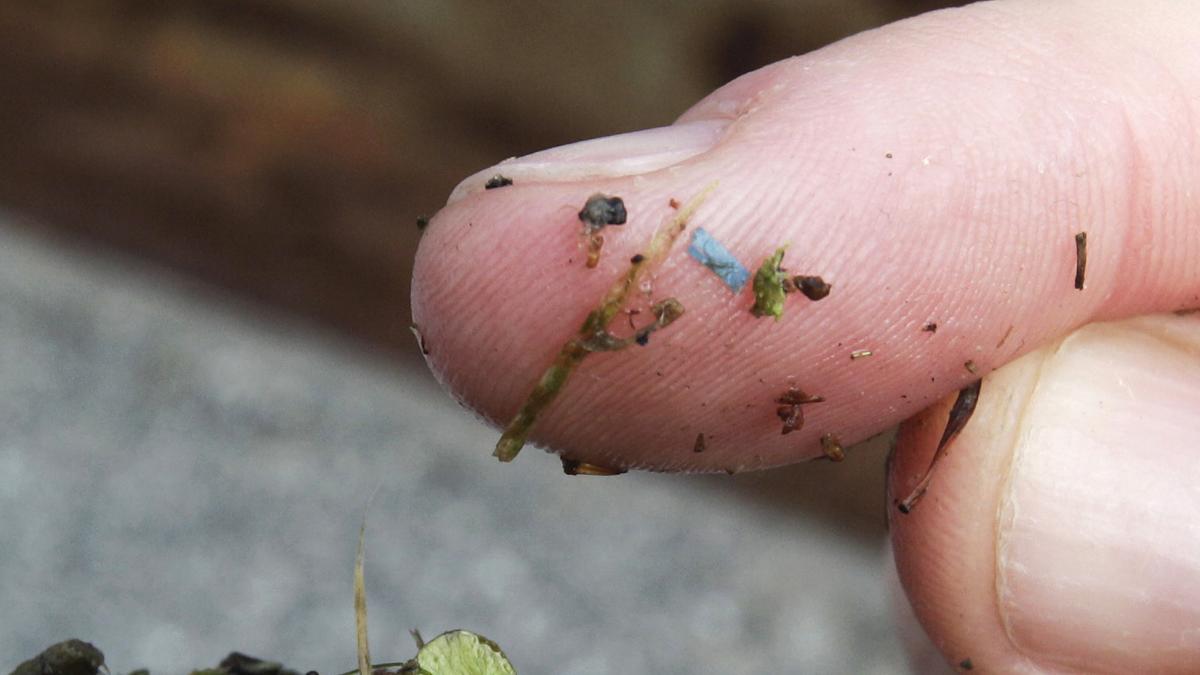
New research finds abundant microplastics in personal care products available in India
The Hindu
Microplastics are terrible for our environment. They accumulate in food chains, reach wastewater treatment facilities and eventually end up in oceans causing aquatic pollution.
Personal care products (PCP) like face washes and shower gels in India contain a significant amount of harmful microplastics, new research has revealed.
According to a study published in the Emerging Contaminants journal and led by Riya K. Alex, a third-year Ph.D Scholar at the Cochin University of Science and Technology, polyethylene (or polythene, PE) is the dominant polymer noted in microplastic emissions from PCPs.
Microplastics are defined as particles of plastic that are under 5mm in range — in terms of microbeads, under 5mm in diameter and mainly in the range of 1-1,000 micrometres.
The research analysed 45 samples of PCP across four categories — face wash, face scrub, shower gel, and body scrub available in Indian market and manufactured in the year 2022. The study especially used products marketed as “eco-friendly”, “natural”, and “organic” to scrutinise the legitimacy of these claims. Around 23.33% of products contained cellulose microbeads, and their biodegradability is unclear. Most of these microbeads were coloured white, followed by blue, pink, yellow, red, and green. According to the researchers, the white colour of microbeads could be intended to hide them from easy identification.
In PCPs, microbeads are widely used for exfoliation, as well as delivery of active ingredients and improved aesthetics, among other uses.
Microbeads in PCP are made of materials like polyethylene, polypropylene, and polyester, with polyethylene being the most dominant polymer identified in more than half the microbeads studied.
On average, 1.34% of the total product of each analysed sample was microbeads. This ranged from 0.04% at the lowest to 5.04% at the highest. In 30 grams of each kind of product, the average quantities of microbeads were noted to be 0.26g, 0.90g,1.24g and 1.74g for face washes, face scrubs, body scrubs, and shower gels respectively. The highest quantities obtained were 2.30g, 1.73g, 1.75g and 4.87g, respectively, whereas the lowest quantities extracted were 0.01g, 0.13g, 0.55g and 0.13g, respectively.


Mercedes-Benz CLA 250+ with EQ Technology review: design, performance, range and features explained. Discover how the new electric CLA combines advanced AI, long range, fast charging and futuristic styling for the next generation of luxury EVs.

AI tool for sparrow conservation

BTS’s comeback with ‘Arirang’ marks a major global music event. When does the album release, and where can you watch their concert live stream? We have all the details

The 2026 U.S. cholesterol guidelines urge starting screening and treatment at 30 to prevent cardiovascular disease effectively.

Olam Festival 2026 in Thiruvananthapuram returns March 27-29 with 120+ vendors, music, art, and cultural zones.

A few storytellers in Thiruvananthapuram share their journeys, challenges, and evolving methods on World Storytelling Day, inspiring young minds.

76-year-old Kurian Jacob from Kerala triumphs with seven medals, including five golds, at the Open Masters Games in Abu Dhabi.

Explore the nature of the human mind as an emergent property of brain activity and complex neural interactions.

CERN's Large Hadron Collider discovers the Xi-cc-plus particle, enhancing understanding of quantum mechanics and baryon behavior.

Vibha Batra’s latest book, Spotless (Hachette India) is a novel in verse for young adults

In its first edition, the Madras Art Salon spotlights the works of journalist and artist Narayan Lakshman at The Botanical Club, a social space in the British Deputy High Commission, Chennai

Cholesterol enhances melanoma cell invasion by making nuclei squishier, revealing a potential treatment target in cancer progression.

The designers reinterpret the Swedish artist’s symbolic forms and colour energy through contemporary resortwear silhouettes