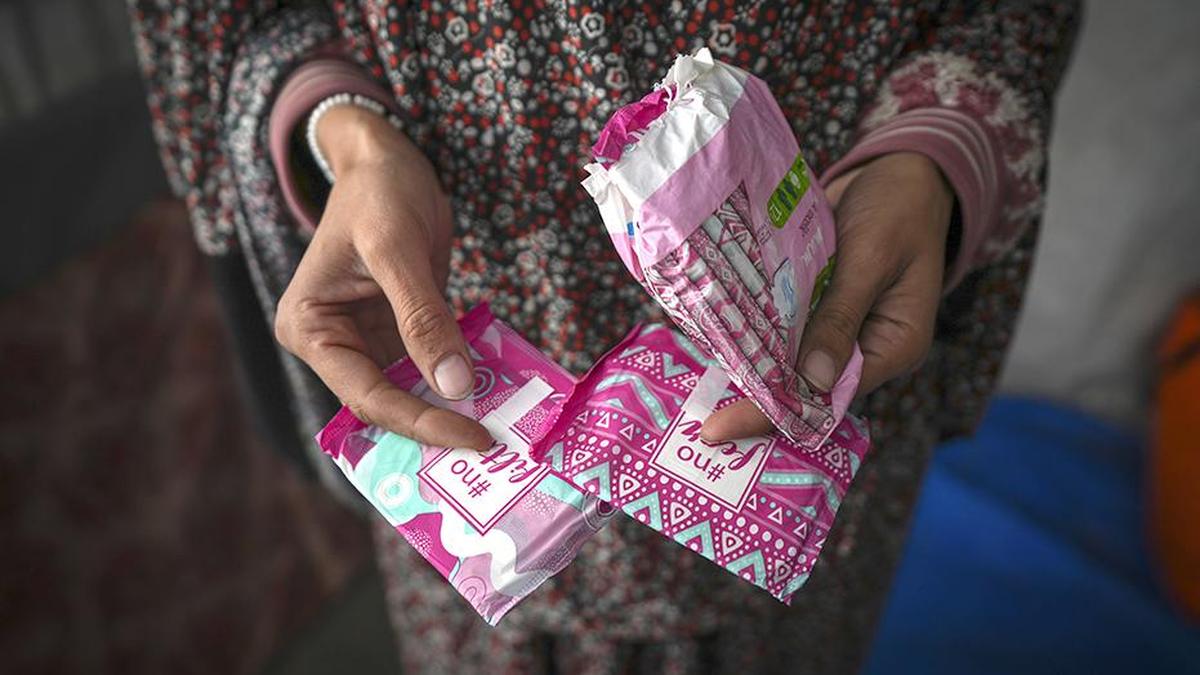
Menstrual pads and tampons can contain toxic substances – here’s what to know about this emerging health issue
The Hindu
Learn about the potential health risks of toxic substances in menstrual pads and tampons and the need for further research.
About half of the global population menstruates at some point in their lives. Disposable products, such as tampons and pads, are some of the most popular products used around the globe to manage menstrual flow.
Unfortunately, studies have shown that many personal care products, including shampoo, lotion, nail polish and menstrual products, contain hazardous chemicals. Items used in or near the vagina are of particular concern because they are in contact with vaginal mucous membranes – the moist tissue lining the inside of the vagina that secretes mucus. These tissues can absorb some chemicals very efficiently.
People use menstrual products 24 hours a day for multiple days monthly, over the course of many years. Tampons, which are used internally, are surrounded by the permeable vaginal mucous membrane for up to eight hours at a time.
I am an environmental epidemiologist, and I study chemical exposure, its sources and its health effects. As a person who menstruates, I also must make my own decisions around menstrual products and manage the challenge of finding accurate information about women’s health risks, which receive less research attentionand funding than men’s health.
In 2024, I co-authored the first paper that detected metals in tampons, including toxic metals like lead and arsenic. My colleagues and I also wrote a review paper that surveyed the scientific literature and found about two dozen studies measuring chemicals in menstrual products.
The various chemicals that these studies detected were typically at concentrations low enough to make their health impact unclear. However, they included chemicals known to disrupt the endocrine system, which makes and controls hormones that are essential for bodies to function.


Discover why wildfire smoke swirls in one direction, influenced by atmospheric layers and buoyant air movement.

From prison cells to clandestine sets, Mohammadi discusses Berlinale-premiered ‘Roya’, resistance, hope and why ‘cinema can’t bring justice — but can create hope’

NTK announces 234 candidates for the 2026 Assembly polls, with Seeman contesting from Karaikudi, seeking social transformation.

Silicon Beach Programme offering 840+ IT job openings in coastal Karnataka, connecting experienced professionals with leading companies and fostering economic growth by turning the region into a tech hub.

Telangana BJP chief Ramchander Rao arrested to prevent his visit to tense Kamareddy amid clashes between political groups.

Kerala Human Rights Commission investigates newborn's death post-C-section amid allegations of medical negligence and public protests.

Discover the Delhi-Meerut Namo Bharat Corridor and Meerut Metro launch details, including routes, fares, and timings.

Maoist leader Devji reportedly surrenders to Telangana police, marking a significant success in anti-Maoist operations.

Prime Minister Narendra Modi's 131st episode of Mann Ki Baat on February 22, 2026

New research suggests that insights from feline cancer could lead to improved breast cancer treatments for humans.

Gunfight erupts in Kishtwar, J&K as Army conducts search for suspected terrorists in Chatroo forests.

Gurugram man faces FIR for allegedly burning his live-in partner's private parts with sanitiser in a brutal attack.

Sharad Pawar, 85, hospitalized in Pune for mild dehydration; doctors confirm his condition is stable and he requires IV fluids.