LPG crisis: India needs to electrify heat and win thermal independence Premium
The Hindu
India must electrify industrial heat to achieve thermal independence amidst the ongoing LPG crisis and geopolitical challenges.
In the industrial town of Morbi in Gujarat, the air usually hums with the roar of gas-fired kilns producing millions of square metres of ceramic tiles. Today, however, nearly a quarter of the town’s ceramic units have gone silent. Nearly a thousand kilometres away in Ludhiana, Punjab, one of India’s largest hosiery and knitwear clusters is facing a similar silence. The reason is geopolitical.
As the conflict between the U.S. and Iran intensifies, the Strait of Hormuz, the world’s most vital oil and gas artery, has turned into a gauntlet. India imports nearly half of its natural gas and immediately felt the pinch — rendered more painful by the Ministry of Petroleum and Natural Gas slashing gas allocations to non-priority industrial sectors to just 65-80% of their contracted volumes.
For manufacturers in clusters like Morbi and Ludhiana, where firms have begun exploring alternatives to gas and other fossil fuels, the present crisis must be a moment of validation as they move towards the large-scale electrification of heat. For others, however, it can seem like an ultimatum to fast-track decarbonisation and, for India overall, a reminder that it needs thermal independence, i.e. a ‘sovereign’ source of heat, rather than just energy independence.
For decades, industrial heat has been synonymous with burning hydrocarbons like coal or gas. In Ludhiana’s textile mills, for instance, large boilers burn gas to create steam used in dyeing and finishing. In Morbi, gas flames bake tiles at temperatures exceeding 1,000 °C.
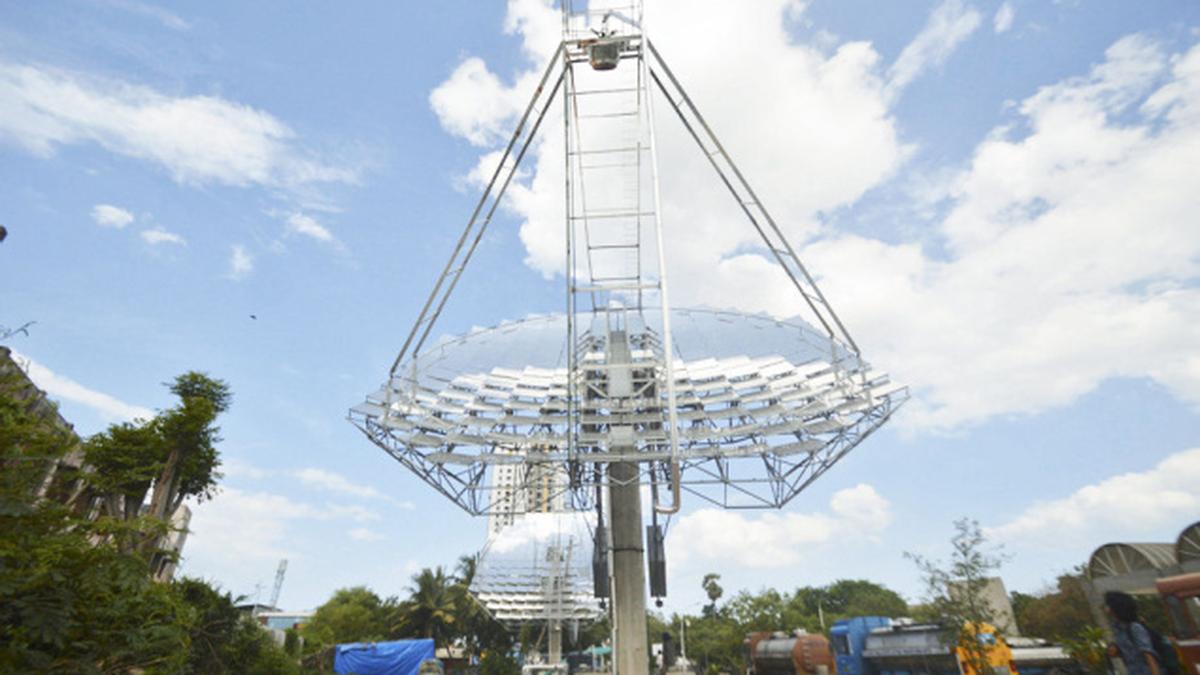
Rooftop solar photovoltaic panels have become common but they are designed to produce electricity, not the raw, intense heat that industries demand, so this is where technologies such as concentrated solar thermal (CST) could become relevant. Whereas photovoltaics use semiconductors to convert renewable sunlight into a stream of electrons, CST uses precisely controlled mirrors to concentrate sunlight onto a receiver, where it heats a fluid like water or molten salt to up to 400 °C.
Most textile processes, including scouring and bleaching, require a temperature between 100 °C and 180 °C. In principle, mills could install parabolic troughs on factory grounds or nearby land to generate pressurised steam directly from sunlight. According to data from the Ministry of New and Renewable Energy, India has a CST potential of 6.4 GW. Adoption, however, remains low — but as gas prices have already tripled due to the war in West Asia, the payback period for a CST installation could also shrink from the current seven years.


The State currently lacks the mature R&D required to develop homegrown technologies.

Madhya Pradesh directs collectors to review LPG supply and prevent black marketing amid ongoing shortages caused by the West Asia conflict.

Tamil Nadu urges the Centre to support existing model schools instead of implementing the Navodaya scheme, citing incompatibility with state policies.

India joins 30 UN Member States in condemning the escalation of hostilities in Lebanon and supporting UN peacekeepers.

Iran-Israel war: Follow the latest updates from The Hindu on the West Asia conflict and rising oil crisis on March 12, 2026

Here is a select list of stories to start the day with The Hindu's Morning Digest on March 12, 2026

Residents of gated communities and high rise apartment complexes in and around Hyderabad relying solely on piped LPG supplies have started feeling the heat of the ongoing cooking gas crisis.

Over 2,000 JNU students support Vice-Chancellor's removal in a referendum amid controversy over alleged casteist remarks.

The national inter-university youth festival Kalai Saaral begins, featuring students from 142 universities and 28 cultural events in Chennai.

The Delhi High Court on Wednesday restrained the Municipal Corporation of Delhi (MCD) from carrying out demolition action for a week against houses belonging to certain individuals allegedly involved in the Uttam Nagar Holi clash, which resulted in the death of a 26-year-old man.

The Madurai Bench of the Madras High Court on Wednesday directed the Director General of Police to appoint a police officer not below the rank of Deputy Superintendent of Police of the CB-CID to conduct investigation into the death of R. Akash Delison allegedly in police custody, and include relevant provisions of the Scheduled Castes and the Scheduled Tribes (Prevention of Atrocities) Act.

The CPI (M) needs to find a way to convert its ground-level support to votes in Telangana

Women now constitute about one-half of the agricultural workforce in India