Looking back to the strength of a people’s movement against filariasis Premium
The Hindu
History of filariasis combating strategies in India, particularly Kerala
The World Health Organization has sought to eliminate filariasis, globally, by 2030, a decade later than its original target of 2020. While India’s target year is now 2027, this deadline has been arrived at after several revisions: the National Health Policy had originally set the goalpost for 2015. Filariasis, clearly, has been difficult disease to eradicate.
While pioneering experiments by vector specialists over the years have helped India reduce its disease burden, consistent efforts are needed to eliminate the disease, reports have acknowledged.
“Filariasis is the common term for a group of diseases caused by parasitic nematodes belonging to the superfamily Filarioidea. Adult worms of these parasites live in the lymphatic system, cutaneous tissues or body cavity of the humans and are transmitted through vectors”, explains a documents from the National Centre for Vector Borne Diseases Control.
Filariasis caused by nematodes that live in the human lymph system is called Lymphatic Filariasis (LF). The burden of lymphatic filariasis is massive in India, with as many as 670 million persons at risk for the disease, according to a report published in the Indian Journal of Medical Research in 2022.
While the disease has been around for decades in India, there still exist many misconceptions about it, says S. Sabesan, former director of the Indian Council of Medical Research -- Vector Control Research Centre, Puducherry.
Kerala was instrumental in spotlighting filariasis in India. In 1984-85, a group of filariasis affected persons in Alappuzha formed an association, and its president contested the general election that year, aiming to attract the attention of politicians and bureaucrats. It bore fruit. A Member of Parliament from Kerala S. Krishna Kumar, became the deputy minister in the Union Health Ministry. He called for action against filariasis in Kerala, which set the ball rolling, recalls Dr. Sabesan.
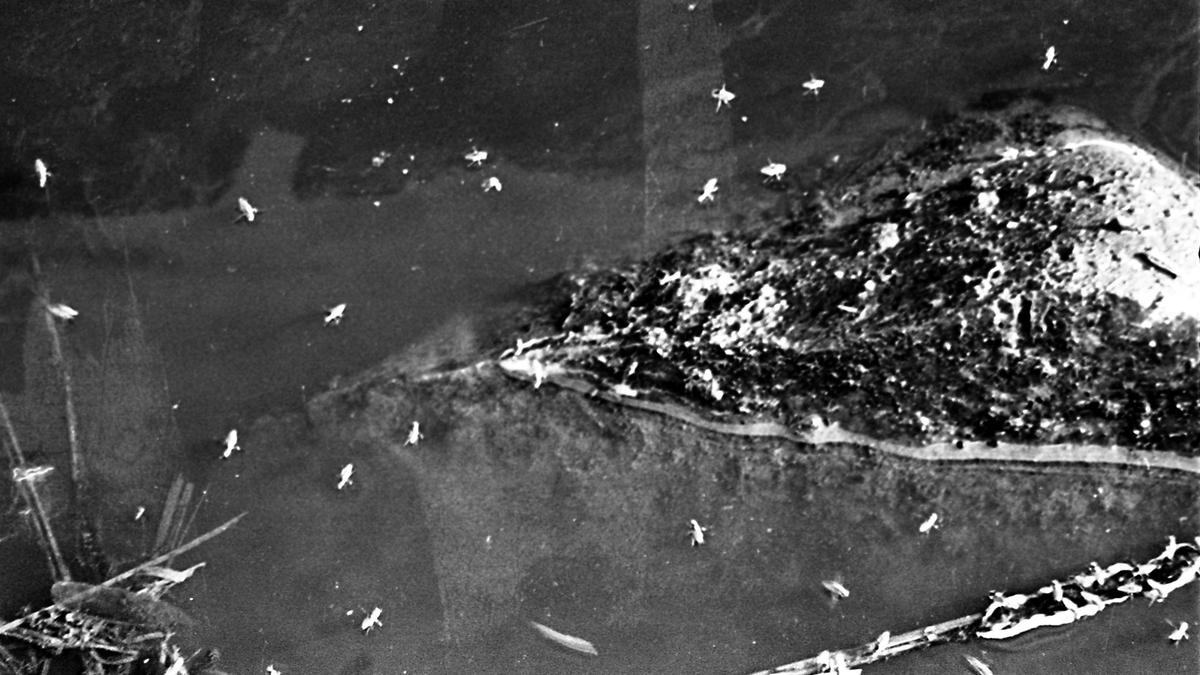
Kerala’s culture of associations helped to further the project of eliminating filariasis, he says. All associations were amassed under the umbrella of the Filariasis control movement or ‘Filco‘ movement. The project targeted removing floating vegetation where mosquitoes that cause the disease breed. The mosquitoes lay eggs on leaves and the larvae absorb oxygen from the air sacs in the roots of the plants. Understanding the breeding pattern of the mosquitoes helped remove the floating vegetation, which was then placed as manure in coconut groves.


Special prayers mark Eid-ul-Fitr celebrations in Madurai

India’s gem and jewellery industry continues to demonstrate remarkable resilience and a spirit of innovation, said Kirit Bhansali, chairman of the Gem and Jewellery Export Promotion Council (GJEPC), at the inauguration of the 4th edition of IIJS Bharat-Tritiya 2026 at Bengaluru International Exhibition Centre (BIEC) here on Saturday, March 21.

HYDGEN dispatches eight modular green hydrogen systems to Surat, enhancing on-site industrial hydrogen generation and operational efficiency.

Fight is between AIADMK and DMK, says Rajan Chellappa

Two habitual offenders arrested in Miyapur for wine shop burglary; police recover stolen cash and bike.

Tiruchi's Smart City projects face underutilisation despite completion, raising concerns about planning, execution, and revenue generation.

Election Observer Anubha Shrivatsava inspects polling booths in Western Ghats, ensuring smooth arrangements amid challenging conditions.

A.P. Minister announces ₹9.8 crore development of Barashaheed Dargah and ₹20 crore international school for minorities in Nellore.

Vice-President Radhakrishnan advocates for modern university syllabi to enhance employability and skill development in today's evolving job market.

A poignant protest at Palakkad Medical College highlights ongoing developmental challenges, initiated by a symbolic wreath-laying by a young girl.

A three-year-old girl was tragically killed by a truck while walking with her mother near Bengaluru.

Iran's President calls for U.S.-Israeli aggression cessation and urges BRICS to ensure regional peace and security.

Harish Rao accuses govt. of cancelling ₹1,070 cr. work sanctioned to Siddipet