'Like the Moon': Astronauts flock to Spanish isle to train
The Hindu
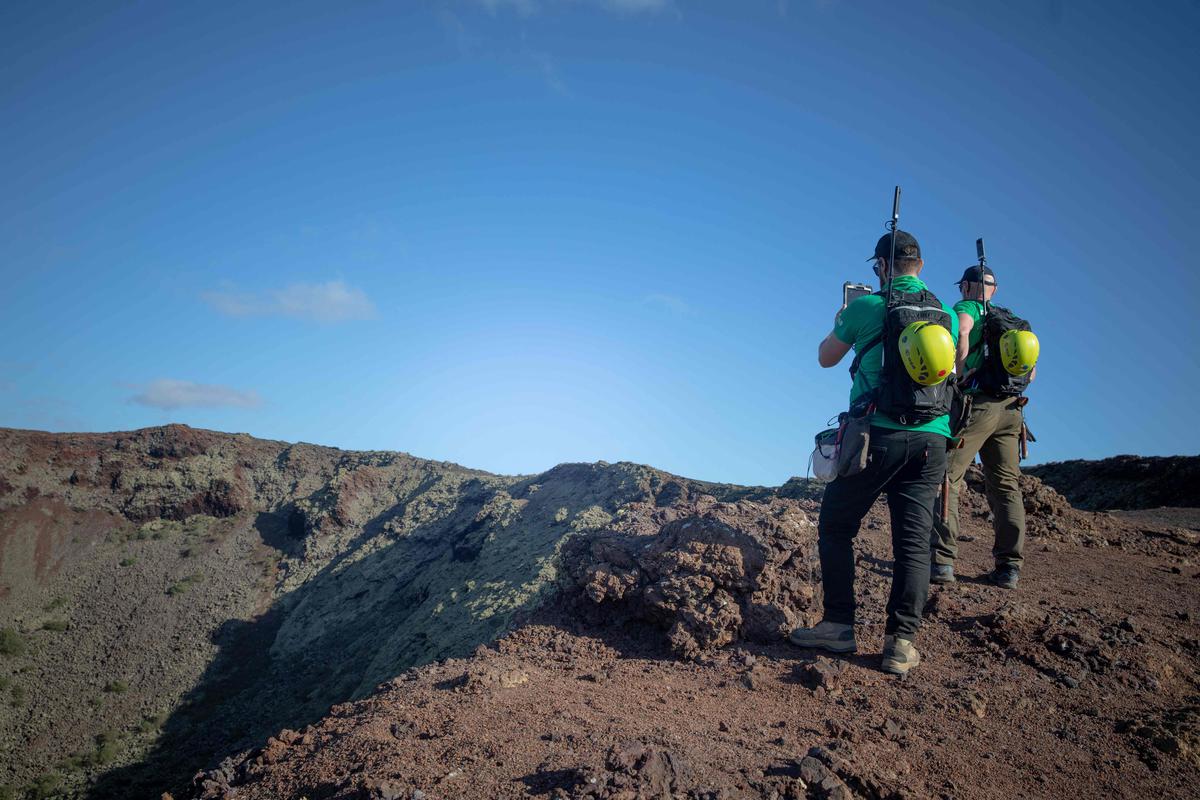
With its blackened lava fields, craters and volcanic tubes, Lanzarote's geology can be uncannily similar to that of the Moon.
Kneeling on the edge of a deep crater, astronaut Alexander Gerst uses a chisel to collect a sample of volcanic rock which he carefully puts inside a white plastic bag.
Gerst is not on the Moon, even if it looks like it. He is in the middle of Los Volcanes Natural Park on the island of Lanzarote in Spain's Canary Islands, off the northwest coast of Africa.
With its blackened lava fields, craters and volcanic tubes, Lanzarote's geology can be uncannily similar to that of the Moon and Mars -- so much so that the European Space Agency (ESA) and NASA have for years been sending astronauts to the island to train.
"This place has lavas that are very, very similar to the ones that we find on the Moon," Gerst, a 46-year-old German astronaut with the ESA, told AFP.
He said the island was "a unique training ground".
Gerst, who has completed two missions on the International Space Station, is one of about a dozen astronauts who have taken part in the ESA's Pangaea training course in Lanzarote over the past decade.
Named after the ancient supercontinent, Pangaea seeks to give astronauts as well as space engineers and geologists the skills needed for expeditions to other planets.


Hyderabad bucks congestion trend as traffic speeds improve despite a surge in vehicles on its roads.

‘Love Mocktail 3’, the latest installment of the hit Kannada franchise from Darling Krishna-Milana Nagaraj, is winning hearts in Karnataka, weathering the challenge of the action-packed juggernaut ‘Dhurandhar: The Revenge’

VSU professor R. Madhumathi awarded by Venus International Foundation for her exceptional contributions to education and social service.

Utter darkness envelops busy road next to Tirunelveli counting centre during night

In this episode, Stanly Johny speaks to us about Trump’s tactical pause on Iran and whether it signals de-escalation or a shift in strategy.

To qualify for this year’s MADDYS, work must have been first released between 1st April 2025 and 31st March 2026.

Bengaluru police launch a special drive to curb reckless riding after doctors' alcohol-fueled road incident raises concerns.

Five queer activists discuss the repercussions of the Trans Amendment Bill 2026 on dignity and identity within the community.

Former Chief Minister Narayanasamy opts out of Puducherry Assembly elections to maintain alliance harmony amidst seat-sharing talks with DMK.

Dr Prarthana Venkatesh, the founder of nutraceutical brand Longevita, talks about the inspiration behind the brand, why the longevity discourse is now exploding and how modern medicine is tackling aging

Ponmudy seeks Madras High Court's intervention to dismiss BJP councillor's complaint over alleged derogatory speech against religious groups.

Congress leader K.C. Venugopal alleges corruption in Kerala's bar license renewals, accusing CPI(M) and BJP of unethical collusion ahead of 2026 polls.

Bengaluru police arrest three in a money-doubling fraud, recovering ₹40 lakh and uncovering additional victims.