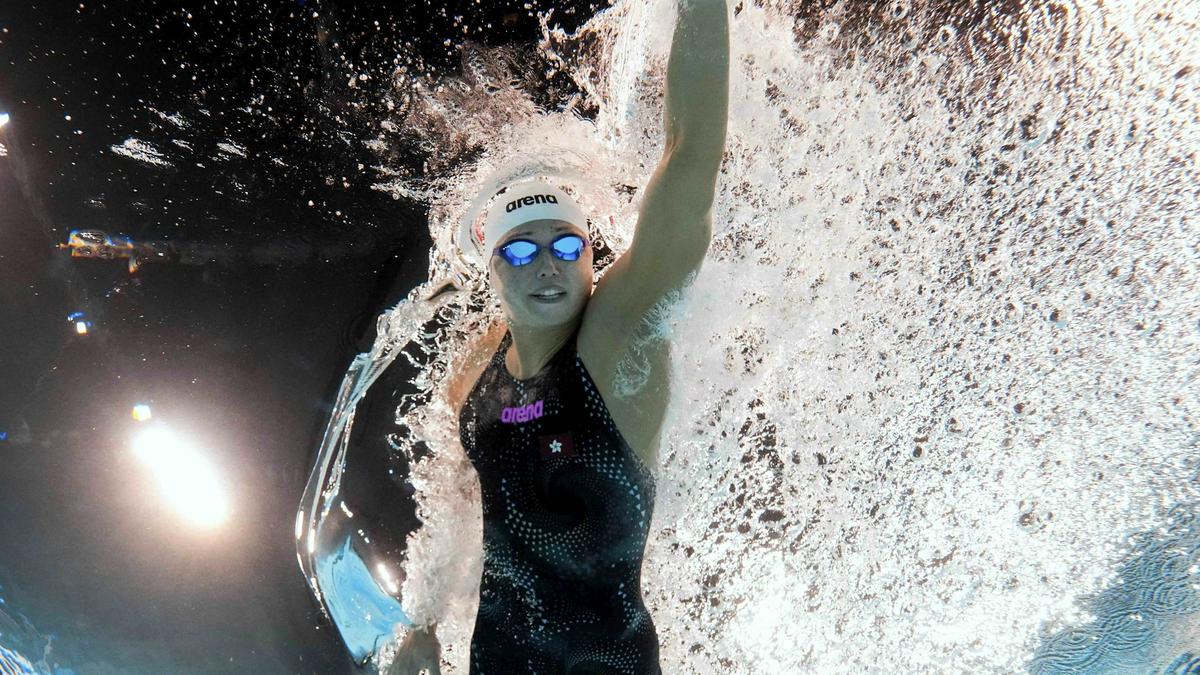
Is the shallow pool in Paris really slowing Olympic swimmers down?
The Hindu
Paris Olympics sees drought of world records in swimming events due to possible pool depth affecting performance.
There has been plenty of rain, sweat and tears shed at the Paris Olympics this week. But the pool at the heart of La Defénce Arena has suffered a drought of world records that has athletes and officials scratching their heads.
Paris Olympics LIVE Day 6
After five days, Paris 2024 has seen only a single world record fall in a swimming event. That compares with six new swimming world records set at Tokyo in 2021 and eight at Rio in 2018. Even the much-hyped women’s 400 metre freestyle – billed as the “race of the century” – failed to topple any personal bests from the three most recent world-record holders, Ariarne Titmus (Australia), Summer McIntosh (Canada) and Katie Ledecky (United States).
To earn a spot on the winners’ podium, of course, place – not pace – is what matters. But the near-absence of the letters WR alongside any of the finishing times on the Olympic scoreboard has coaches, competitors and commentators searching for a culprit.
Several athletes, including Titmus, have pointed to problems with the accommodation, food and transport at the games. And some are pointing to the Olympic pool itself with cries of “J’accuse…!”
It is undeniable that the pool at La Défence Arena is shallower than at recent Olympics. It’s 2.15m deep – deeper than the required minimum of 2m but quite a bit shallower than the standard 3m used at the Tokyo and Rio games.
Why would this make a difference? Well, when swimmers dive into the pool and power through the water, they naturally create waves that radiate outwards. Some of these waves will propagate along the surface of the pool and be damped by gutters at the edge. Others will travel downward, bounce off the bottom of the pool, and return to the surface to create turbulence.


Discover the Minor Planet Centre, the key hub for tracking and verifying observations of small solar system bodies.

Discover the Minor Planet Centre, the key hub for tracking and verifying observations of small solar system bodies.

In this week's Science for All newsletter, XX explains

Test your knowledge with the quiz on Science films at the Oscars through history

Set between the Siwalik hills and the plains, Butwal offers travellers a mix of regional cuisine, pilgrimage trails to Lumbini and the comfort of Hyatt’s new hospitality landmark

Explore 2026's wallpaper trends in India, highlighting botanicals and handmade designs that enhance modern homes with nature-inspired aesthetics.

Mercedes-Benz CLA 250+ with EQ Technology review: design, performance, range and features explained. Discover how the new electric CLA combines advanced AI, long range, fast charging and futuristic styling for the next generation of luxury EVs.

AI tool for sparrow conservation

BTS’s comeback with ‘Arirang’ marks a major global music event. When does the album release, and where can you watch their concert live stream? We have all the details

The 2026 U.S. cholesterol guidelines urge starting screening and treatment at 30 to prevent cardiovascular disease effectively.

Olam Festival 2026 in Thiruvananthapuram returns March 27-29 with 120+ vendors, music, art, and cultural zones.

A few storytellers in Thiruvananthapuram share their journeys, challenges, and evolving methods on World Storytelling Day, inspiring young minds.

76-year-old Kurian Jacob from Kerala triumphs with seven medals, including five golds, at the Open Masters Games in Abu Dhabi.