Industrial output growth slides to three-month low
The Hindu
India’s industrial output growth slid to a three-month low of 5.8% in September from a 14-month high pace of 10.3% in August, from a 6% rise in July, with manufacturing growth halving to 4.5% from the 9.3% recorded in the previous month.
India’s industrial output growth slid to a three-month low of 5.8% in September from a 14-month high pace of 10.3% in August, from a 6% rise in July, with manufacturing growth halving to 4.5% from the 9.3% recorded in the previous month.
Electricity and mining growth also moderated to 9.9% and 11.5%, respectively. Consumption demand appeared weak with consumer durables’ production rising just 1% while non-durables’ grew 2.7% in September, despite a beneficial base effect from last year when both segments tanked by 5.5% and 5.7%, respectively.
Spliced on the basis of usage, primary goods grew the fastest at 8%, cooling from 12.4% in August, followed by infrastructure and construction goods that were up 7.5% and capital goods which rose 7.4%.
Intermediate goods output grew 5.8%, mildly slower than 6.5% in August.
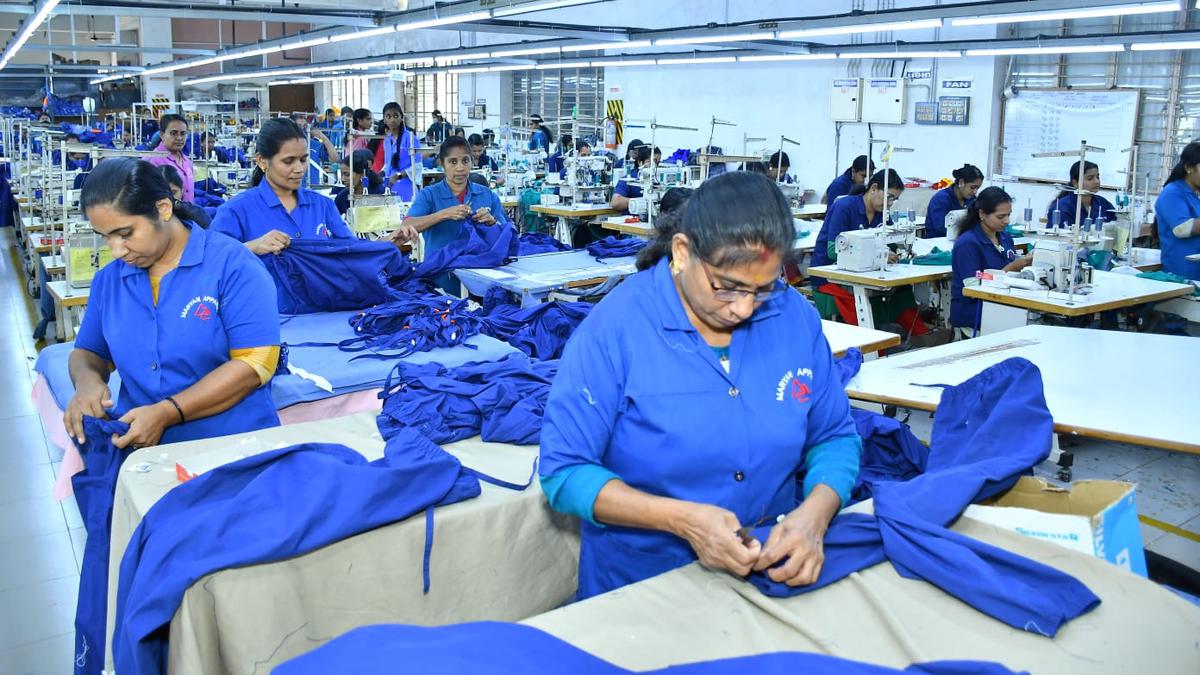
While only seven of 23 manufacturing sectors had clocked a contraction in August, nine segments saw drops in output in September, led by furniture (-20.2%). The apparel segment contracted 17.9%, worse than the 17.1% decline clocked in August.
Computers and electronics’ output fell 8.9%, while the contraction in chemicals widened from 4.3% in August to 5.6% in September. “Other Manufacturing”, that encompasses sectors that are not broadly categorised, fell 13.5%.


Experts link Punjab's distress migration to economic stagnation and job mismatches, highlighting systemic failures in political leadership.

India's merchandise exports remain flat in February, with Commerce Secretary warning of a potential dip in March due to trade constraints.

Hard Rock International closes 10 outlets in India, including three cafes in Bengaluru, while Goa hotel remains open.

The booming market for artificial intelligence servers brought Taiwan's Foxconn a 24 percent jump in annual net profit, the company said

In a statement on its website, Adobe said it has in recent years streamlined its sign-up and cancellation processes and made them more transparent.

Stock markets recover as Sensex and Nifty bounce back following a three-day slump, driven by value-buying in blue-chip stocks.

U.S. President Donald Trump’s administration is set to receive a roughly $10 billion fee from investors in the recently completed deal to take control of TikTok’s U.S. business, the Wall Street Journal reported

Meta is planning sweeping layoffs that could affect 20% or more of the company, three sources familiar with the matter told Reuters

Learn how to choose the best personal loan lender by evaluating eligibility, interest rates, and borrowing experience.

Discover why pension planning is essential in modern India to ensure financial security and peace during retirement.

The U.S. has launched two investigations under Section 301 of the Trade Act of 1974 against India and other economies to examine practices that may be ‘unreasonable or discriminatory and burden or restrict U.S. commerce’. One probe examines whether countries, including India, are using excess manufacturing capacity to export to the U.S. in a manner that hurts American businesses, while another looks at whether countries have taken ‘sufficient steps’ to prohibit imports of goods produced with forced labour.

NHAI raises annual pass fee to ₹3,075 from April 1, 2026, streamlining toll payments for FASTag users.

The U.S. probes forced labour in global supply chains, scrutinizing China and India's exports, warns the Global Trade Research Initiative.