Indore tragedy: why do EV batteries catch fire? | Explained Premium
The Hindu
Understand the causes of EV battery fires, safety risks, and precautions after the deadly Indore fire tragedy.
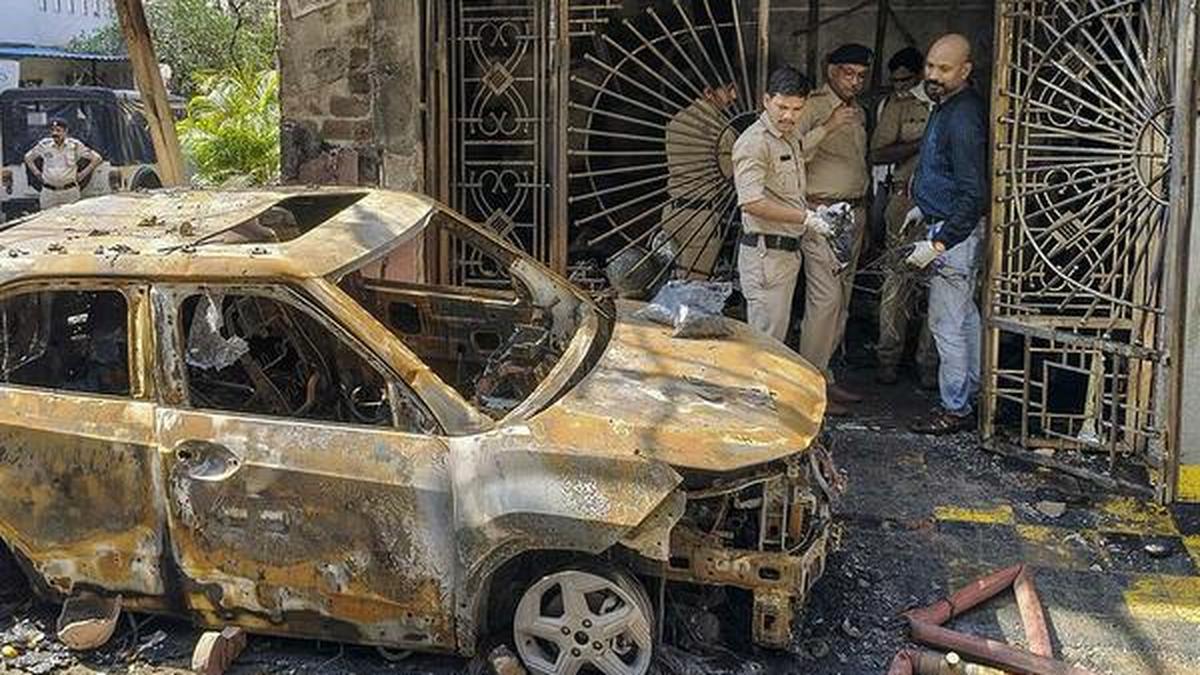
The story so far: A fire tore through a house in Indore on March 18, killing eight people including two children. An electric vehicle (EV) charging point outside the house appeared to have sparked the blaze. An investigation is underway.
Nearly every EV on the road today runs on lithium-ion batteries, which use the same chemistry powering millions of smartphones and laptops. They pack more energy than lead-acid batteries and are generally safe when managed well.
A common cause of EV battery fires is an event called a thermal runaway. A lithium-ion battery packs thousands of cells tightly together, each generating heat as it charges and discharges.
Normally, an onboard computer called the battery management system keeps the temperature within a safe range. But if something goes wrong, one cell can overheat, causing neighbouring cells to overheat in a chain reaction that can outpace the cooling system.
This process also releases a toxic cocktail of gases, including hydrogen fluoride, in a flammable vapour that eases the ‘path’ to a fire.
Manufacturers protect battery packs by packing them inside shells of reinforced steel or aluminium. However, a hard impact — like from a strong impact to the undercarriage — can deform the casing and puncture or deform the cells inside, leading to a short circuit.


Modi and Jaishankar advocate for dialogue as India and France collaborate to de-escalate tensions amid escalating strikes on energy infrastructure.

The star-studded event was held in Mumbai and was attended by rithik Roshan, Alia Bhatt, Bobby Deol, Shahid Kapoor, Vijay Varma, Sonakshi Sinha, Jyotika, Ali Fazal, Sonali Bendre, Preity Zinta, Ravi Kishan and others

Shorts News:We are working on securing LPG, petroleum to meet our energy security needs: MEA

P. Veldurai served five years as MLA and was later asked to repay ₹21 lakh in Tamil Nadu.

Supreme Court reserves verdict on defining 'industry' under Industrial Disputes Act, impacting educational and healthcare sectors.

Dindigul Collector S. Saravanan held a meeting with Election Observers to ensure smooth election monitoring across seven constituencies.

Despite delays from the Centre, 24 States allocate funds for a new rural jobs program, using past MGNREGA expenditure as a baseline.

Congress’s third candidate list for Assam Assembly elections highlights the Pradyut factor and notable party shifts among MLAs.

Scholars foresee political shifts and governance concerns at BRS Ugadi celebrations, predicting potential opposition strength amid public dissatisfaction.

Election observers deployed in Thoothukudi; field inspection begins

Sri Sathya Sai Prema Sadan celebrated Ugadi with Vedic chants, Ugadi Pachadi, and Sri Rama Navami preparations in Visakhapatnam.

Visakhapatnam celebrated Ugadi with Panchanga Sravanam, cultural events, and auspicious predictions for a prosperous new year.

Celebrating diverse top talents, including visually impaired achievers, artists, and cultural icons honored with Ugadi awards.