India among four nations driving most global pesticide toxicity: study Premium
The Hindu
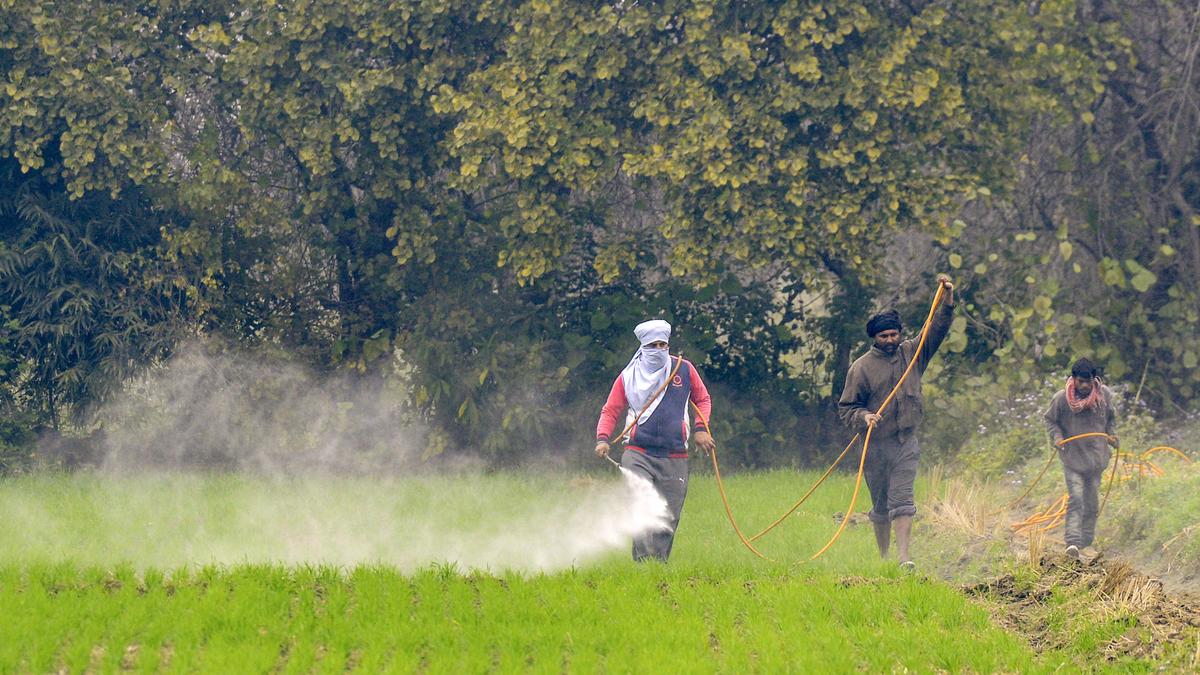
India is among the four biggest contributors of pesticide toxicity in the world, affecting both terrestrial and aquatic species, a study has found.
India is among just four countries that contribute almost 70% to the world’s total applied toxicity (TAT) in the form of pesticide, which is directed at agricultural pests, but in affect unleashes huge collateral damage among “non-target” species (that is, species that pesticides claimed as collateral).
In 2022, at the United Nations Biodiversity Conference, countries committed to reducing pesticide risk by 50% by 2030. Is the UN pact, intrinsically linked to biodiversity and human health, on track?
According to new paper in Science the answer is a resounding “no.” Researchers, for the very first time, calculated the total applied toxicity (TAT) from 2013-2019 across more than 600 pesticides, in 65 countries, and found that the applied toxicity had increased, especially for 20 pesticides used in agriculture.
China, Brazil, the U.S., and India are the biggest contributors of global TAT, accounting for nearly 70%. Pesticides, the researchers found, were used copiously on fruits, vegetables, maize, soybean, rice, and other cereals. While the study found that toxicity increased in India, the U.S., Brazil and several countries in Africa, Chile was the solitary country on track to meet the UN’s 2030 target. The increased TAT could be due to countries using larger volumes of pesticides, as well as more toxic ones, says the paper.
To estimate TAT at a national level, the scientists looked at the annual amount of pesticide used in agriculture in the study countries and also the toxicity and lethality of these pesticides for different non-target species, such as pollinators, aquatic plants, invertebrates, fish, terrestrial arthropods (invertebrates with segmented bodies), soil organisms, terrestrial vertebrates ,and plants. The researchers found that during the study period, terrestrial arthropods were most affected, followed by soil organisms and fish.
“The importance of all of these species’ groups is recognised in the biodiversity debate, in agroecology, and from an economic perspective,” says the paper. The increasing global TAT trends pose a challenge to achieving the U.N. pesticide risk reduction target and demonstrate the presence of threats to biodiversity globally, it added.


The MG Majestor is a flagship full-size SUV combining a 2.0-litre twin-turbo diesel engine, ladder-frame construction and triple differential locks with a tech-loaded cabin featuring dual 12.3-inch displays and Level 2 ADAS. Blending genuine off-road capability with premium features and bold design, the Majestor aims to redefine MG’s presence in India’s premium SUV segment.

Kerala's first horror 3D game, Thekku Island, launches on February 27, featuring a gripping mystery and immersive gameplay.

Explore the science of taste, including aroma, fat detection, and the intriguing role of genetics in flavour perception.

Explore the historical significance of blue, from ancient symbolism to its cultural impact and modern classification.

Scientists discover QT45, a self-replicating RNA molecule, offering insights into the origins of life on Earth.

Discover how an ancient gene influences the sex of ant, bee, and wasp embryos, impacting conservation and breeding practices.

A committee will investigate systemic issues behind ISRO's PSLV rocket failures, focusing on manufacturing and accountability processes.

Why India is still awkward about kink, and why that may be changing

Learn how modified fluorescent proteins are evolving into quantum sensors, enhancing our understanding of cellular processes.

Discover three groundbreaking research developments: chick sound-shape connections, data storage in glass, and promising psychedelic depression treatment.

Explore the NGT's decision on the Great Nicobar project, balancing national security with environmental concerns and biodiversity impacts.

Legend would have us believe that English colonists were first introduced to popcorn on February 22, 1630. While historians are now more or less certain that that story is more myth than truth, there’s no denying that native Americans have had popcorns for thousands of years. Grab your popcorn as A.S.Ganesh lets you in on certain kernels of truth…

India is among the four biggest contributors of pesticide toxicity in the world, affecting both terrestrial and aquatic species, a study has found.