In Frames: Unearthing the silent splendour of Hoysalas
The Hindu
In Frames: A photo feature on Hoysala-era monuments across quiet farmlands of Hassan, Mandya and Mysuru
Across the quiet farmlands of Hassan, Mandya and Mysuru stand some of Karnataka’s most remarkable yet overlooked Hoysala-era monuments — temples and basadis (shrines) that once formed the spiritual fabric of a thriving medieval kingdom. Built between the 11th and 13th centuries, these shrines reveal the dynasty’s signature blend of devotion and sculptural mastery, extending far beyond the celebrated sites of Belur, Halebidu and Somanathapura.
Carved from the soft, malleable soapstone favoured by Hoysala artisans, the structures rest on star-shaped platforms and feature sanctums arranged in ekakuta, dvikuta and trikuta formations. Their walls unfold like stone tapestries: celestial dancers, finely turned pillars and friezes dense with epic narratives.
Once a vibrant Hoysala outpost, Koravangala is home to three temples built by three brothers. The Nageshwara and Govindeshwara temples (1160 CE) showcase an early phase of Hoysala workmanship. A decade later came the village’s architectural peak — the Bucheshwara temple (1173 CE), raised by Buchi in honour of Veera Ballala II. Today, Bucheshwara stands restored, while the older shrines linger in graceful decay.
Long before it lent its name to fast bowler Javagal Srinath, the village was a key commercial centre under King Vira Someshwara. Its jewel is the Lakshminarasimha temple (1250 CE), a striking trikuta shrine known for its elegant elephant sculptures and a later Vijayanagara-era gateway.
The Lakshmidevi temple at Doddagaddavalli (1114 CE) is among the earliest surviving Hoysala structures. Its stark lines set it apart from later ornate creations, while its rare Mahakali shrine, guarded by skeletal betalas (guardian deity), hints at ancient tantric traditions. Built by merchant woman Sahaja Devi, the temple’s four-shrine plan — dedicated to Lakshmidevi, Shiva, Vishnu and Kali — captures a moment of early Hoysala ambition.
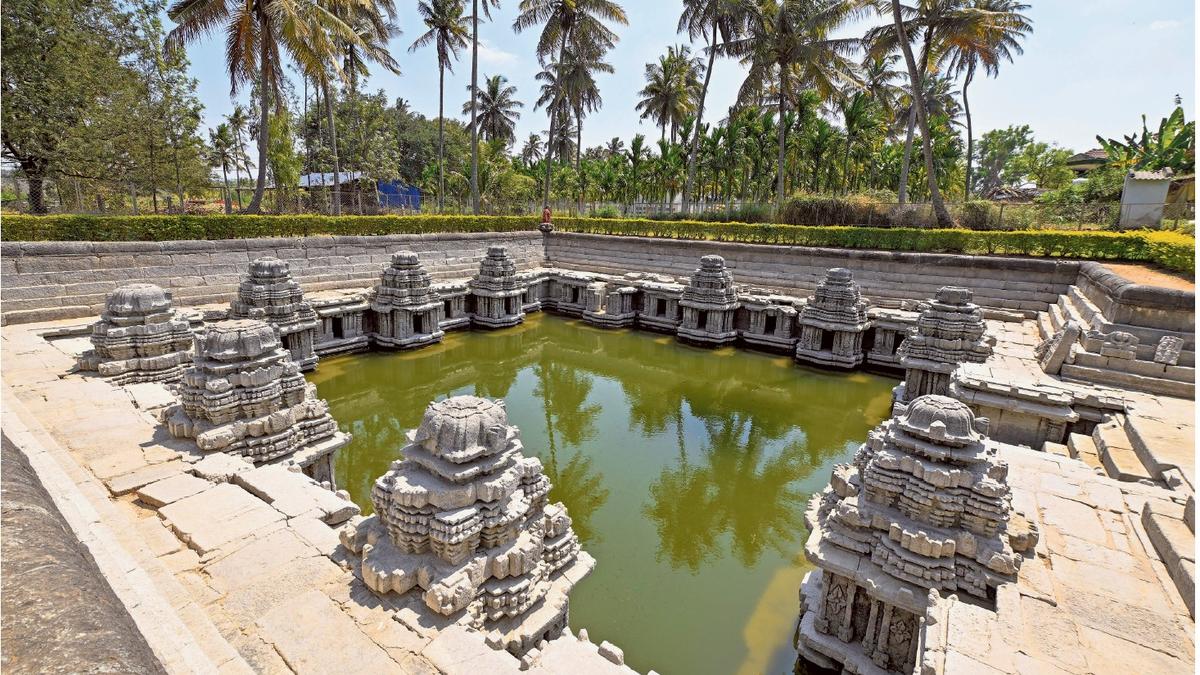
The 12th-century Hulikere Kalyani near Halebidum, with its stepwell, showcases the dynasty’s imagination in water architecture. Commissioned around 1160 CE by Lattayya, an official of Narasimha I, it is also steeped in local lore as the private bathing pond of Queen Shantala Devi.


St. Xavier’s University, Kolkata awarded Shashi Tharoor an honorary D.Litt at its seventh convocation, celebrating academic achievements and new programs.

Rajinikanth and Kamal Haasan's long-awaited reunion after 47 years excites fans, highlighting their enduring friendship beyond rivalry.

Calcutta High Court cancels judicial officers' leaves until March 9 to ensure compliance with Supreme Court electoral roll directives.

T.N. government launches online portal for foreign medical graduates to check internships and apply directly for positions.

Security heightened in Delhi after intel warns of potential terror attacks by Lashkar-e-Taiba on religious sites.

NASA's Artemis 2 Moon mission launch is postponed from March due to technical issues with the SLS rocket's helium flow.

Sons of Irula snake catchers secure government jobs, improving family livelihoods and enabling better education opportunities.

G. Kumar Naik chairs a DISHA meeting in Raichur, reviewing development projects and agricultural support for local farmers.

Delays in suburban train services boost CMRL ridership, prompting calls for increased train frequency amid ongoing station work.

NTK announces 234 candidates for the 2026 Assembly polls, with Seeman contesting from Karaikudi, seeking social transformation.

VIT vice president Sankar Viswanathan awarded honorary doctorate by Thailand's Rajamangala University for exceptional contributions to engineering and technology.

Kingston Engineering College near Katpadi gains autonomous status, becoming Vellore's first such institution, aiming for future growth.

Tambaram Corporation replaces wornout roof sheets; activists question need for large terminus on arterial stretch