Not just playthings Premium
The Hindu
Explore how toys have shifted from silent companions to influential devices, impacting children's play, creativity, and social interactions.
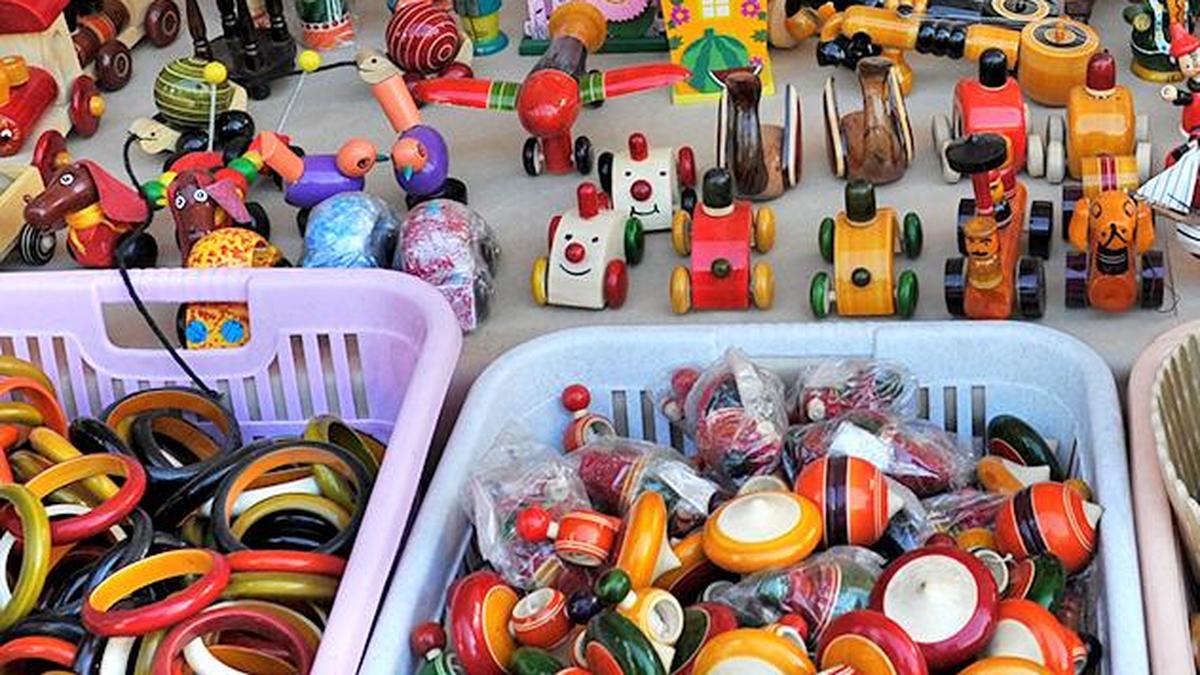
When I think of toys, I don’t remember screens or charging cables. I remember my sister and I sitting on the floor with a small wooden choppusaman set, cooking elaborate meals for guests who never arrived. I remember the marapachibommai dolls that appeared every Navaratri, quietly watching over our noisy games. I remember marbles that vanished into roadside drains, kites that got stuck on electric wires, and cricket matches that ended only when someone’s mother came searching.
Those toys never told us what to do. We told them.
Today, when I watch children around me, their toys seem to be in charge. The toy talks, the game sets the rules, and the screen announces when they have won. Even stories are no longer invented; they are downloaded. It feels as though imagination has been quietly outsourced to software.
This is not to say that today’s toys are useless. Many of them are extraordinary. Children now build robots, learn basic coding, and explore distant planets without leaving their bedrooms. If someone had shown me virtual reality as a child, I might never have stepped outside myself. Technology has undeniably brought wonder into play. But it has also changed what play means.
Earlier, play had no destination. We were not collecting points or completing missions. We were simply passing time, and in that unstructured, “wasted” time, we learned how to negotiate, how to lose, how to wait, and how to make peace after arguments. Today, play increasingly resembles training: faster responses, higher scores, constant upgrades, the pressure of the next level.
What worries me even more is how solitary play has become. Children may be connected to hundreds of players online, yet rarely play together in the same physical space. Parks stand empty. Living rooms are silent except for the tapping of screens. Even birthday parties now often find children sitting in corners with phones, instead of chasing each other across the floor.


G. Kumar Naik chairs a DISHA meeting in Raichur, reviewing development projects and agricultural support for local farmers.

Delays in suburban train services boost CMRL ridership, prompting calls for increased train frequency amid ongoing station work.

NTK announces 234 candidates for the 2026 Assembly polls, with Seeman contesting from Karaikudi, seeking social transformation.

VIT vice president Sankar Viswanathan awarded honorary doctorate by Thailand's Rajamangala University for exceptional contributions to engineering and technology.

Kingston Engineering College near Katpadi gains autonomous status, becoming Vellore's first such institution, aiming for future growth.

Tambaram Corporation replaces wornout roof sheets; activists question need for large terminus on arterial stretch

Ban on hoardings, but relaxed for a select few

Over 900 police will ensure security at TVK's February 23 meeting in Vellore, limiting attendees to 4,900 due to heat.

Karnataka government to distribute 10 lakh e-Khata certificates and complete major road works by April end, says Deputy CM D.K. Shivakumar.

On the section of Tambaram Velachery Main Road that meets Semmozhi Salai in Medavakkam, motorists have to deal with this additional challenge: a manhole that is too high for their safety.

Tamil Nadu government remains optimistic about meeting fiscal norms despite challenges, citing savings and a favorable fiscal outlook.

Women rushed to ATMs to withdraw ₹5,000 amidst fears of government interference, claims Tamil Nadu CM M.K. Stalin.

Explore unique handicrafts and cultural events at the 'Pudu Vasantham - Crafts Bazaar 2026' in Puducherry.