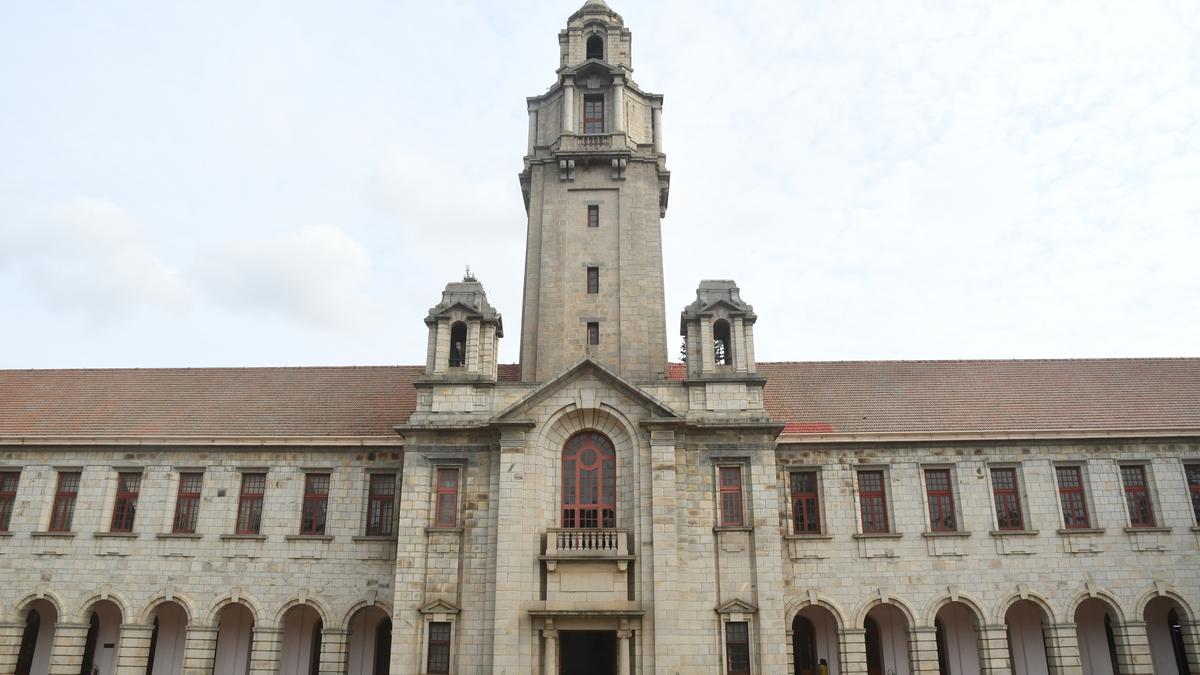
IISc researchers devise a new language for ML models
The Hindu
IISc researchers develop STRONG language to encode nanopore structure, train machine learning models for property prediction.
Indian Institute of Science researchers have devised a new language that encodes the shape and structure of nanopores in the form of a sequence of characters.
This language devised by Ananth Govind Rajan’s lab and the study published in the Journal of the American Chemical Society can be used to train any machine learning model to predict the properties of nanopores in a wide variety of materials.
IISc said the language called STRONG (STring Representation Of Nanopore Geometry) assigns different letters to different atom configurations and creates a sequence of all the atoms on the edge of a nanopore to specify its shape.
“For instance, a fully bonded atom (having three bonds) is represented as ‘F’, and a corner atom (bonded to two atoms) is represented as ‘C’ and so on. Different nanopores have different kinds of atoms at their edge, which dictates their properties,” IISc said.
It added that STRONGs allowed the team to devise fast ways for identifying functionally equivalent nanopores having identical edge atoms, such as those related by rotation or reflection. This drastically cuts down on the amount of data that needs to be analysed for predicting nanopore properties.
Just like how ChatGPT predicts textual data, neural networks (machine learning models) can read the letters in STRONGs to understand what a nanopore will look like and predict what its properties will be, it added.
The team turned to a variant of a neural network used in Natural Language Processing that works well with long sequences and can selectively remember or forget information over time. Unlike traditional programming, in which the computer is given explicit instructions, neural networks can be trained to figure out how to solve a problem they have not encountered so far.


Environmental activist Bolisetty Satyanarayana urges urgent action to protect Kolleru Lake from ecological degradation and illegal aquaculture.

A 27-year-old man was murdered in east Bengaluru, with police suspecting a financial dispute as the motive.

A survey reveals a drastic decline in Thiruvananthapuram's house sparrow population, prompting calls for urgent conservation efforts.

AIADMK announces candidates A. Anbalagan and A. Gandhi for Puducherry Assembly elections in Oupalam and Orleanpeth constituencies.

Shorts News: Landslide hits Mandi after rain, nine houses evacuated

Three men arrested in Delhi for hoarding 74 LPG cylinders, facing charges under the Essential Commodities Act.

Bengaluru police summon Muthappa Rai's son, Ricky Rai, after a Lamborghini was caught performing dangerous stunts, raising public safety concerns.

LPG cargo ship from the US arrives at New Mangalore Port as charges waived amid West Asia conflict concerns.

Modi convenes ministerial meeting to address energy supply challenges amid West Asia conflict and ensure stable logistics nationwide.

CPI(M) negotiates with DMK over seat allocation for Tamil Nadu Assembly elections, aiming for six seats amid alliance talks.

Join our webinar to explore the necessity and impact of foreign universities establishing campuses in India.

PM Modi praises Bihar's rich culture and history in a heartfelt letter to CM Nitish Kumar on Bihar Diwas.

Former Minister Semmalai urges parties to limit freebies and prioritize development for Tamil Nadu's future prosperity.