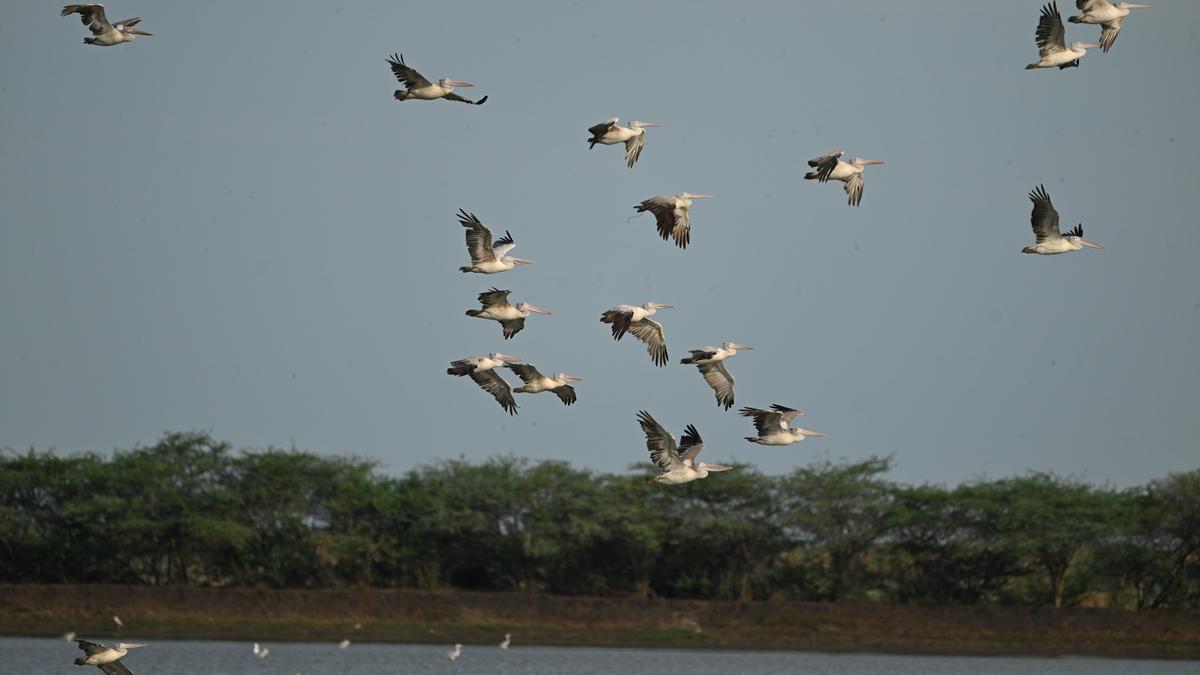
Environmental activist expresses concern at degradation of Kolleru Lake
The Hindu
Environmental activist Bolisetty Satyanarayana urges urgent action to protect Kolleru Lake from ecological degradation and illegal aquaculture.
The Kolleru Lake, which had thrived as a thriving freshwater ecosystem for several centuries, supporting biodiversity, livelihoods, and natural flood regulation, has suffered a sustained and measurable decline in its ecological health during the last 50 years, according to environmental activist and national convener of Jal Biradari Bolisetty Satyanarayana.
There has been a sustained and measurable decline in the ecological health of Kolleru Lake since 1975 due to reduction in natural water spread, expansion of aquaculture activities within the boundaries of the lake and alteration of natural hydrology. The successive governments and the enforcement agencies in the State have not only failed to protect the lake but also resorted to violation of court orders on its protection, Mr. Satyanarayana told media persons, here, on Sunday (March 22).
The approximate lake area was 2,22,600 acres in 1975, based on satellite mapping and spatial analysis, the area under aquaculture/encroachment as in 2025 is approximately 1,28,000 acres and the remaining open water area is 94,000 acres. These figures indicate a significant transformation of a natural wetland into altered land use zone, he explained.
He appealed to the Centre and State governments to stop the illegal aquaculture activities in the lake and demanded pushing out the encroachers, failing which citizens and stakeholders would be compelled to launch an agitation for protection of the lake.
He explained that the degradation of Kolleru Lake has far-reaching consequences. These include: decline in migratory bird populations, loss of traditional fishing-based livelihoods and increased pollution from untreated inflows and aquaculture discharge and weakening of natural flood buffering capacity. These are not isolated environmental issues as they directly affect human safety, economy and long-term regional stability.
Underlining the importance of immediate corrective action, Mr. Satyanarayana called for a time-bound restoration plan, institutionalisation of independent monitoring of the lake using satellite data and strengthening of accountability mechanisms. A decisive and accountable action was the only way forward, he added.


Shorts News: Landslide hits Mandi after rain, nine houses evacuated

Three men arrested in Delhi for hoarding 74 LPG cylinders, facing charges under the Essential Commodities Act.

Bengaluru police summon Muthappa Rai's son, Ricky Rai, after a Lamborghini was caught performing dangerous stunts, raising public safety concerns.

LPG cargo ship from the US arrives at New Mangalore Port as charges waived amid West Asia conflict concerns.

Modi convenes ministerial meeting to address energy supply challenges amid West Asia conflict and ensure stable logistics nationwide.

CPI(M) negotiates with DMK over seat allocation for Tamil Nadu Assembly elections, aiming for six seats amid alliance talks.

Join our webinar to explore the necessity and impact of foreign universities establishing campuses in India.

PM Modi praises Bihar's rich culture and history in a heartfelt letter to CM Nitish Kumar on Bihar Diwas.

Former Minister Semmalai urges parties to limit freebies and prioritize development for Tamil Nadu's future prosperity.

Congress and DMK are set to share 15 seats each for the Puducherry Assembly elections on April 9, 2026.

Four Assam police commandos injured in an extremist attack during a gunfight in Tinsukia district, officials report.

Belagavi ZP CEO emphasizes innovative marketing for farmers and artisans, collaborating with Exim Bank to boost exports and opportunities.

Mizoram's civic body election heats up as parties finalize candidates and campaign strategies ahead of the April 21 polls.