How the pet industry encourages animal abuse Premium
The Hindu
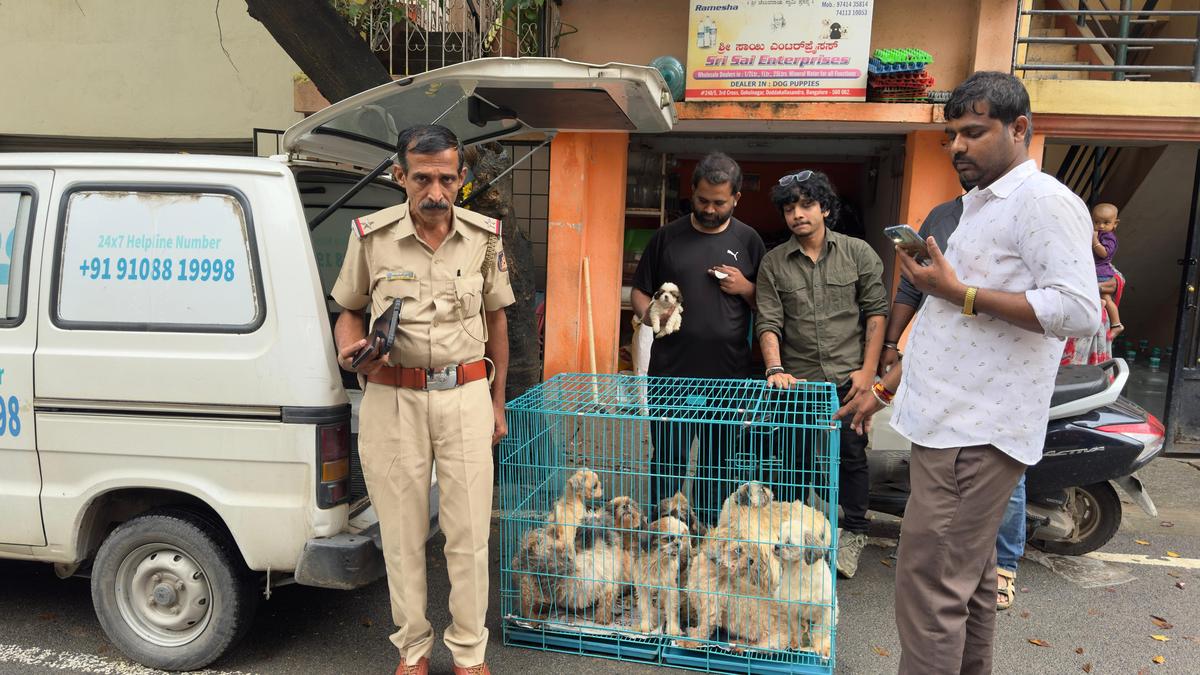
Narendra, who was part of a team that rescued 11 Shih Tzu puppies on October 16, 2024, says that the dogs they rescued were all shivering and sick when discovered. “After they were examined by the vets, we realised that due to severe cataracts, they had lost about ten to twenty per cent of their vision,” she says, adding that the dogs also had tick fever and were highly anaemic.
Sanjana Narendra recalls the unbearable stench that engulfed her when she entered the dark, filthy shed in Doddakallasandra, Konanakunte, where puppies were being illegally bred. “There were no proper windows or ventilation,” says the manager of the Shwana Foundation, a city-based NGO working for the welfare of dogs.
Narendra, who was part of a team that rescued 11 Shih Tzu puppies on October 16, 2024, says that the dogs they rescued were all shivering and sick when discovered. “After they were examined by the vets, we realised that due to severe cataracts, they had lost about ten to twenty per cent of their vision,” she says, adding that the dogs also had tick fever and were highly anaemic.
The person accused of illegally breeding these puppies was a man who ran a water-can delivery business in the area. “He was notorious for abusing and overbreeding the dogs. They were beaten, neglected and forced to live inside tiny cages where they couldn’t move around or sit properly,” says Narendra, a 24-year medical student at the Shridevi Institute of Medical Sciences and Research Hospital in Tumakuru. The animals were not just restrained but badly beaten and improperly fed, she says.
According to her, the team responded to a tipoff from a resident, approaching the accused on the pretext of buying a pup. They made videos of what they had witnessed before calling 112 for help. Based on the complaint, the Hoysala patrolling police reached the spot, rescued the animals and sent them to medical help at a veterinary hospital in Jayanagar. The police also booked a non-cognizable case against the breeder and took an undertaking from him that he would no longer breed the pets, she adds.
Pet breeding in India is a highly unregulated industry, though a fairly lucrative one, going by the sheer number of pet shops that have proliferated in the country, selling breed dogs, Persian cats, birds, turtles and fish, among many other animals. It is also one that sees a lot of abuse and neglect of the animals being bred and sold, as Keerthan Vignesh R.P., chief manager of Charlie’s Animal Rescue Centre, a Bengaluru-based animal shelter, will attest to.
Vignesh, who has often rescued animals used for breeding, recounts some of the horrors he has encountered: animals in gunny bags and baskets left in dump yards and gutters, a dog chained so tightly to a pole that the chain pierced its neck, animals burned with hot oil and water or with their tails cut off. He still recalls the breeder who had owned and bred a nine-year-old chow chow. “The dog delivered two puppies before it died, and this fellow was so proud, saying that even though the dog was nine years old, he did not let it go until it gave two puppies.”
He refers to the pet breeding industry as a “mafia” of sorts, one that leaves the breeding animals very sick. “They will do anything and everything to make sure that they make some money out of these animals,” he says, recounting some of the health conditions these dogs often suffer from, including chronic kidney failure, skin issues, calcium deficiency, sight problems, bone deformity, fungal infections, even mammary tumours.


After more-than-two-year wait, the flyover at Goripalayam junction will be commissioned on Saturday. As of now, the main arm of the new flyover, named after freedom fighter Netaji Subash Chandra Bose, will help to decongest vehicular movement from Tamukkam junction till Nelpettai junction on East Veli Street.

PAC criticizes the government for poor execution and financial delays in the ₹4,455 crore SANKALP skill development scheme.

Coimbatore is emerging as a leading hub for Global Capability Centres in Tamil Nadu, driven by strong educational infrastructure and investment.

Peace talks between fishermen from Rameswaram and Karaikal aim to resolve fishing territory disputes and ensure maritime harmony.

Telangana's Food Safety Department inspects 122 establishments in a statewide drive, enforcing compliance on cereal products and safety standards.

The Greater Bengaluru Authority expands to 86 members, enhancing representation with key political figures included.

Civil Aviation Minister Rammohan Naidu Kinjarapu on Friday e-inaugurated (virtually) the Udan Yatri Cafe at Mangaluru International Airport and digitally launched DigiYatra at the facility.

Tension in Bagalkot as stones are thrown during Shivaji Jayanti procession; police ensure safety and investigate the incident.

Uday Bala Krishnan emphasises the vital role of compassionate teachers in nurturing young minds amidst the rise of Artificial Intelligence.

A.K. Jayasankaran Nambiar appointed executive chairman of Kerala State Legal Services Authority by the Governor and Chief Justice.

Shorts News:Watch: Youth Congress workers hold ‘shirtless protest’ at AI Summit

Hakki Pikki people from Karnataka detained in Ghana raise concerns among families about their safety and the legality of their herbal sales.

Anakapalli police arrest habitual offender, recovering gold worth ₹30 lakh after a swift investigation into a house break-in.