How rehabilitation has failed Karnataka’s manual scavengers
The Hindu
Explore the struggles of Karnataka's manual scavengers as rehabilitation efforts fail to improve their health and livelihoods.
While Karnataka has officially identified around 7,400 manual scavengers after the enactment of the Prohibition of Employment as Manual Scavengers and their Rehabilitation Act, 2013, the exercise, meant to be a turning point in their life, has failed to help them have a sustained livelihood.
In Mathkur near Hesaraghatta, 24 families were identified in the survey conducted by the National Safai Karamcharis Finance and Development Corporation (NSKFDC). They were recorded, given ID cards, and brought under the rehabilitation framework.
However, over a decade later, when The Hindu visited the families, none of them reported having a stable livelihood, while many said they continue to deal with health problems linked to the work they once did.
Workers across areas like Dasanapura, Mathkur, and Madanayakanahalli, who spoke to The Hindu, said that years spent on entering septic tanks and dry latrines continue to have serious effects on their health. “We used to get inside the pits without any protection. The smell would make us dizzy, sometimes we would faint. Now I get fits and I cannot sleep properly,” said Shivaganesh.
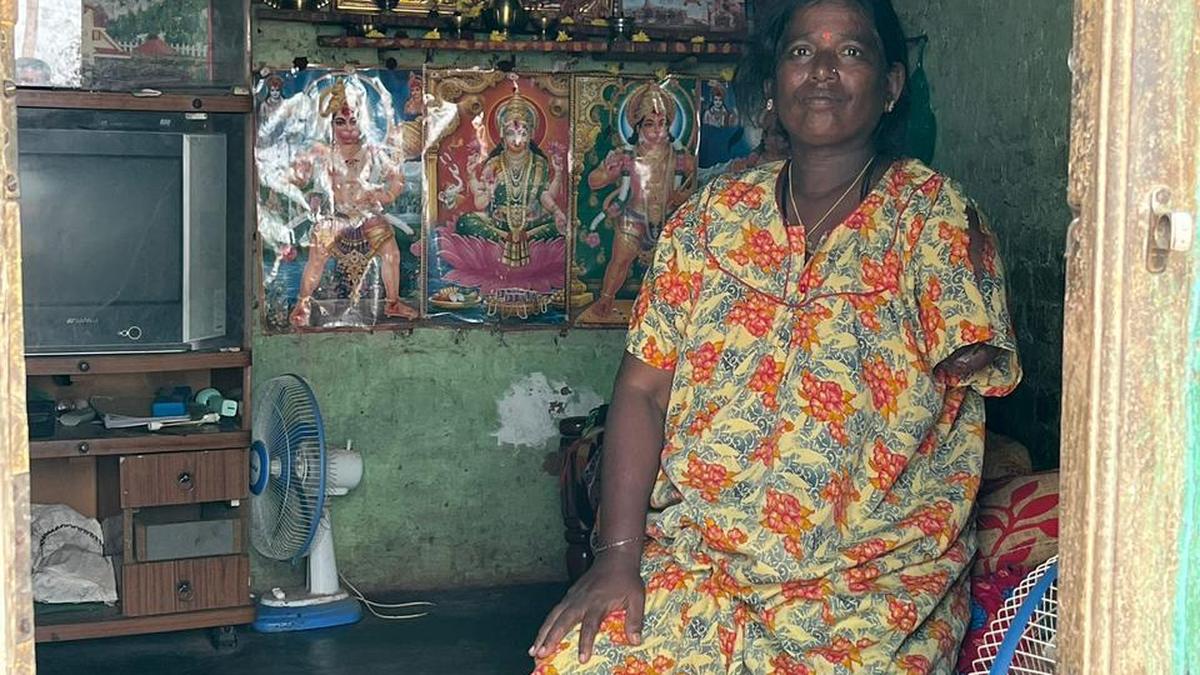
While rehabilitation was promised, families of manual scavengers in mathkur, near Hessarghatta, continues to live without government support. | Photo Credit: SPECIAL ARRANGEMENT
Other workers said that during those years they would consume alcohol before entering tanks to cope with the stench and suffocation. “We have stopped now, but the damage is done. Doctors say my liver is affected,” Manjunath M.A., another worker, added.


Union Education Minister Dharmendra Pradhan advocates for global education collaborations, highlighting India's vibrant knowledge ecosystem and growth potential.

Syed Akram Javeed was recently conferred the Chief Minister’s State Sports Award for 2025–26; he has been officiating tennis tournaments for many years

K. Vijayanand takes charge as Ex-Officio Special CS to CM

Zilla Parishad secures 488.61 acres of school land across three districts to combat encroachment and protect educational spaces.

Bengaluru traders report sufficient stocks of dates and dry fruits for Ramzan, but ongoing conflicts may disrupt future supplies.

Students from 22 schools showcased innovative projects at the Shell Nxplorers Science Carnival in Mangaluru's Pilikula Regional Science Centre.

Three spectators killed and 95 injured during manjuvirattu bull chase event in Sivaganga, Tamil Nadu.

NDA seat-sharing talks are pending until the election schedule is announced, says BJP State president Nainar Nagenthran.

R. Krishnaiah urges a state-wide boycott on March 6 to demand overdue scholarship and tuition fee reimbursements for students.

Class XII board examinations commence in Ramanathapuram and Sivaganga, with over 30,000 students participating across multiple centres.

Karnataka's tobacco crop size reduced to 90 million kg for 2026-27 due to falling prices and subdued demand.

NMC warns medical colleges of rejecting applications for extra seats if caught admitting fake patients during assessments.

JD(S) MLC Bhoje Gowda urges Karnataka government to assist stranded citizens in Dubai amid escalating conflict and explosions.