How fast‑tracking the Women’s Reservation Bill could reshape the 2027 electoral map Premium
The Hindu
Exploring how expediting the Women's Reservation Bill could transform the electoral landscape in seven key states by 2027.
Early this month, Parliamentary Affairs Minister Kiren Rijiju called leaders of several opposition parties, informing them that Home Minister Amit Shah wanted to meet them. He did not disclose the reason for the meeting.
One such meeting with the Samajwadi Party was scheduled for March 5. Coincidentally, that was also the day Bihar Chief Minister Nitish Kumar, eager to enter the Rajya Sabha, was filing his nomination papers. Mr. Shah had flown from Delhi to Patna to be by his side. He had expected to return to the Capital by evening, in time for the meeting with the Samajwadi Party. But developments in Patna delayed him, and the meeting had to be rescheduled.
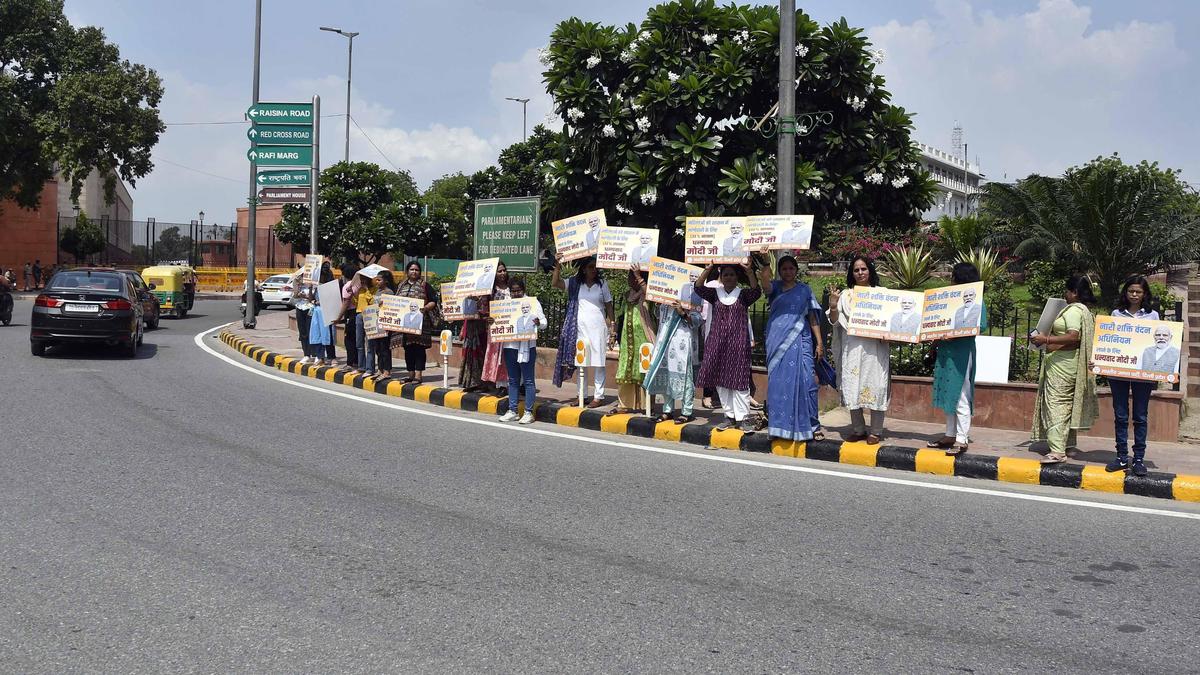
Recently, he met Congress leaders and conveyed that the government is keen to accelerate the implementation of the Constitution (One Hundred and Sixth Amendment) Act, known variously as the Nari Shakti Vandan Adhiniyam in official parlance, and more commonly as the Women’s Reservation Bill. Mr. Shah proposed lifting the two limitations imposed by Section 5 of the Act, which states that the reservation for women will come into effect “after an exercise of delimitation is undertaken for this purpose after the relevant figures for the first census taken after commencement of the Act…”
The timing of these “feelers” is significant. In 2027, seven States go to polls, four of which are ruled by the BJP. If the idea fructifies its impact could be felt in these seven States including the prized catch of Uttar Pradesh. The BJP will be defending its government in Uttar Pradesh for a third consecutive term. The State that powered two emphatic BJP victories in the Lok Sabha has also been a slippery slope. In 2017, the BJP won an unprecedented 312 seats; this fell to 255 in 2022. If the 2024 Lok Sabha results are extrapolated to the Assembly segments in the State, the Samajwadi Party is ahead in 178 seats. Along with its ally, the Congress, the alliance comfortably crosses the majority mark of 202 in the 403‑member Assembly.
Electoral arithmetic aside, there are pockets of discontent within the BJP. The party has so far managed to keep internal grievances from spilling into the open, but cracks are now visible. In January this year, for instance, the BJP legislator from Charkhari, a rural constituency in Bundelkhand, led a protest against State Water Minister Swatantra Singh.
Despite engaging in what is effectively a rare pre‑legislative consultation by informally reaching out to opposition parties, the government’s move carries an element of surprise. With just one year left for the UP Assembly polls, opposition parties will have to wait for the administration to notify which seats will be reserved for women before finalising candidates.


Gulbarga University alumni discuss the severe impact of climate change on women, emphasizing gender inequality and empowerment strategies.

A 50-year-old Bengaluru man, Venkatesh, dies by suicide after severe financial losses in the share market.

Parliament Budget Session: Follow The Hindu live as the opposition is likely to move motion to remove Lok Sabha Speaker Om Birla on March 10, 2026.

Assam announces ₹30 wage hike for tea workers ahead of elections, following land ownership deed distribution and recommendations from the Minimum Wages Advisory Board.

Exploring how expediting the Women's Reservation Bill could transform the electoral landscape in seven key states by 2027.

A coalition of tech experts on Monday sued US President Donald Trump's administration over a policy resulting in visa denials, detention or deportation for researchers and fact-checkers reporting on social media platforms.

Although he had travelled to Chicago on several occasions, he had never been able to set a novel in the U.S. city, writer T. Padmanabhan has said. Mr. Padmanabhan was speaking about Chicago at the release of Niyogam, a novel by senior Congress leader Ramesh Chennithala set against the backdrop of the ‘Windy City’, on Monday.

Supreme Court extends tenure of tribunal members until September as government plans new bill for their appointments and accountability.

Katerina Siniakova upsets Mirra Andreeva, ending her Indian Wells title defense in a thrilling third-round match.

CJI Surya Kant urges High Court collegiums to include female advocates from the Supreme Court for judgeship elevation and institutional reforms.

A study by BARC scientists has concluded that HALEU-Thorium fuel is unsuitable for India's nuclear reactors, requiring costly redesigns and reducing plutonium production.

Discover the molecular mechanisms behind severe blood clots linked to specific COVID-19 vaccines, revealing crucial insights for future vaccine safety.

Bengaluru's GBA Budget may exceed ₹21,000 crores, with each corporation receiving over ₹4,200 crores for development.