Has quality of elected leaders improved? Supreme Court casts doubt on NOTA
India Today
A bench comprising Chief Justice of India Surya Kant and Justice Joymalya Bagchi examined the broader impact of NOTA and patterns of voter participation across social groups.
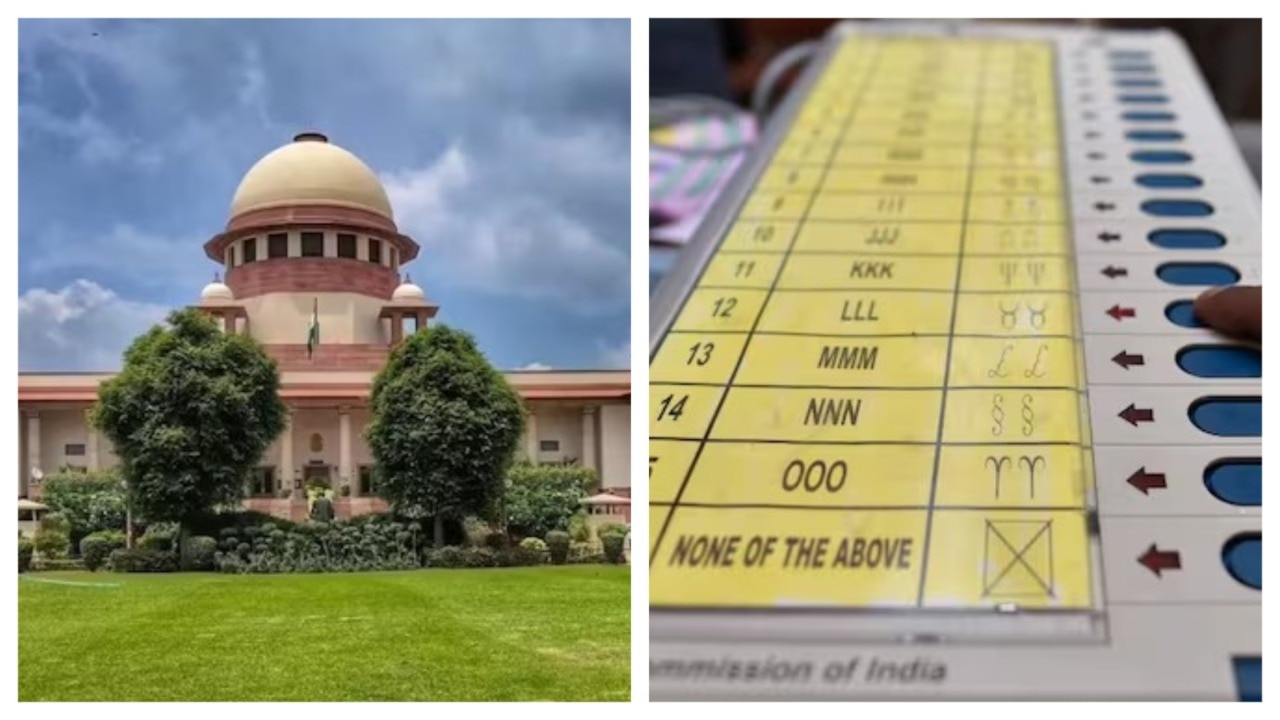
The Supreme Court on Tuesday expressed doubt about whether the introduction of the None of the Above (NOTA) option in Indian elections has led to any tangible improvement in the quality of elected representatives. The observation came during the hearing of a plea seeking to make NOTA mandatory in all elections, including those where only a single candidate is in the fray.
A bench comprising Chief Justice of India Surya Kant and Justice Joymalya Bagchi examined the broader impact of NOTA and patterns of voter participation across social groups.
Questioning the effectiveness of the option, Justice Bagchi remarked, "Has the quality of elected leaders improved with NOTA? Because what tells us is that educated, well-off people vote less and the economically weaker section vote more".
The bench noted that voter apathy appeared more pronounced among educated and affluent sections, despite the availability of NOTA, while economically weaker sections continued to participate actively in the electoral process.
CJI Surya Kant suggested that the issue of low voter turnout might require innovative measures.
"Sometimes we think we need to issue some kind of compulsory but not harsh mechanism to ensure that people go and vote. It (mechanism) may not be punitive in nature. In rural areas.. women who are exempted from taking up labour or construction works, they have sigh of relief as they go in groups to cast votes, while singing songs etc.," he observed.


A second patient died within 72 hours at RG Kar Hospital, with his family alleging that a lack of stretcher and basic facilities forced the critically ill man to walk 100 metres, leading to his death.

As Parliament prepares to bring amendments to the Transgender Act, activists warn the proposed changes risk rolling back years of hard-won rights.

A high-speed boat crash in the Maldives has left two Indians missing, including a celebrated rally figure, even as Gautam Singhania returns home. Search teams continue efforts amid mounting concern and unanswered questions.

A prominent seer, Pranavananda Swamiji, alleged that mutts backing Karnataka Deputy Chief Minister DK Shivakumar to take over the top post were denied any allocation in the state budget presented by Chief Minister Siddaramaiah. He reiterated his support for Shivakumar to take over as the chief minister.

India's original Dhurandhar, Ravindra Kaushik, rose from acting at college theatres, to infiltrating the Pakistan Army as a RAW Agent. He provided critical intelligence on Pakistani troop movements and the country's nuclear programme, but died a lonely death after his betrayal and subsequent capture by the ISI.


According to the police, 19-year-old Sachin Dharmendrabhai Chaudhary, who works as a labourer, had borrowed the money before expressing his inability to repay it immediately, police said. He was allegedly threatened with his life over the delay in repayment. Fearing for his life, Sachin immediately alerted the police.

A quiet arrest in Rajasthan has unravelled a wider espionage network, linking an Air Force employee to Pakistani handlers. Investigators say the trail began months ago and may reach deeper than first believed.

A 36-year-old woman plotted to murder her mother-in-law with the help of her 21-year-old lover. The murder plot was exposed by CCTV installed inside the house.


A former village pradhan who had been missing since March 18 was found dead in a sack near a canal in Pratapgarh. Police have arrested his lover, claiming she carried out the murder with accomplices.

From a Kashmiri widow parting with her late husband's cherished jewellery to children emptying their piggy banks, a wave of generosity is emerging across India as citizens step up to support people affected by the escalating conflict in Iran.