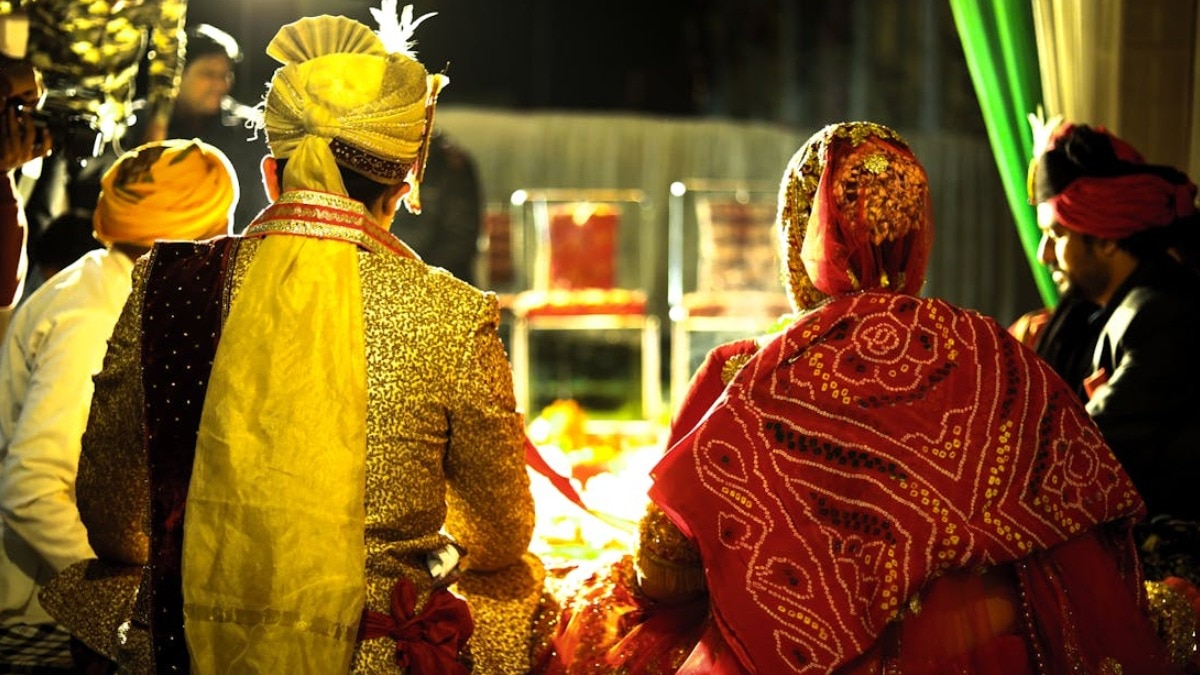
Gujarat to make parent initmation mandatory for marriage, critics cite Hadiya case
India Today
In a move that has sparked a fresh debate over individual liberty versus parental oversight, the Gujarat government has proposed making parental intimation a formal part of the marriage registration process.
Any marriage held in Gujarat may soon have to be conducted with the full knowledge of the couple’s parents, if proposed amendments to the state’s marriage registration rules are implemented.
The state government has proposed changes under the Gujarat Registration of Marriages Act that would require couples to declare whether they have informed their parents about their marriage, while authorities would also be mandated to notify parents during the registration process.
The move, announced in the state Assembly on Friday, is aimed at tightening procedures around marriage registration, particularly in cases involving elopements and instances of “love jihad”.
Deputy Chief Minister and Home Minister Harsh Sanghavi, who announced the proposals, alleged that “innocent girls are being trapped” and such practices were spreading “like termites” in society, asserting that the government could no longer ignore the issue.
However, the proposed amendments may face legal scrutiny, as the Supreme Court has repeatedly upheld that the right of two consenting adults to marry is a fundamental right under the Constitution, emphasising individual autonomy.
In the landmark Hadiya case, involving a Kerala woman, Akhila (later Hadiya), who married Shafin Jahan, the court made it clear that adult Indians are free to choose their partners, even if parents feel their rights to protect their children have been transgressed. The court has specified that "choices which individuals make on whether or not to marry and on whom to marry, lie outside the control of the state".


According to local sources, he has been trying for nearly 12 years to free his land from alleged encroachment by a steel manufacturing company. Following information about the episode, the local Tehsildar, SDM, and police officials rushed to the spot.

As per the Bill, those involved in unlawful conversions on the pretext of marriage will be punished with imprisonment of seven years and shall also be liable for a fine of Rs 1 lakh. Violations in respect of a minor, a person of unsound mind, a woman or a person belonging to the Scheduled Caste and Scheduled Tribe will be punished with imprisonment of seven years and a fine of Rs 5 lakh.

A video showing Bhojpuri singer Dhananjay Sharma lifting a female dancer and throwing her into the crowd during a live show has sparked outrage online. Sharma later claimed the dancer misbehaved with him.

Authorities say he coordinated with handlers in India, Pakistan, and abroad, aiming to overthrow democratic governance and establish Sharia law under an ISIS-style caliphate.

A 23-year-old man in Panipat was murdered by three friends after he allegedly applied Holi colour to one accused's lover. The accused got him drunk, attacked him with a screwdriver and placed him alive on a railway track to make the killing look like an accident.

Responding to media queries, Ministry of External Affairs (MEA) spokesperson Randhir Jaiswal said the government "categorically rejects" the report and its characterisation of India. He said the commission has repeatedly presented a "distorted and selective picture" of the country.

The NDA won all five Rajya Sabha seats from Bihar after four Opposition MLAs skipped voting, dealing a setback to the Mahagathbandhan. The alliance also secured two seats in Odisha amid cross-voting by Opposition MLAs during the biennial polls.

A 46,000-tonne LPG shipment aboard Shivalik reached Gujarat's Mundra Port, carrying around 32 lakh domestic cylinders, as authorities rushed supplies to ease shortages triggered by disruptions in the Strait of Hormuz.

India depends on imports to meet its demand for urea, one of the most widely-used fertilisers in India.

India Today's OSINT team identified at least 22 Indian-flagged vessels operating in the Gulf region, including seven LPG carriers, seven oil tankers, four container ships, two bulk carriers, one tug and one dredger.

India on Monday said it has not held bilateral talks with the United States on deploying naval vessels to secure merchant shipping in the Strait of Hormuz. The clarification came after US President Donald Trump urged countries to send warships to keep the strategic waterway open amid tensions with Iran.

After attacking his wife, Nafees attempted suicide by inflicting injuries on himself with the same scissors. Neighbours intervened after hearing the commotion and stopped him from taking his own life.

The victim, identified as Naitik Kumar, allegedly rammed his speeding Bullet motorcycle into a scooter near Janeshwar Mishra Park in Lucknow, triggering a crash that left him dead and two others injured.