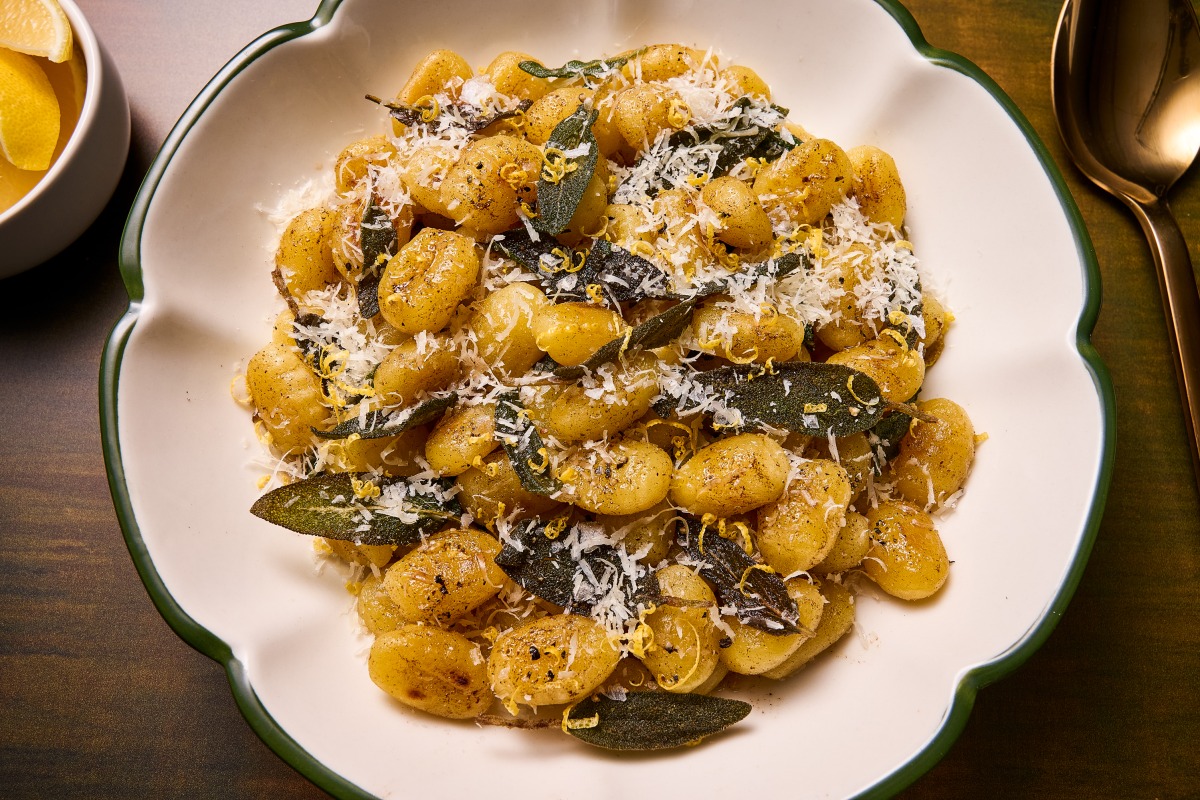
Gnocchi with brown butter and fried sage is a 20-minute meal with flair
The Peninsula
How was your 2025? For many, myself included, it was fairly tumultuous. There was work stress, anxiety about my family s health and sadness about worl...
How was your 2025? For many, myself included, it was fairly tumultuous. There was work stress, anxiety about my family’s health and sadness about world events. But there were bright spots, too, including awe-inspiring concerts; trips to different cities and countries; and deepening friendships over card games, meals and dancing until the wee hours.
In any given year, there’s always reason to celebrate, even if it’s just the fact that you made it through. So to bid farewell to the old and ring in the new, we’re making brown butter and fried sage leaves to pour over pan-seared gnocchi - a meal that feels festive and extravagant but takes only 20 minutes to prepare.
It starts with store-bought gnocchi that get cooked in a nonstick or cast-iron skillet until brown and crisp on the outside, though they retain a slight chew for a variety of textures. It’s a technique I shared over the summer, and I am once again asking you to try it for yourself if you haven’t already. (You are certainly welcome to make your own potato or ricotta gnocchi if you’re in the mood for more of a project during the holiday week.)
Brown butter and fried sage are classic partners for gnocchi. (If you’re not a fan of the potato dumplings for whatever reason, you could pour brown butter and sage on any type of pasta and it would be delicious.) The butter is nutty with notes of caramel, while the sage is earthy, savory and woodsy, with a touch of freshness that some liken to citrus, eucalyptus or mint.
Browning butter is simple to do but requires a watchful eye and keen senses. “Butter is a matrix of fat, water, proteins and sugars,” recipes editor Becky Krystal wrote on the subject. When it is exposed to heat, the water is driven off and what remains starts to evolve, creating new aroma and flavor compounds. “Use your eyes, ears and nose. The bubbling and crackling … followed by silence means the water has been cooked off and it’s time to pay even closer attention as the solids brown.”


Doha, Qatar: Virtuocity, Qatar s largest purpose built esports arena located in Doha Festival City, has marked a significant milestone with one of the...

Doha, Qatar: In a powerful demonstration of its commitment to holistic education, a team of students and teachers from The Next Generation School (TNG...

Doha: Eid Al Fitr is usually a time of joy, gatherings, and community as the holy month of Ramadan comes to an end. In Qatar, Eid 2026 will begin o...

San Francisco: U.S. chipmaker Nvidia unveiled a series of artificial intelligence (AI) innovations spanning graphics, computing infrastructure and sof...

Doha, Qatar: Minister of Awqaf and Islamic Affairs H E Sheikh Ghanem bin Shaheen bin Ghanem Al Ghanem received Qatari students who participated in the...

Paris, France: The European Space Agency announced Thursday it has re established communication with a spacecraft that is part of its Proba 3 mission,...

Doha: The outreach programmes organised by the Sheikh Abdulla Bin Zaid Al Mahmoud Islamic Cultural Center continued at several locations across the co...

Paris, France: Unusually strong winds and warm ocean water likely drove a rapid plunge in Antarctic sea ice in recent years, scientists said on Wednes...

Doha, Qatar: The General Directorate of Endowments at the Ministry of Awqaf and Islamic Affairs has received a series of new charitable contributions...

Doha, Qatar: The Sheikh Abdulla Bin Zaid Al Mahmoud Islamic Cultural Center organised a lecture for English speakers titled Ramadan: The Month of Mer...

Paris, France: The Large Hadron Collider has discovered a new particle, the 80th identified so far by the world s most powerful particle smasher, Euro...

Doha, Qatar: Nando s Qatar recently hosted a number of participants from the Shafallah Centre for Persons with Disabilities, one of the centres operat...

Doha, Qatar: The View Hospital has announced the launch of Peace of Mind, a community initiative designed to provide free online mental wellbeing supp...