From March 1 your WhatsApp use set to change, SIM binding becomes mandatory: Here is what it means for users
India Today
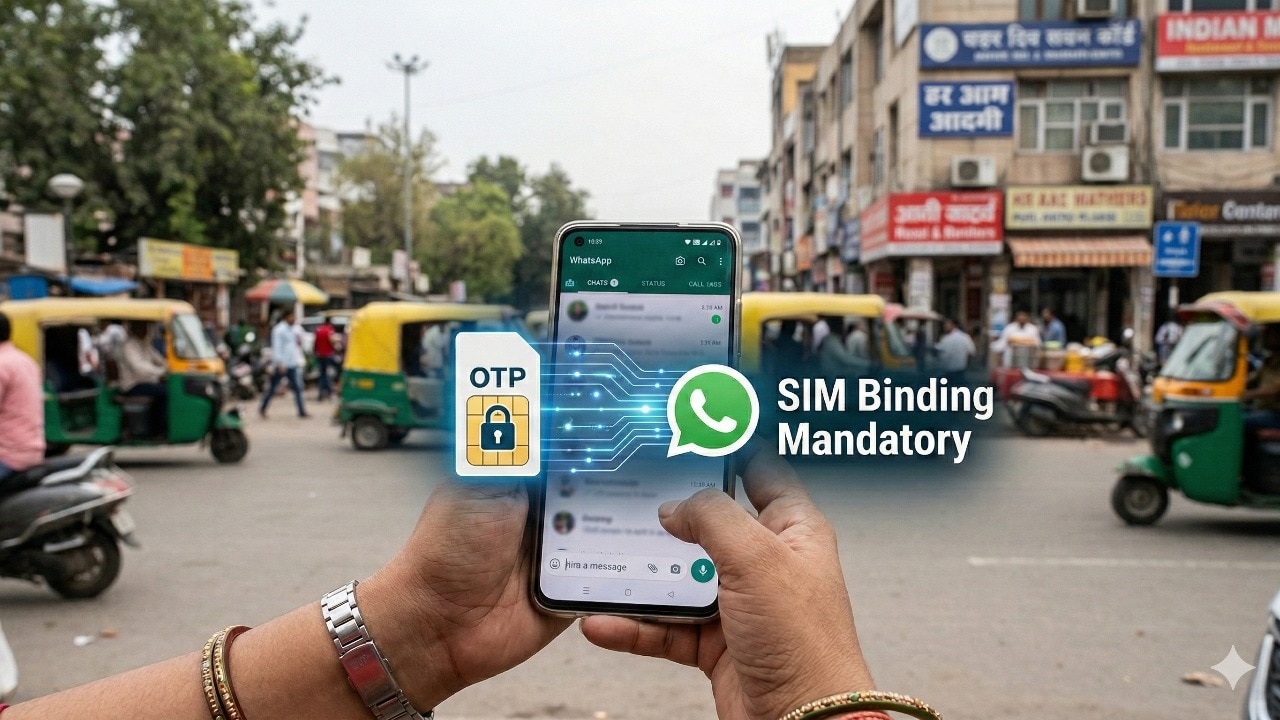
Starting March 1, 2026, WhatsApp will make SIM binding mandatory for Indian users under government orders. The change could change how you use multi-device logins and WhatsApp Web everyday.
The Indian government is making SIM binding compulsory for WhatsApp users in the country, and this rule could significantly change how you use your account across devices. Starting March 1, 2026, the Department of Telecommunications (DoT), under the Telecom Cyber Security (TCS) Rules, 2024, will enforce mandatory SIM binding. In simple terms, your WhatsApp account will have to remain linked to the physical SIM card inserted in your primary phone.
The government has made it clear that there will be no extension beyond the February 28 deadline. According to the Union ministry, the decision is rooted in “national security” and the urgent need to curb rising cyber fraud cases across the country.
Across the globe, WhatsApp follows what it calls a “verify-once” model. You enter your phone number, receive a one-time password (OTP), and once your account is activated, you’re good to go. Even if you remove the SIM card later or use WhatsApp on linked devices like a laptop or tablet, the app continues to work without needing the SIM physically inside the phone.
But the new SIM binding rule will change this process completely for users in India.
Under the new framework introduced by the Department of Telecommunications (DoT), your WhatsApp account must remain continuously linked to the physical SIM card inserted in your primary device. In fact, the platform is expected to check roughly every six hours whether the registered SIM is actually inside your phone.
If you remove, replace, or deactivate that SIM card, WhatsApp will stop working until the original SIM is reinserted and verified again. This process will significantly impact how WhatsApp users in India access the platform across devices, including WhatsApp Web, desktop apps, tablets, and even secondary phones.


Among the fashion standouts at the Oscars 2026 were Nicole Kidman, Teyana Taylor, Priyanka Chopra, Emma Stone, Audrey Nuna, Anne Hathaway and Pedro Pascal.

Thousands of degree certificates and mark sheets have remained unclaimed in several colleges for nearly four decades. Students passed their exams but never returned to collect their documents, leaving institutions struggling to store the growing pile of academic records.

In a small classroom in Aligarh's government school, waste materials are turning into machines. A government school teacher is guiding students to build simple robots and drones using scrap, helping them understand science through hands-on learning.

Elon Musk's satellite internet service, Starlink, is now available in Kuwait. This announcement comes at a time when the country has found itself impacted by the US-Israel war with Iran.

Delhi University has rejected Rahul Gandhi's claim of caste bias in interviews. In a post on X, the university said the Leader of the Opposition should verify facts before making such statements.

Apple is rumoured to be making its debut in the foldable smartphone market this year with the iPhone fold. From the design to the features, and the expected price, here is everything you need to know about the first-ever foldable iPhone.

The Central Board of Secondary Education, CBSE, has cancelled the Class 12 board examinations in several Middle Eastern countries due to the ongoing US-Israel-Iran war. The board also confirmed that the mechanism for announcing results for affected students will be announced at a later stage.

Chinese giant ByteDance has reportedly suspended its plans to release its latest AI video generation model, SeeDance 2.0, after major Hollywood studios raised disputes over copyright violations.

Bidyut Innovation MD Rahul Shah spoke during the India Today Conclave 2026. Shah reckoned that India could soon have its own robots competing those from other countries, perhaps at a fraction of the cost.

Alpha High School, an AI-driven education institute is rolling out a new course with a promise – earn $1 million by the time you graduate or you get a full refund. Here is how it works.

Devendra Singh Chaplot, an IIT Bombay alum has joined xAI to build super intelligence. His arrival was welcomed by xAI chief Elon Musk. Here is everything you need to know about xAI's latest Indian origin member.

Blending heritage with modern technology, Royal Enfield is preparing to enter the electric motorcycle space with the upcoming Royal Enfield Flying Flea C6, expected to debut in India around mid-2026.

IIT Madras and the Delhi government have signed an MoU to study 'smog-eating' surfaces to help tackle air pollution in the capital.