Exploring Bengaluru’s complex relationship with water Premium
The Hindu
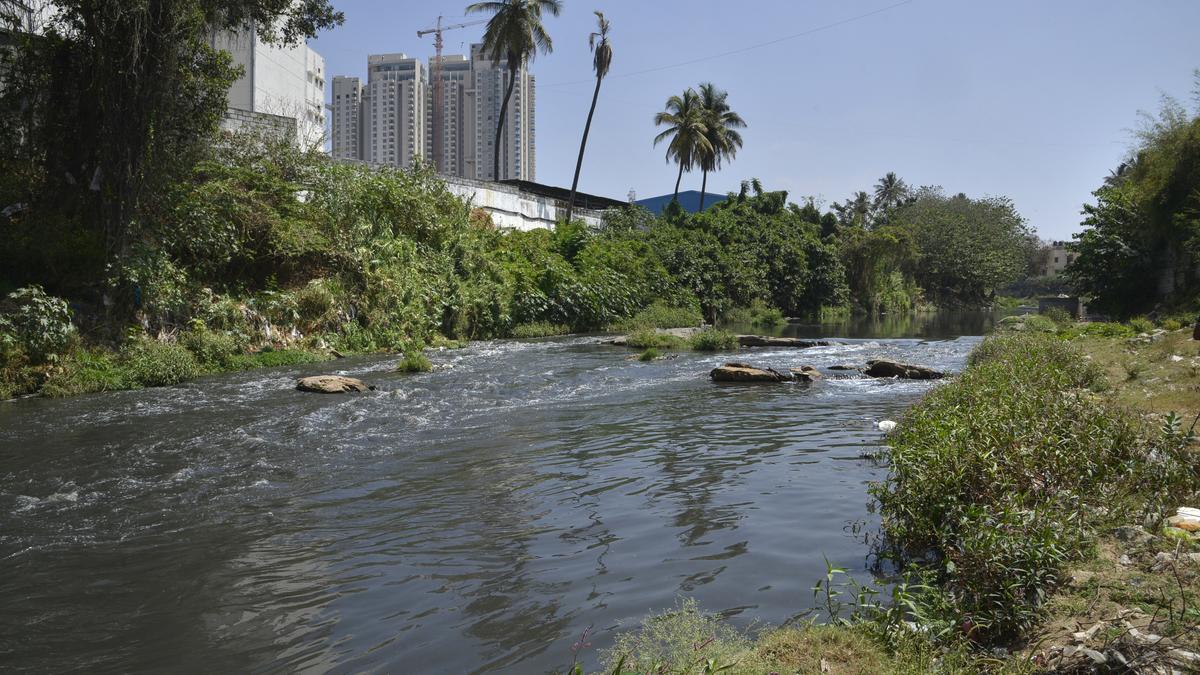
From the Arkavathi, which originates in Nandi hills, to the Vrishabhavathi, which is believed to have been born in this very city and the Dakshina Pinakini traversing through the eastern ends of Bengaluru, including Chikkaballapur, Hoskote, Malur, Kadugodi, and Sarjapura, “the city once had a network of rivers and natural streams flowing through it,” states a story map at Waterscapes of Bengaluru, a new exhibition jointly developed by the Visvesvaraya Industrial and Technological Museum (VITM) and the Paani Earth Foundation.
We all know that Bengaluru was once known as the city of a thousand lakes, but did you also know that it was also once watered by many rivers?
From the Arkavathi, which originates in Nandi hills, to the Vrishabhavathi, which is believed to have been born in this very city and the Dakshina Pinakini traversing through the eastern ends of Bengaluru, including Chikkaballapur, Hoskote, Malur, Kadugodi, and Sarjapura, “the city once had a network of rivers and natural streams flowing through it,” states a story map at Waterscapes of Bengaluru, a new exhibition jointly developed by the Visvesvaraya Industrial and Technological Museum (VITM) and the Paani Earth Foundation.
The exhibition, which is being held at the VITM and will include workshops, expert interactions, and demonstrations, is open till Independence Day. “As August 15 approaches, through these efforts, we hope the rivers will finally get the attention they deserve, with tangible steps taken to set them free,” says Jyoti Mehra, curator at VITM, which has partnered with numerous city-based organisations, including WELL Labs, Biome Environmental Solutions, MOD Foundation, Mythic Society and Ecosattva for the initiative.
Waterscapes of Bengaluru: Flows and Futures of our City’s Rivers and Lakes, which takes visitors on a journey through the city’s evolving waterscapes, from ancient wisdom to modern-day challenges, explores “the city’s relationship with water, which has always been complex,” she says. Through a series of digital interactives, games, puzzles, and hands-on water-based activities, the organisers hope to provide visitors with an immersive experience to help them learn about the background and threats faced by the city’s rivers, once central to the city’s ecological balance, but now heavily encroached upon and polluted.
They will also get to explore Bengaluru’s ingenious network of interconnected lakes, tanks, and open wells that once captured seasonal rain and supported everyday life, but is today largely distorted due to rapid urbanisation, resulting in dependence on large-scale water supply schemes like the Cauvery project, which pumps water over 100 km uphill to reach the city, says Mehra.
According to her, the explosive growth of Bengaluru’s population from 0.16 million in 1901 to over 14 million today and widespread concretisation has forced the city to draw over 50% of its water from the ground. “The struggle to balance growth with its fragile hydrology is a constant one, which has led to people digging deeper, drawing farther, and reaching wider in search of water,” she says, adding that the warning signs to the health of our water system are obvious: frothing lakes, floods, and failing borewells in the city.
While this exhibition is a stark reminder of the acuteness of the crisis, it also celebrates the revival of water wisdom, from the K-100 project to the Million Wells Campaign to lake rejuvenation projects and urban wetland protection. “These efforts are living blueprints for a future where water is co-owned, co-managed, and co-created by all.”


India pledges 60% non-fossil fuel power by 2035, targeting 47% emissions reduction per GDP unit and enhanced carbon sinks.

Supreme Court rules land acquisition compensation and interest must uphold constitutional guarantees, unaffected by financial burdens.

Election officials accept 23 nominations for Bagalkot bypolls, rejecting three, with polling scheduled for April 9.

Students and women’s self-help groups in Madurai engage in vibrant voter awareness campaigns promoting 100% voting participation.

Congress signals a "friendly fight" with allies in select Puducherry Assembly seats ahead of the April 9 elections.

Airstrike in western Anbar kills 7 Iraqi soldiers, injures 13, prompting condemnation for violating international laws on medical facilities.

Plaque unveiled in Bengaluru honors 11 victims of RCB stampede, emphasizing safety responsibility for future events.

India and the U.S. reaffirm commitment to enhance strategic defense cooperation at the 18th Defence Policy Group meeting in New Delhi.

Chhattisgarh's Deputy CM reports only 30-40 Maoists remain in Bastar, highlighting recent surrenders and future development plans.

Explore the historical and industrial significance of Ariyalur constituency, highlighting its challenges, agriculture, and political landscape.

Dindigul and Madurai Collectors conduct joint inspection

In this episode, Kalki Subramaniam speaks to us about why the Transgender Persons Amendment Bill has sparked protests, and how these amendments threaten to push a marginalised community back into the shadows.

India's EU FTA is poised to attract more German companies, boosting bilateral trade and investment opportunities.