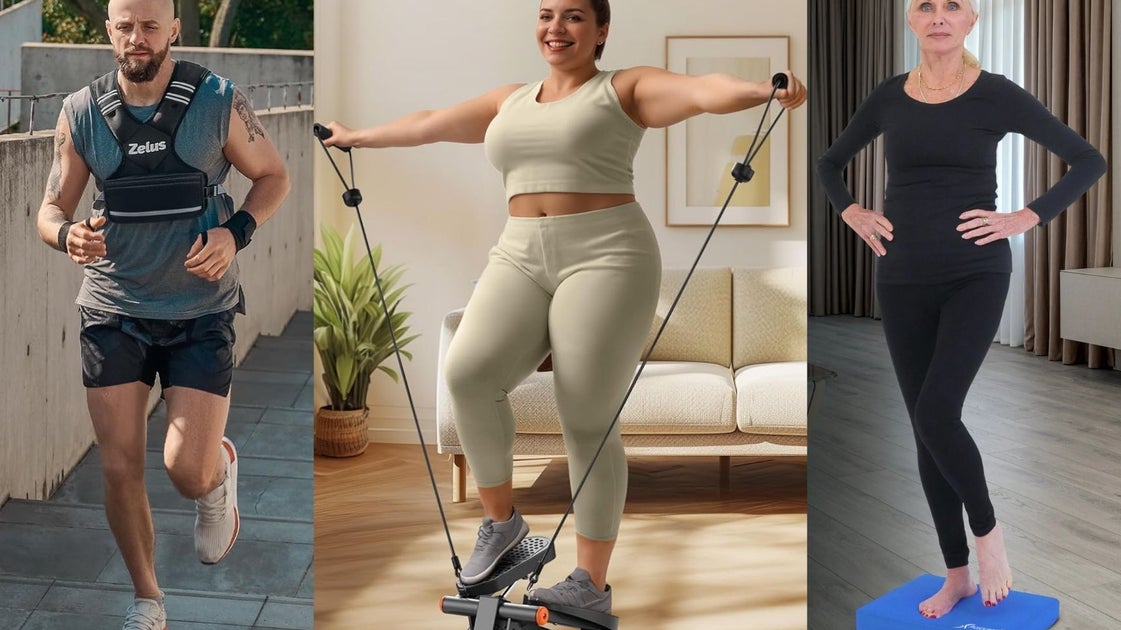
Experts Say These Small And Easy Fitness Items Can Help Improve Your Bone Density
HuffPost
Three experts on bone health explain why your bone density is important, and the types of exercise that can help.
You’re probably familiar with many of the benefits of regular exercise, when done properly. From building muscle to boosting your energy and even helping your brain function better, there’s no shortage of reasons to work up a sweat. But there’s another great benefit you might not think about as much: You could be improving your bone density through exercise, according to experts.
“Bone density refers to how strong and solid your bones are,” Dr. Raphael Longobardi, New Jersey-based orthopedic surgeon told HuffPost. He serves with the RWJBarnabas Health Medical Group and specializes in sports medicine, frequently identifying ways to strengthen the body. “The amount of mineral content in our bones helps them maintain their strength and resistance to fractures. Maintaining bone density is an incredibly important preventative for reducing the risk of conditions like osteoporosis or fractures. This is especially true as we age.”
There are also risk factors for certain groups, according to Kai-Yu Ho, a physical therapist and professor of physical therapy at University of Nevada in Las Vegas. Ho said bone density is important to look after “especially in postmenopausal women, as estrogen loss speeds up bone weakening.”
So, if you’re concerned about your bone density, how can exercise help?
“Exercise is a critical component to bone health,” said Dr. Deborah Sellmeyer, a clinical professor of medicine in endocrinology, gerontology and metabolism at Stanford University. “Impact exercises and weight training have been shown to increase bone density. Exercise regimens that incorporate balance training have been shown to reduce falls. Improved bone density and reduced falls help reduce fracture risk.” According to Ho and Longobardi, resistance and weight training increase bone density because they put stress on your bones and muscles, which promotes stronger bone growth.


You'll need a portable phone charger, compact backpack and some first aid before you pack up and go on a trip outside the country.

With TSA officers working without pay and spring break travel ramping up, experts offer tips to reduce stress and avoid missing flights.

This stowaway truly was sly as a fox.

Talking to friends about your feelings and frustrations can be healthy — but experts warn you should look out for a few damaging traps.

There's good news and there's bad news. This will help you make some sense of it.

If you have carpets or rugs, sorry: They're even dirtier than you think.

A recent study found the most commonly reported symptoms of perimenopause had nothing to do with hot flashes or weight gain.

Alleviate post-workout soreness with these expert-recommended tools.

Experts, including the U.S. Labor Department, have been warning about this moment since Trump took office.

This time of year is prime season for these fast-spreading illnesses.

Chinese medicine might have the answer to this common bedroom discomfort.

"I dismissed my fear as paranoia. But, deep down, I still felt that something was wrong."

Labor diggers, women are onto you.