Dip in annual rainfall may hit cardamom yield at ICH
The Hindu
CUE content cards on the clipboard: https://cuecsapp.thehindu.co.in/cue-web/#/main?name=Ustad%20Zakir%20Hussain%20held%20Kerala%E2%80%99s%20traditional%20percussion%20culture%20in%20high%20esteem%2C%20says%20veteran%20percussionist%20Mattannur%20Sankarankutty%20Marar&uri=https%3A%2F%2Fcuecsapp.thehindu.co.in%2Fwebservice%2Fescenic%2Fcontent%2F68991232&mimetype=x-ece%2Fstory
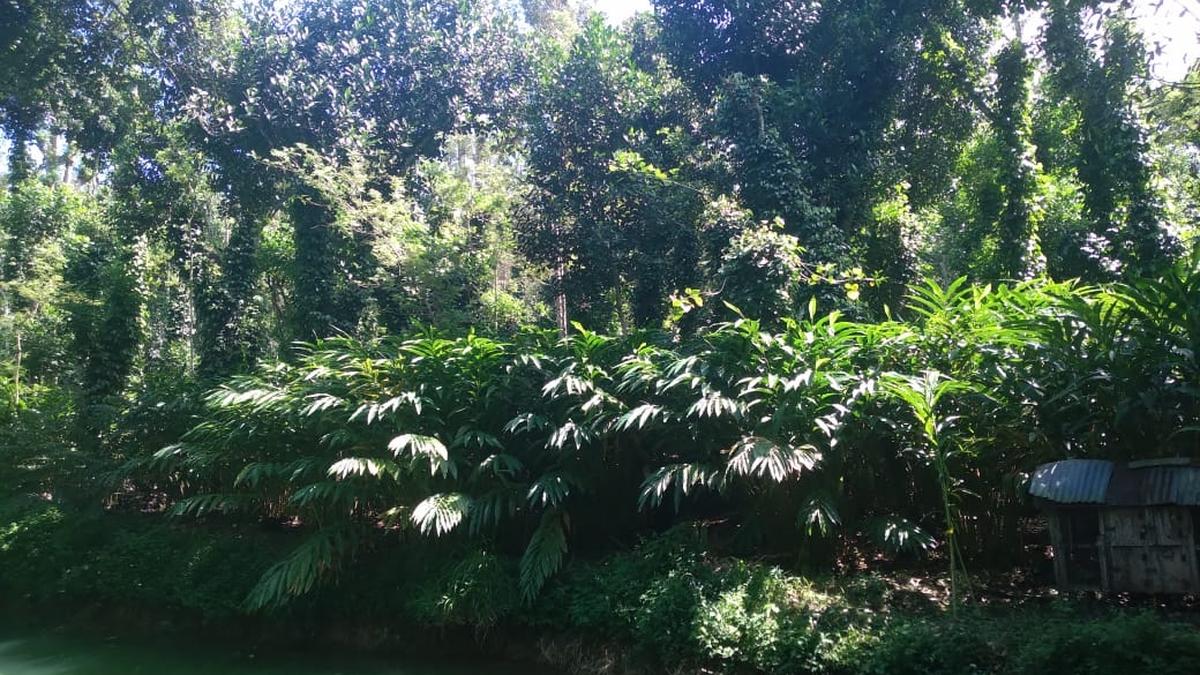
A comprehensive study based on 60 years of data to assess climatic variability and its impact on the Indian Cardamom Hills (ICH) has revealed a concerning trend: a significant dip in annual rainfall.
While the dip in annual rainfall has been recorded as approximately 13.62 mm a year, the number of rainy days dropped by nearly 19.75 days over a 40-year period. In addition to reduced rainfall, the study also highlighted a noticeable increase in both minimum and average decadal temperatures. It shows that these rising temperatures pose a potential threat to cardamom yield and could impact water availability for irrigation. The study underscores the importance of adaptive agriculture and climate-resilient policies to safeguard cultivation and sustain cardamom production.
The ICH is the geographical terrain spread across Kerala and Tamil Nadu, covering over 2,000 square kilometres of mountainous region, mostly a 700–1,800 msl (mean sea level) high plateau spread between Kumuly hills (in the south) and Munnar hills (in the north).
The research team included Sivajothi Ramalingam, Kazuaki Tanaka, Nainaru Tarakaramu, Muthusamy Murugan, Ashokkumar Kaliyaperumal, and M. Ijaz Khan. The study was published in Nature Scientific Reports, a peer-reviewed open access multidisciplinary science journal, recently.
For the study, long-term observed climate data as well as cardamom yield data were collected from the Cardamom Research Station, Kerala Agricultural University, Pampadumpara, Kerala, and subjected to statistical analyses. The study employed various statistical methods to analyse the variability and trends in climatic variables, focussing on surface air temperature and rainfall data in the Indian Cardamom Hills.
“The reduction in both rainfall and rainy days poses a threat to the local agroforest ecosystem, as extended droughts and long rainless periods coupled with sparse tree cover could negatively affect cardamom growth and yield,” says the study.
As the region’s dependence on rain-fed cardamom agriculture makes it highly vulnerable to climate change, irregular rainfall patterns pose a significant threat to livelihoods sustained by the ICH agroforestry system.


Modi and Jaishankar advocate for dialogue as India and France collaborate to de-escalate tensions amid escalating strikes on energy infrastructure.

The star-studded event was held in Mumbai and was attended by rithik Roshan, Alia Bhatt, Bobby Deol, Shahid Kapoor, Vijay Varma, Sonakshi Sinha, Jyotika, Ali Fazal, Sonali Bendre, Preity Zinta, Ravi Kishan and others

Shorts News:We are working on securing LPG, petroleum to meet our energy security needs: MEA

P. Veldurai served five years as MLA and was later asked to repay ₹21 lakh in Tamil Nadu.

Supreme Court reserves verdict on defining 'industry' under Industrial Disputes Act, impacting educational and healthcare sectors.

Dindigul Collector S. Saravanan held a meeting with Election Observers to ensure smooth election monitoring across seven constituencies.

Despite delays from the Centre, 24 States allocate funds for a new rural jobs program, using past MGNREGA expenditure as a baseline.

Congress’s third candidate list for Assam Assembly elections highlights the Pradyut factor and notable party shifts among MLAs.

Scholars foresee political shifts and governance concerns at BRS Ugadi celebrations, predicting potential opposition strength amid public dissatisfaction.

Election observers deployed in Thoothukudi; field inspection begins

Sri Sathya Sai Prema Sadan celebrated Ugadi with Vedic chants, Ugadi Pachadi, and Sri Rama Navami preparations in Visakhapatnam.

Visakhapatnam celebrated Ugadi with Panchanga Sravanam, cultural events, and auspicious predictions for a prosperous new year.

Celebrating diverse top talents, including visually impaired achievers, artists, and cultural icons honored with Ugadi awards.