Did Venus ever have oceans? Scientists have an answer
The Hindu
New research suggests Venus never had oceans, making it uninhabitable, with implications for understanding planetary evolution.
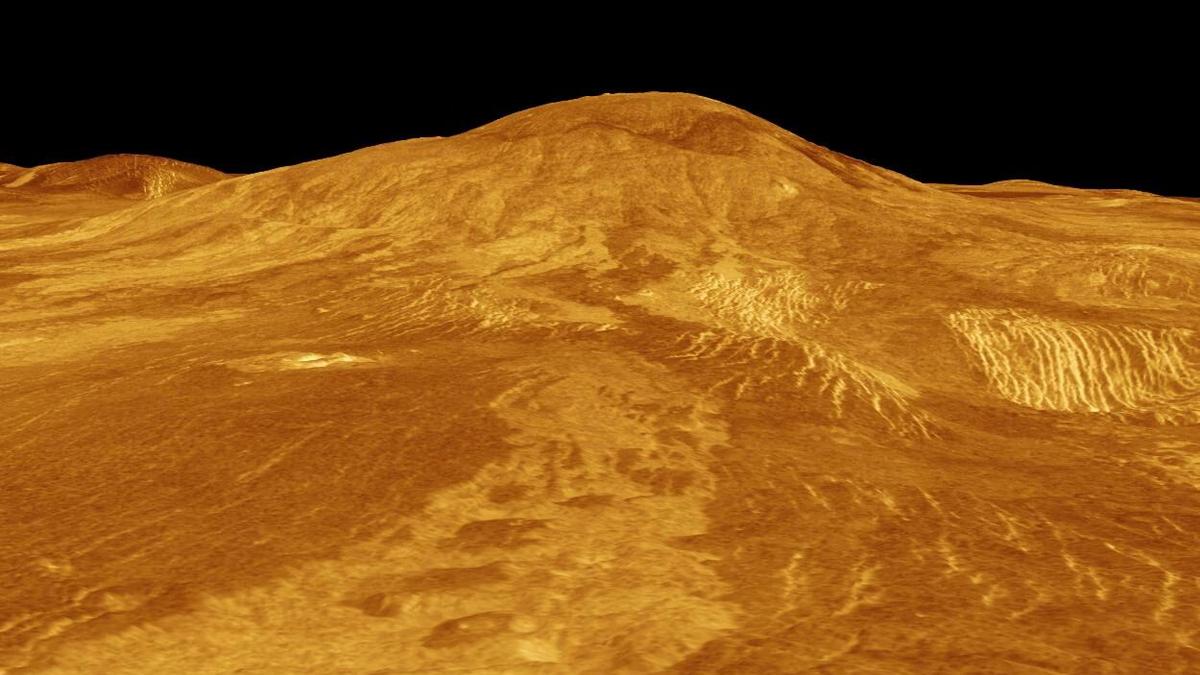
Earth is an ocean world, with water covering about 71% of its surface. Venus, our closest planetary neighbor, is sometimes called Earth’s twin based on their similar size and rocky composition. While its surface is baked and barren today, might Venus once also have been covered by oceans?
The answer is no, according to new research that inferred the water content of the planet’s interior - a key indicator for whether or not Venus once had oceans - based on the chemical composition of its atmosphere. The researchers concluded that the planet currently has a substantially dry interior that is consistent with the idea that Venus was left desiccated after the epoch early in its history when its surface was comprised of molten rock - magma - and thereafter has had a parched surface.
Water is considered an indispensable ingredient for life, so the study’s conclusions suggest Venus was never habitable. The findings offer no support for a previous hypothesis that Venus may have a reservoir of water beneath its surface, a vestige of a lost ocean.
Volcanism, by injecting gases into a planet’s atmosphere, provides clues about the interior of rocky planets. As magma ascends from an intermediate planetary layer called the mantle to the surface, it unleashes gases from deeper parts of the interior.
Volcanic gases on Earth are more than 60% water vapor, evidence of a water-rich interior. The researchers calculated that gases in Venusian eruptions are no more than 6% water vapor, indicative of a desiccated interior.
“We suggest that a habitable past would be associated with Venus’ present interior being water-rich, and a dry past with Venus’ present interior being dry,” said Tereza Constantinou, a doctoral student at the University of Cambridge’s Institute of Astronomy and lead author of the study published on Monday in the journal Nature Astronomy.
“The atmospheric chemistry suggests that volcanic eruptions on Venus release very little water, implying that the planet’s interior - the source of volcanism - is equally dry. This is consistent with Venus having had a long-lasting dry surface and never having been habitable,” Constantinou added.


Can nations unite to protect the endangered Hudsonian godwit and address the challenges of climate change and habitat loss?

Discover the Minor Planet Centre, the key hub for tracking and verifying observations of small solar system bodies.

Discover the Minor Planet Centre, the key hub for tracking and verifying observations of small solar system bodies.

In this week's Science for All newsletter, XX explains

Test your knowledge with the quiz on Science films at the Oscars through history

Set between the Siwalik hills and the plains, Butwal offers travellers a mix of regional cuisine, pilgrimage trails to Lumbini and the comfort of Hyatt’s new hospitality landmark

Explore 2026's wallpaper trends in India, highlighting botanicals and handmade designs that enhance modern homes with nature-inspired aesthetics.

Mercedes-Benz CLA 250+ with EQ Technology review: design, performance, range and features explained. Discover how the new electric CLA combines advanced AI, long range, fast charging and futuristic styling for the next generation of luxury EVs.

AI tool for sparrow conservation

BTS’s comeback with ‘Arirang’ marks a major global music event. When does the album release, and where can you watch their concert live stream? We have all the details

The 2026 U.S. cholesterol guidelines urge starting screening and treatment at 30 to prevent cardiovascular disease effectively.

Olam Festival 2026 in Thiruvananthapuram returns March 27-29 with 120+ vendors, music, art, and cultural zones.

A few storytellers in Thiruvananthapuram share their journeys, challenges, and evolving methods on World Storytelling Day, inspiring young minds.