Can Vijay’s Tamilaga Vettri Kazhagam seek a new election symbol in 2026? | Explained Premium
The Hindu
Actor Vijay’s fans-turned-political supporters are eager to know what TVK’s new election symbol would be before his first rally in Vikravandi on October 27. What does the law say about the matter? The Hindu explains.
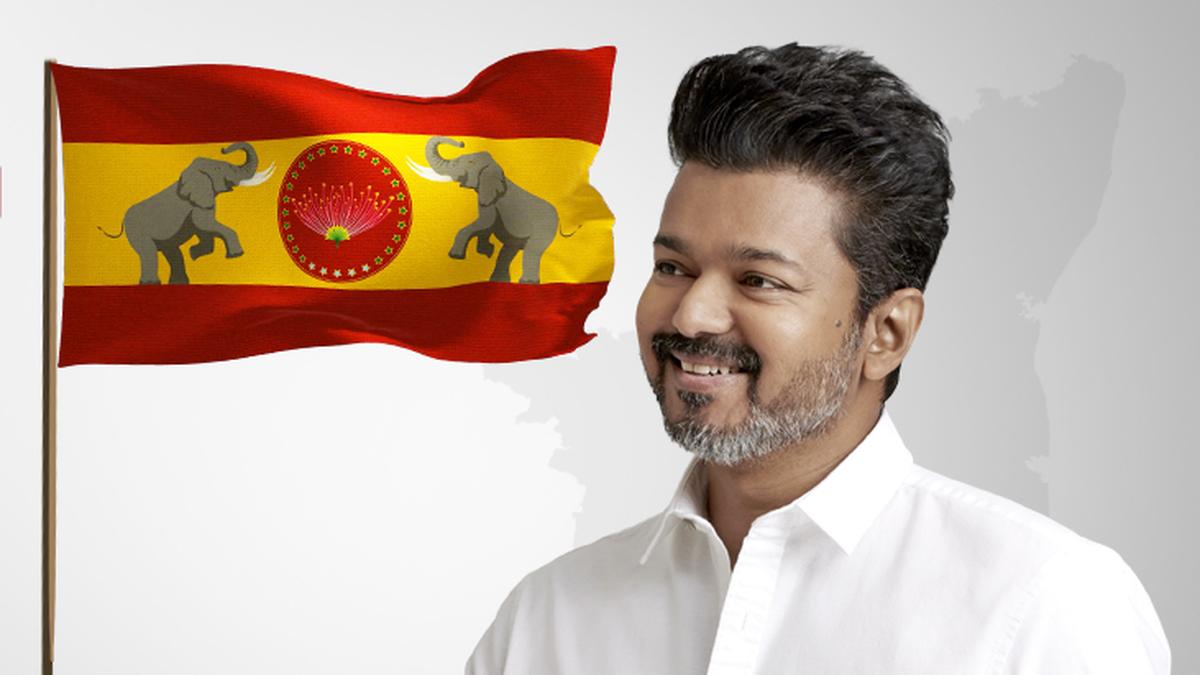
The story so far: The most keenly watched new entrant in Tamil Nadu politics is film actor C. Joseph Vijay’s (popularly known as Vijay) Tamilaga Vettri Kazhagam (TVK). The party has been registered with the Election Commission of India (ECI) under Section 29A of the Representation of the People (RoP) Act, 1951, and the application identifies Mr. Vijay as the party’s president and Anand alias Munusamy as its general secretary, besides other office-bearers. The TVK has decided to conduct its first State conference near Vikravandi in Villupuram district of Tamil Nadu on October 27, 2024, with the aim of entering the electoral fray in the 2026 Assembly elections. The actor’s fans-turned-political supporters are now eager to know what the party’s new election symbol would be and whether it would get a common symbol or completely new one. What does the law say about the matter? We explain.
Any association or a body of individual citizens of the country, wanting to call itself a political party and intending to avail the benefits under the RoP Act of 1951, should necessarily make an application to the ECI seeking registration. The application must be filed within 30 days of the formation of the political party and clearly mention its name, the list of office-bearers, the numerical strength of its members, and other details.
The application, on the party’s letter head, must also be accompanied by a copy of the memorandum of rules and regulations of the political party, and those rules should contain a specific provision that the party would bear true faith and allegiance to the Constitution of India and to the principles of socialism, secularism, and democracy, and would uphold the sovereignty, unity, and integrity of the country.
The party’s rules and regulations must also specify the powers and functions of the office-bearers, and the decision-making power conferred on them must reflect democratic spirit without any veto power. The party’s constitution must also fix the office-bearers’ term, for a period not exceeding five years, and insist on the conduct of periodic intra-party elections. The rules related to the maintenance of discipline by the members and the mode of dispute resolution must also be provided in the regulations.
Further, the rules and regulations must specify how the party funds would be utilised for political activities and the mode of maintenance of accounts. Submission of audited accounts before the ECI, within six months after the end of every financial year, should also be made mandatory under the party’s constitution.
Registration of Political Parties (Furnishing of Additional Particulars) Order, 1992, also requires the application to be submitted along with individual affidavits from at least 100 members of the party to the effect that they are registered electors and not members of any other political party. The party’s president or general secretary must also file a similar affidavit asserting that none of its members hold dual membership.
Accordingly, the TVK had submitted its application along with the requisite annexures with the ECI on February 2, 2024, and issued a notification in a newspaper on May 11 calling for public objections, if any, for its registration by June 11. On September 8, Mr. Vijay made a public announcement of the party having been registered with the ECI.


CM A. Revanth Reddy reviews Bhadrachalam temple development plans, targeting completion by March 2027 while adhering to Agama Shastra.

First-half blitz helps Punjab FC drub Kerala Blasters FC

Vellore Mayor Sujatha Anandakumar and a councillor face legal action for violating the Model Code of Conduct by distributing sports equipment.

Supreme Court judge Justice Nagarathna highlights government's role in court backlog, urging judicial reforms for effective litigation management.

Kerala LDF ministers declare assets nearing ₹2 crore each amid upcoming elections, revealing financial details and legal challenges.

Indiaspora, a San Francisco-based non-profit organisation which connects leaders of the Indian diaspora, is holding its 2026 Indiaspora Forum on March 22-24 and also a Global AI Summit on March 25, 2026, at JW Marriott Prestige Golfshire Resort in Bengaluru.

Special prayers mark Eid-ul-Fitr celebrations in Madurai

India’s gem and jewellery industry continues to demonstrate remarkable resilience and a spirit of innovation, said Kirit Bhansali, chairman of the Gem and Jewellery Export Promotion Council (GJEPC), at the inauguration of the 4th edition of IIJS Bharat-Tritiya 2026 at Bengaluru International Exhibition Centre (BIEC) here on Saturday, March 21.

HYDGEN dispatches eight modular green hydrogen systems to Surat, enhancing on-site industrial hydrogen generation and operational efficiency.

Fight is between AIADMK and DMK, says Rajan Chellappa

Two habitual offenders arrested in Miyapur for wine shop burglary; police recover stolen cash and bike.

Tiruchi's Smart City projects face underutilisation despite completion, raising concerns about planning, execution, and revenue generation.

Election Observer Anubha Shrivatsava inspects polling booths in Western Ghats, ensuring smooth arrangements amid challenging conditions.